
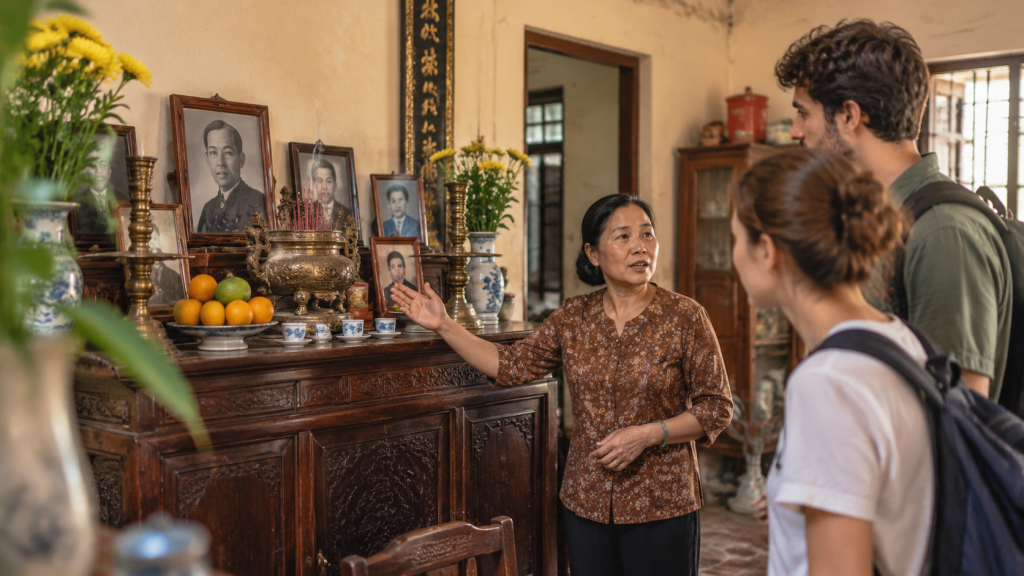
Ancestor worship in Vietnam is part of everyday life, so travelers may notice family altars in living rooms, incense curling through a temple hall, or fruit and tea set out as offerings. If these customs feel unfamiliar, it can be hard to know whether to pause, take a photo, or join in. A little context helps you explore without treating a private family practice as a tourist display.
This guide explains what ancestor worship means, how common rituals work, and why families gather for death anniversaries and Lunar New Year. It also shares practical etiquette for visiting homes and sacred places, so solo travelers, couples, and families can observe with confidence. For a deeper look at local spiritual traditions, explore Vietnamese beliefs and rituals with curiosity, patience, and respect for each host’s customs.
What Is Ancestor Worship in Vietnam?
Ancestor worship in Vietnam is a family practice of remembering and honoring deceased relatives, not one uniform religion. For travelers, that distinction makes a home altar easier to understand: it is a place of connection and respect, shaped by family tradition rather than a single national rule.
Filial piety and respect for elders influence the practice, alongside the belief that ancestors remain connected to the living. Customs differ between households and regions, and they can coexist with Buddhism, Catholicism, or other beliefs.
Quick definition: Ancestor veneration in Vietnam is the way families honor deceased relatives and maintain a sense of continuity between generations. A household altar often holds photographs or ancestral tablets, incense, flowers, and fruit. Families may make offerings or gather there on important occasions, but practices vary by household and belief.
The Meaning of Ancestor Veneration in Vietnamese Culture
Honoring ancestors expresses gratitude, kinship, and respect for elders. It is not necessarily worship of a deity: the focus is on family members who came before, remembered as part of the family’s continuing story. For example, relatives may light incense before a family meal or gather to remember someone on an anniversary.
This is a personal and living tradition, not a performance for visitors. If you are curious about local beliefs, explore them thoughtfully through Vietnamese beliefs and customs, and let residents guide what is appropriate to observe.
Family Altars and Their Place in Vietnamese Homes
A family altar is commonly placed in a respected area of the home. It may include a photograph or ancestral tablet, an incense holder, flowers, and fruit. The objects are reminders of family bonds; their arrangement and use are not identical in every home.
For visitors, the key distinction is simple:
| Aspect | Ancestor veneration | Deity worship | What visitors may notice |
|---|---|---|---|
| Focus | Deceased family members | A deity or sacred figure | Different figures and offerings |
| Setting | Often a household altar | Often a temple or shrine | Customs vary by family and place |
The altar gives family members a focal point for remembrance and rituals. If invited into a home, admire it from a respectful distance and ask before taking photographs or touching anything. A small gesture of curiosity, guided by your host, can open a window onto everyday Vietnamese life.
How Ancestor Worship in Vietnam Is Practiced
Quick answer: Ancestor worship in Vietnam is usually practiced at home through small acts of remembrance: family members prepare an altar, light incense, and present food or drink. The rhythm varies by household, but the purpose is to honor deceased relatives and keep family ties alive across generations.
Incense, Food Offerings, and Everyday Rituals
A family member may arrange fruit, flowers, tea, water, or a prepared dish before lighting incense. Some people bow, pray aloud, or speak silently to their ancestors. In one home, the ritual may take only a few minutes; another family may gather around the altar together.
- Offerings are gestures of respect, not a meal for visitors.
- Follow your host’s lead and ask before taking photos or approaching the altar.
Tet, Death Anniversaries, and Other Important Occasions
Rituals often become more communal on important dates. Families may clean and decorate the altar, cook a shared meal, visit graves, or make offerings. Practices differ, so what you see in one home should not be treated as a rule for all of Vietnam.
| Occasion | Common observance | What visitors may notice | Family variation |
|---|---|---|---|
| Tet | Altar offerings and family meals | Fruit, flowers, and incense | Foods and timing differ |
| Death anniversaries and Vu Lan | Remembrance, offerings, or grave visits | Relatives gathering together | Customs depend on the family |
For curious travelers, the most meaningful view is often a quiet one: notice the care given to the ritual without treating it as a performance. If invited to learn more, let your hosts guide you; a beliefs and culture tour can add context to traditions encountered on the road. Explore Vietnam Crazy Tour experiences for locally guided ways to discover the country.
Why Ancestor Worship Matters in Vietnamese Family and Community Life
Ancestor worship in Vietnam is more than a ritual at an altar: it is a way families express gratitude, keep relatives present in memory, and pass identity from one generation to the next. For visitors, this context makes a quiet family gathering or a busy holiday meal easier to understand.
At its heart, remembrance connects respect for living parents and elders with care for those who have died. A family may light incense, share a meal on a death anniversary, or tell children stories about a grandparent while pointing to an old photograph. These small acts make family history part of everyday life, not just a lesson in a book.
Filial Piety, Family Identity, and Remembering Relatives
Children learn who came before them through names, stories, photographs, and repeated family customs. During Tet or a death anniversary, relatives often gather around the household altar before sharing food. The gathering honors the deceased, but it also gives younger family members a living sense of belonging.
In brief: Ancestor veneration strengthens family bonds by turning remembrance into shared practice. Everyday offerings, family stories, and reunions on important dates help younger generations understand their roots, while gratitude toward deceased relatives remains part of present-day family life.
Household Traditions and Community Observances
Most observances take place privately at home, while temples, pagodas, and ancestral halls host community or religious practices. Customs differ between families and regions. Ancestor veneration may also coexist with Buddhism, Catholicism, or other beliefs; it does not require every household to follow one identical form. Visitors exploring local traditions can find more cultural context through local beliefs and culture.
| Setting | Who gathers | Typical focus |
|---|---|---|
| Family home | Relatives across generations | Remembrance and family ties |
| Temple or ancestral hall | Worshippers or local community | Shared observance and local tradition |
For travelers, the most respectful approach is to observe quietly, follow local guidance, and ask before photographing a family altar. To explore more meaningful cultural experiences with Vietnam Crazy Tour, browse our Vietnam tours and choose a journey that leaves room for local encounters.
How Travelers Can Show Respect Around Vietnamese Ancestor Altars
Quick answer: When visiting a Vietnamese home or sacred site, observe before acting, follow your host’s guidance, and ask before joining a ritual or taking photos. Keep a respectful distance from the altar, do not touch offerings, and remember that family ancestor worship is a meaningful private practice, not a display for visitors.
Respectful Etiquette in Homes, Temples, and Pagodas
Ancestor worship in Vietnam varies between families, so there is no single ritual visitors should copy. In a local home, remove your shoes if others do, greet your host, and let them decide whether to explain or invite you closer. At temples and pagodas, dress modestly, keep your voice low, and watch where worshippers walk before choosing a place to stand.
For example, if a family is lighting incense, pause at the edge of the room rather than stepping between them and the altar. Ask before photographing people or rituals, and never move an incense burner, pick up fruit, or point at sacred objects. Curious about local beliefs? A respectful culture and beliefs tour can offer context without turning private practice into a spectacle.
| Situation | Good approach | Avoid |
|---|---|---|
| Family home | Observe and ask permission | Touching altar items |
| Temple or pagoda | Follow signs and local cues | Interrupting prayers or blocking paths |
Common Misunderstandings to Avoid
Not every Vietnamese family follows the same customs, and a household altar is not automatically Buddhist. Offerings are not refreshments for visitors; wait for your host to offer food. If you are unsure, a quiet question is better than guessing. Respectful curiosity is welcome, but participation is always optional.
Want to explore Vietnam beyond the usual stops? Browse Vietnam Crazy Tour experiences and choose a locally guided trip that suits your travel style.
Frequently Asked Questions About Ancestor Worship in Vietnam
Ancestor worship in Vietnam is a family practice, so there is no single rule for visitors. A host may invite you to observe, offer incense, or share food, while another family may prefer to keep the ritual private. A polite question and a willingness to follow their lead are the safest approach.
Quick answer: Ask before joining a ritual or taking photos, accept guidance graciously, and do not assume participation is expected. Customs differ between families and regions. If you are uncertain, step back, observe quietly, and let your host explain what feels appropriate.
Can Travelers Participate in an Ancestor Worship Ritual?
Sometimes. Participation depends on the family or host, the occasion, and the ritual itself. If invited, ask what to do and follow their example; if nobody invites you, quietly observing is entirely respectful.
What Should Visitors Do When Offered Incense or Food?
Pause and let your host guide you. You can politely ask where to place incense or whether the food is for the ritual or for guests. Taking part is not always expected, and a respectful thank-you is enough if you prefer not to.
Is Ancestor Worship Practiced by Every Vietnamese Family?
No. The practice is widespread, but it is not universal. Beliefs and customs vary by household, region, religion, and personal preference. Even two families in the same neighborhood may mark an occasion differently.
Can Visitors Photograph an Ancestor Altar?
Ask permission first, especially in a private home or during a ceremony. Some families are happy to explain their altar but do not want it photographed. Keep your camera away if the answer is no, and never touch or rearrange anything for a picture.
| Situation | Respectful response | Is participation expected |
|---|---|---|
| A host offers incense | Ask how to take part | No, follow the invitation |
| You notice a home altar | Ask before photographing | No, observing is fine |
For travelers curious about local spiritual traditions, explore local beliefs respectfully with an open mind. When visiting a home or joining a cultural experience, ask your host or local guide what a ritual means before taking part; that small question can make the encounter more meaningful for everyone.