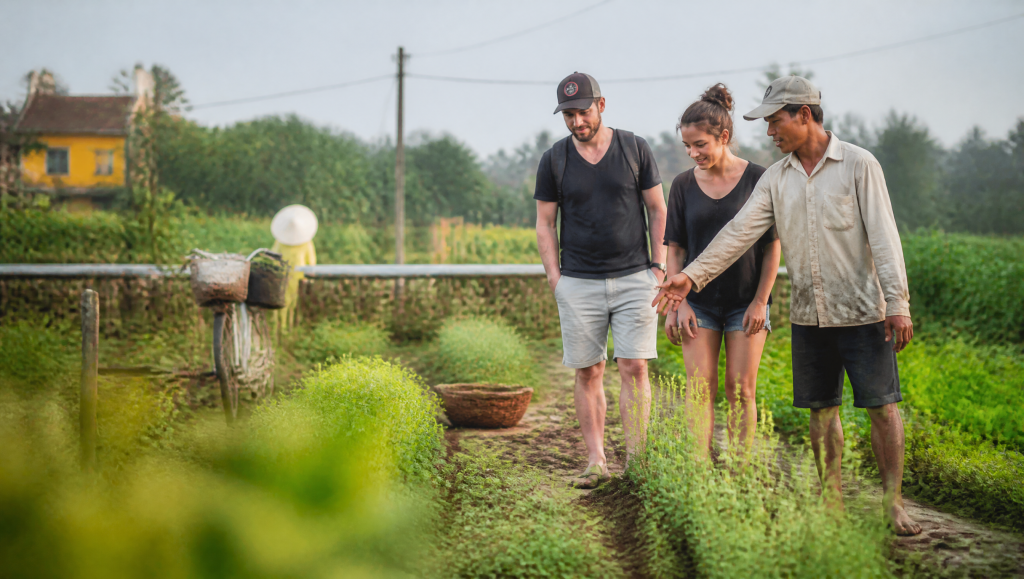
Tra Que Vegetable Village is one of the easiest ways to answer the classic Hoi An question: what can I do beyond the Ancient Town? Just a short ride from the center, it opens into a slower world of Hoi An countryside paths, organic farming, and real village life. For travelers who want a Vietnam village experience that feels local, calm, and still easy to fit into a half day, this is the kind of escape that delivers.
What makes Tra Que Vegetable Village worth your time is not a big attraction checklist, but the feeling of being inside a working farm where people still grow herbs and vegetables the traditional way. You can watch daily farm routines, join a hands-on visit, or simply bike through the fields and take it in at your own pace. This guide shows what Tra Que is, why it matters, and how to visit it well, so you can plan a countryside stop that actually feels rewarding.
| Tiêu chí | Self-visit | Guided visit | Best for |
|---|---|---|---|
| Time needed | 1 to 2 hours | 2 to 4 hours | Short Hoi An day trip |
| Experience style | Quiet and flexible | Hands-on and explained | Solo travelers, couples, families |
Tra Que works best when you treat it as more than a photo stop. A simple plan is to bike in the morning, spend time in the fields, then pair it with lunch or a cooking class nearby. If you want a smoother countryside day and a few curated Vietnam experiences, you can also explore all Vietnam Crazy Tour options or start from the Vietnam Crazy Tour homepage for trip ideas that fit different travel styles.
Featured snippet: Tra Que Vegetable Village is a peaceful organic farming village near Hoi An where visitors can see traditional vegetable growing, cycle through the countryside, and join local-style activities. It is best for travelers who want an authentic, low-key Vietnam village experience just outside the Ancient Town.
In practical terms, Tra Que is best for people who want one easy win outside the city. If you are traveling as a couple, solo, or with family, the village gives you an authentic break without the pressure of a full-day tour. That is why Tra Que Vegetable Village keeps showing up in good Hoi An travel plans.

What Is Tra Que Vegetable Village and Why Is It Famous?
Tra Que Vegetable Village is a small working farm area just outside Hoi An where visitors come to see how local vegetables and herbs are grown in a clean, traditional way. If you want a break from the old town crowds and want something real, green, and hands-on, this place gives you that countryside reset fast.
What makes Tra Que Vegetable Village famous is not just the scenery, but the farming routine behind it. Farmers still use lagoon algae and organic methods instead of harsh chemicals, so the whole area feels different from a normal sightseeing stop. For many travelers, that mix of culture, food, and daily local life is the real win.
Featured insight: Tra Que is not a show farm. It is a living agricultural community where visitors can watch, learn, and sometimes join simple farm tasks. That is why it works so well for first-time visitors, couples, and solo travelers who want something local without feeling staged.
| Tiêu chí | Tra Que Village | Hoi An Old Town | Why it matters |
|---|---|---|---|
| Vibe | Quiet, green, rural | Busy, historic, touristy | Good for a slower half-day |
| Main draw | Organic farming culture | Lamps, shops, heritage streets | Better if you want local authenticity |
In practical terms, this is the kind of place where you might see farmers watering rows of basil, mint, and leafy greens while a small group cycles past in the background. If you are building a Hoi An plan that feels more adventurous, it pairs well with countryside stops and even a Vietnam tour collection if you want more local experiences in one trip.
Soft CTA: If your goal is to see the real side of Hoi An, not just the postcard side, Tra Que belongs on your shortlist. It is simple, authentic, and easy to fit into a morning or afternoon.
Why it is part of Hoi An’s identity is easy to understand once you look at the farming rhythm. This village helps supply local kitchens, supports community livelihoods, and keeps old agricultural knowledge alive. That is a big reason travelers remember it more than many other rural stops.
Mini insight: the best visits are usually early, when the fields are cooler and the work feels active. You get better photos, more movement, and a stronger sense of daily life before the heat builds up.
For readers who like local, human-centered travel, Tra Que Vegetable Village is one of the cleanest examples in central Vietnam. It is not about checking a box. It is about seeing how food, land, and community still connect in a very real way, and that is exactly why it stays famous.
Strong CTA: If you want a deeper Hoi An day with genuine countryside flavor, start with Tra Que and build from there. It is the kind of stop that upgrades the whole trip.

How a Visit to Tra Que Vegetable Village Works
Tra Que Vegetable Village is one of the easiest ways to step out of Hoi An and into a real working farm. For travelers who want something local, active, and not overly polished, the visit usually runs on a simple rhythm: arrive, walk the gardens, join a farming task, then finish with a fresh meal. It is a small reset from the old town, and that contrast is exactly the appeal.
If you are planning a half-day escape, this is the part that helps you know what to expect. A visit to Tra Que Vegetable Village is not about rushing through sights. It is about moving slowly, touching the soil, and understanding how herbs and vegetables are grown the local way. That is why solo travelers, couples, and families often enjoy it without needing a long schedule or special experience.
Featured snippet: A typical visit to Tra Que Vegetable Village includes a garden walk, hands-on farm work, and a local lunch. Most travelers spend a few hours learning how herbs are planted, watered, and harvested before tasting simple dishes made with fresh produce from the village.
The visit flow is usually easy to follow. First, you walk through the vegetable beds and see how the gardens are organized. Then comes the hands-on part, where a local guide or farmer shows you basic tasks such as raking soil, planting seedlings, watering rows, or harvesting herbs. After that, many visits end with a lunch or cooking session that turns the whole experience into a full countryside meal.
What makes this work so well for adventurous travelers is the balance between watching and doing. You do not just stand around taking photos. You get involved, even if only for a short time, and that creates a stronger memory. If you want more Vietnam trip ideas that keep the local feel alive, you can also browse all Vietnam Crazy Tour options for other culture-first experiences.
| Tiêu chí | Quick visit | Hands-on tour | Cooking experience |
|---|---|---|---|
| Best for | Travelers short on time | Guests who want farm activities | Food-focused visitors |
| Time needed | 1 to 2 hours | 2 to 3 hours | 3 to 4 hours |
The key experiences are planting, watering, harvesting, and cooking with herbs. Each one is simple, but together they show how much care goes into local farming in Hoi An. A good mini insight here is that the village feels most rewarding when you slow down and actually try the tools, even if your farming skills are zero. The best visits are not about perfection, they are about participation.
Planting is often the first surprise because it is easier than most people expect. Watering feels playful and practical at the same time, especially for couples or families traveling with kids. Harvesting gives you the clearest sense of where your lunch comes from, and cooking ties everything together with herbs like basil, mint, or coriander. If this kind of experience is your style, a soft next step is to plan it alongside Vietnam Crazy Tour for a fuller local journey in central Vietnam.
For many visitors, the real value is not the checklist of activities. It is the feeling that you have spent a few hours inside a living countryside system, not a staged attraction. That is why Tra Que works so well for first-time travelers who want something authentic but still easy to enjoy.
Top Reasons to Visit Tra Que Vegetable Village
Tra Que Vegetable Village is worth visiting if you want a quiet break from Hoi An and a more local side of central Vietnam. The appeal is simple: fresh air, working farm scenery, and a chance to see how herbs and vegetables are grown with traditional methods. For travelers who feel overloaded by crowded streets, this is the reset button.
It also fits the kind of trip where you want more than a photo stop. You can walk beside planting beds, watch farmers at work, and understand how daily village life still moves at a slower rhythm. If you like rural experiences that feel real instead of staged, this place delivers that calm, grounded energy.
Featured snippet: Tra Que Vegetable Village is best known for its peaceful countryside setting, organic farming culture, and hands-on visitor experiences. It is a strong choice for travelers who want local scenery, light cultural learning, and a short half-day escape from Hoi An.
| Tiêu chí | Quiet scenery | Cultural immersion | Hands-on learning |
|---|---|---|---|
| Best for | Travelers needing a calm rural escape | Visitors curious about village life | Families, couples, and slow travelers |
| Why it works | Open fields and low noise | Real farming routines and local rhythm | You can try simple farm tasks and learn by doing |
One practical win is that Tra Que is easy to combine with a cycling route or a countryside half-day plan, especially if you already want to explore the area beyond the old town. For an easy planning base, check Vietnam Crazy Tour for more local trip ideas that keep the pace relaxed but still adventurous. A couple can enjoy the scenery, while a solo traveler gets space to wander without pressure.
The best use cases are straightforward. Families like the open space and low-stress walking. Couples get a peaceful, romantic detour. Photographers get clean green lines, farmers in action, and authentic daylight scenes. Slow travelers benefit most because the village rewards attention, not speed. If you prefer meaningful stops over checklist tourism, Tra Que Vegetable Village belongs on your Hoi An plan.
For travelers building a wider Vietnam route, it can also pair nicely with other offbeat local experiences. If your style leans toward cultural depth, browse the full Vietnam tours list and choose something that matches your pace. The village is not about big thrills. It is about small, real moments that feel distinctly Vietnamese and surprisingly memorable.
Strong CTA: If you want a cleaner, calmer, and more authentic Hoi An stop, add Tra Que Vegetable Village to your itinerary and make time for a slow visit, not a rushed one. That is where the place works best.
Tra Que Vegetable Village vs Other Hoi An Countryside Experiences
Tra Que Vegetable Village is the easiest countryside choice in Hoi An if you want a short, local, and hands-on experience without spending half a day on transfers. It works especially well for first-time visitors who want greenery, real farm life, and a soft cultural swap from the Old Town heat. The vibe is simple, active, and close enough to fit into a flexible half-day plan.
If your travel style leans adventurous but practical, Tra Que gives you a cleaner decision than many countryside add-ons. You are not just looking at scenery; you are choosing between movement, interaction, and time efficiency. That matters for couples, families, and solo travelers who want local texture without a long logistics headache. For a broader trip plan, you can also explore Vietnam countryside travel ideas and compare what fits your rhythm.
Featured snippet: Tra Que Vegetable Village is best for travelers who want a close, authentic, and low-stress countryside experience in Hoi An. Compared with boat rides, rice fields, and craft villages, it offers more direct local interaction, easier access, and a stronger food-and-farming focus.
| Tiêu chí | Tra Que Vegetable Village | Boat rides and rice fields | Craft villages |
|---|---|---|---|
| Best for | Hands-on farm life and fresh food | Scenic slow travel and photos | Culture, making, and souvenirs |
| Main trade-off | Less dramatic scenery | Less interaction with locals | Can feel more commercial |
Compared with boat rides, Tra Que is more grounded and interactive. A boat trip gives you calm water, light adventure, and strong photo moments, while rice fields deliver wide-open views and a slower pace. But Tra Que wins when you want to see how locals actually work, especially if you enjoy learning by doing rather than just looking. That is why many travelers pair it with a local-style day tour list instead of treating it as a stand-alone attraction.
The limitation is simple: if you want big wow landscapes, Tra Que may feel smaller than rice terraces or river scenery. It is also less about entertainment and more about observation, farming, and tasting the local rhythm. Mini insight: travelers who expect a show may leave underwhelmed, but travelers who want authenticity usually rate it highly.
If you prefer craft villages, you will get a different kind of satisfaction. Pottery and woodwork spots are better for watching artisans shape something physical, while Tra Que is stronger for food lovers and people curious about organic farming. For solo travelers and couples, the village feels easy and calm; for families, it works well because the walkability is gentle and the learning is visual. If your group wants deeper cultural flavor, check out Vietnam culture-based tours for a more thematic side trip.
How to choose fast: pick Tra Que if you want farm-to-table energy, pick rice fields if you want open scenery, pick boat rides if you want movement on water, and pick craft villages if you want hands-on art. Strong CTA: if you only have one countryside slot in Hoi An, Tra Que is the safest all-rounder because it delivers local contact, easy access, and a genuinely Vietnamese experience without overcomplicating your day.
Tips, Common Mistakes, FAQ, and Final Travel CTA
Tra Que Vegetable Village is best enjoyed when you slow down, arrive early, and let the farm rhythm set the pace. This is not a place for a rushed checklist. Travelers who walk, bike, or join a small guided visit usually get the real experience: fresh herb beds, local farming routines, and quiet countryside air just outside Hoi An.
If you want the best version of the village, plan for soft light, cooler weather, and time to actually stop and observe. A quick in-and-out visit can feel flat, but a careful visit turns into a real local travel highlight. For a deeper Hoi An countryside day, many visitors pair it with Vietnam Crazy Tour travel ideas and keep the rest of the afternoon flexible.
Featured snippet: The best way to visit Tra Que Vegetable Village is early in the morning or late afternoon, with at least one to two hours set aside. Avoid rushing, skip the hottest midday hours, and consider a guide or cooking class if you want context, better photos, and a more authentic countryside experience.
| Tip | Best Choice | Why It Works | Traveler Fit |
|---|---|---|---|
| Visit time | Early morning or late afternoon | Cooler weather and active farm work | Solo, couples, families |
| Transport | Bicycle or Grab bike | Easy, local, and flexible | Adventurous travelers |
Mistakes to avoid: going at the wrong time, skipping a guide, or rushing the experience. The wrong time usually means midday heat, which makes the village less pleasant and the photos harsh. Skipping a guide can leave you staring at vegetables without understanding the farming system, while rushing means you miss the best part, which is watching daily life unfold naturally.
A better approach is simple: ride in slowly, spend time near the herb beds, and ask questions if a local guide is available. If you want a more structured day, check all Vietnam Crazy Tour options for ideas that can fit into a Hoi An countryside route without making the day feel overplanned.
Essential FAQs
Best time to visit: early morning is ideal for cooler air, active work, and softer light. Late afternoon also works well if you want a quieter, more relaxed atmosphere.
Entrance fees: some visitors report a small entrance fee, while others do not pay anything. Keep a little cash ready just in case local policies change.
How long to stay: most travelers need 1 to 2 hours, and longer if you add a cooking class or a slow bike ride through the countryside.
How to get there: the easiest options are bicycle, motorbike, or Grab bike from Hoi An. Cars can struggle in narrow lanes, so a smaller vehicle is usually smarter.
Mini insight: if you only have one free morning in Hoi An, Tra Que works best as a half-day countryside stop rather than a full-day attraction. That is why it feels so good for solo travelers, couples, and families who want something local without a huge time commitment.
For travelers who want a soft, meaningful add-on, this is also a smart place to combine with food experiences, farm learning, or nearby stops in Hoi An. It gives your trip a local layer that feels real, not packaged.
When you are ready to build a bigger Vietnam adventure, start with the countryside calm here and then move on to more active routes across the country. Browse Vietnam Crazy Tour homebase for more trip inspiration, or lock in a deeper local experience while the energy is still fresh.
Final CTA: If Tra Que Vegetable Village is on your Hoi An list, do not treat it like a quick photo stop. Go early, move slowly, and give yourself time to enjoy the farming atmosphere, the fresh produce, and the real village rhythm. That is the difference between a basic visit and a memorable local travel moment.
