
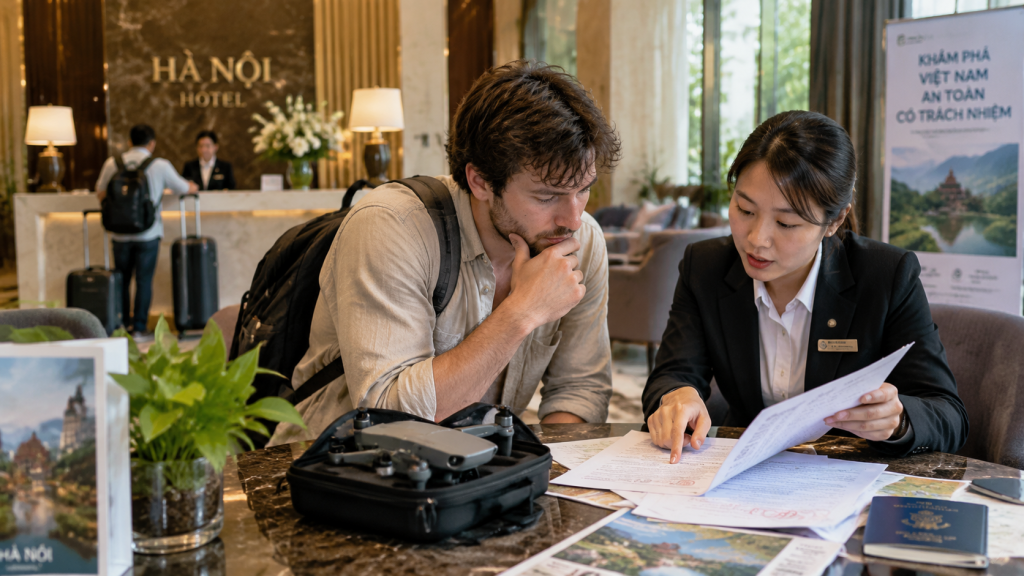
Drone regulations in Vietnam can turn a dream shot into a real headache fast. If you are planning aerial footage over Hanoi, Ha Long Bay, Da Nang, or Ho Chi Minh City, the big question is not just where to fly, but whether you can legally take off at all. For solo travelers, couples, and families chasing wild local views, the smartest move is to understand the rules before the drone leaves your bag.
This guide gives you the quick legal picture, the permit basics, and the practical steps that save time at the airport and in the field. Think of it as your pre-flight checklist for drone flight rules in Vietnam, with clear examples of risky zones, approval needs, and simple safety habits. If you want a smoother trip and fewer surprises, Vietnam crazy tour style planning starts with staying legal, calm, and prepared.
| Tiêu chí | City Areas | Nature Spots | Best Move |
|---|---|---|---|
| Permission risk | High | Lower but still checked | Confirm rules before flying |
| Traveler impact | Fines or confiscation | Safer with approval | Use local guidance or permit support |
In plain terms, drone regulations in Vietnam are strict because authorities treat airspace control seriously. A small drone is still a drone, and size does not remove the permit requirement. One useful insight: many travelers assume scenic places are automatically safe, but popular landscapes can sit near restricted zones. That is why checking ahead matters more than carrying a lightweight camera drone. If your trip includes offbeat experiences, you can also browse Vietnam tour options that help you focus on the view, not the paperwork. The short version: legal first, epic footage second.
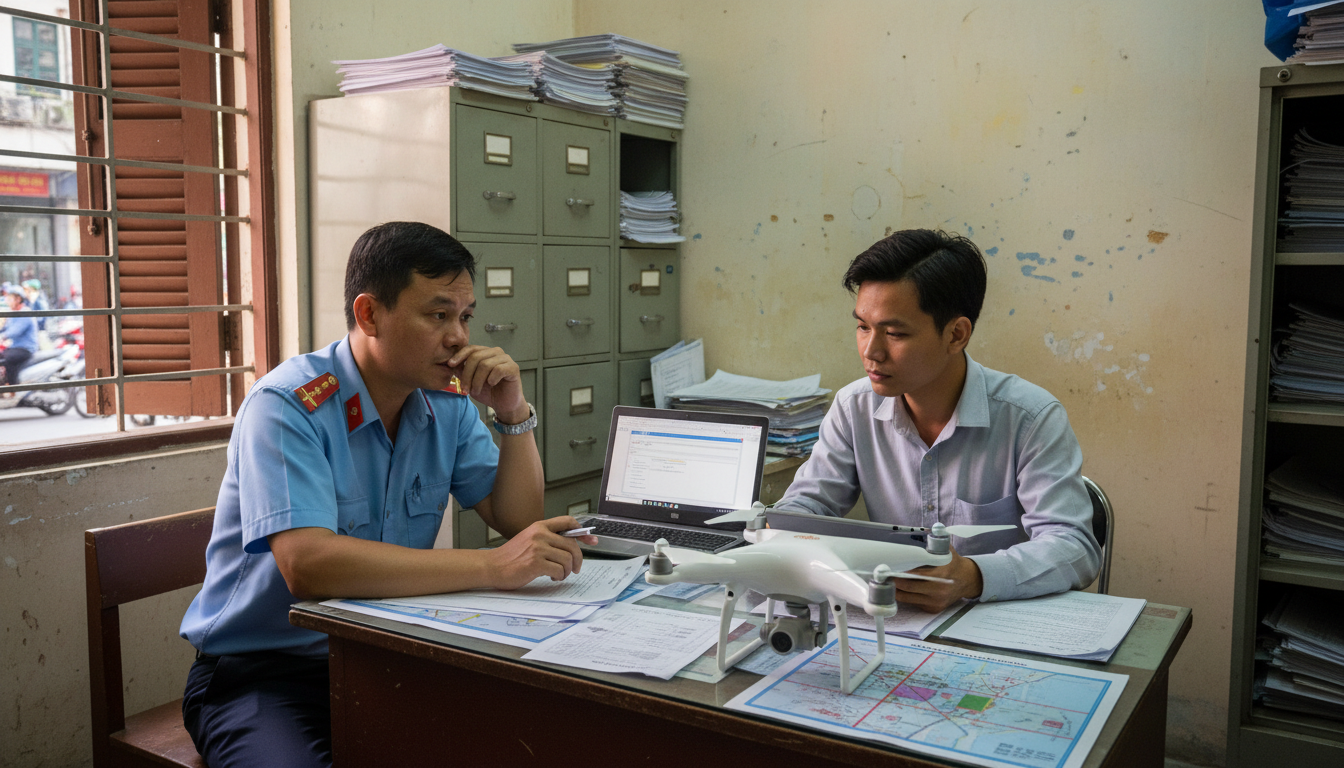
Overview of Drone Regulations in Vietnam
Drone regulations in Vietnam are not a casual travel detail, they are a legal gate you need to understand before packing your gear. For foreign visitors who want clean aerial shots of bays, rice terraces, or wild coastline, the main pain point is simple: a drone that is fine at home can still be restricted on arrival here.
In practice, the rules cover permission, flight zones, customs checks, and who can approve a takeoff. That is why travelers planning an adventurous route through remote landscapes should read this early, because flying first and asking later is the fastest way to lose time, money, and possibly the drone itself.
Featured snippet: Drone regulations in Vietnam require prior approval before flight, even for tourist use. The rules typically cover where you can fly, how the drone enters the country, and which authority must approve the operation. Sensitive areas, urban centers, airports, and border zones are tightly controlled.
What these rules actually cover is broader than many travelers expect. They do not only focus on the drone model or battery size. They also control the purpose of the flight, the exact location, and sometimes the timing. If your plan includes places like Ha Giang, Ninh Binh, or the coast, think of the permit as part of trip logistics, not an optional extra.
A simple breakdown helps:
| Criteria | Allowed | Restricted | Risk level |
|---|---|---|---|
| Tourist drone use | Only with approval | Flying on arrival without notice | High |
| Flight locations | Selected rural zones | Airports, cities, border areas | Very high |
Why Vietnam keeps the rules strict comes down to national security, airspace control, and public safety. The key authority is usually tied to defense oversight, while local enforcement can involve police, airport staff, or provincial officials depending on where you are. That means there is no single relaxed zone just because the scenery looks empty.
Mini insight: the most beautiful local places are often the most sensitive from a drone perspective, because quiet valleys, coastlines, and frontier roads can sit near controlled airspace. If you want to keep the adventure smooth, use a local operator or plan your route with help from Vietnam Crazy Tour experts who understand how travel logistics work on the ground.
For travelers building a custom itinerary, the smartest move is to treat drone approval like transport or hotel booking: confirm it early, then shape the rest of the day around it. If you are comparing experiences, check all Vietnam tours for routes that already suit photo-friendly, low-stress travel without forcing you into legal grey zones.
Soft CTA: if you want Vietnam’s wildest views without the permit headache, choose a route that is designed around local conditions, not just social-media shots.
Strong CTA: before you fly, verify the permit path, flight area, and customs rules, then book support that keeps your trip legal, local, and camera-ready from day one.
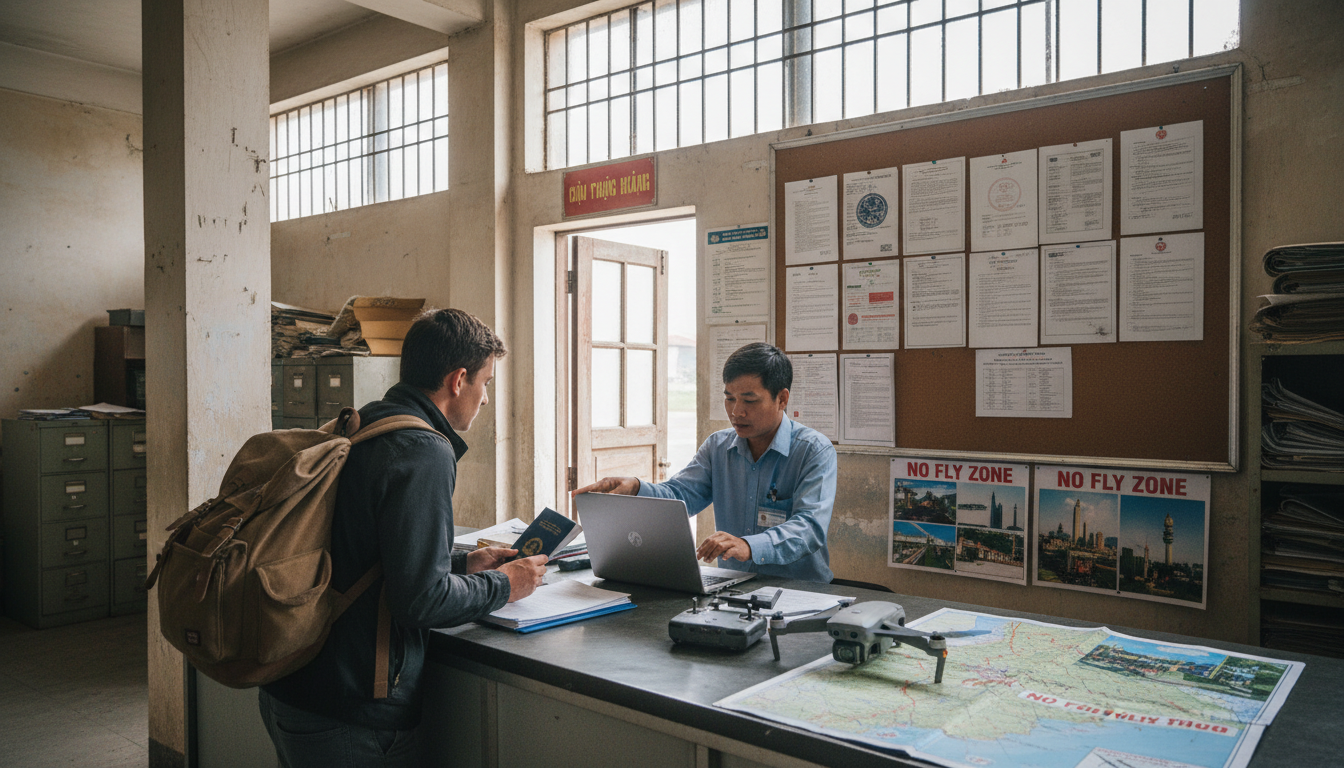
How to Legally Fly a Drone in Vietnam
Drone regulations in Vietnam are strict, and the biggest mistake travelers make is assuming a small camera drone is automatically allowed. If you want smooth aerial shots of rice terraces, bays, or coastal roads, the safe route is simple: get permission first, check your route, and keep your paperwork ready before takeoff.
For foreign tourists, solo travelers, couples, and families on an adventurous trip, the process is less about flying skills and more about approvals. Vietnam treats drone use as a controlled activity, so the smartest move is to plan early, use local support when needed, and avoid guessing at the airport or on the beach.
Featured snippet: To legally fly a drone in Vietnam, you usually need prior flight approval, clear flight details, and documents submitted before arrival. Expect review time, possible location limits, and strict no-fly zones around military sites, airports, and government buildings. Without approval, even recreational flights can lead to fines or confiscation.
The practical process is very straightforward on paper, but not always fast in real life.
Step-by-step permit flow:
- Prepare drone details, pilot info, and exact flight locations
- Submit the request well before travel dates
- Wait for approval from the relevant Vietnamese authority
- Carry the approval letter with you during the trip
- Fly only in the approved area and during the approved window
Mini insight: many travelers forget that a permit for one site does not cover the next one. If you move from Ninh Binh to Ha Giang, treat it as a new plan, not a free pass. That is why agencies handling Vietnam adventure tours often coordinate filming support early, especially when the route includes remote landscapes.
Required documents usually include a passport copy, drone specifications, planned dates, exact coordinates or location names, and the purpose of filming. In some cases, authorities may also ask for a local contact or supporting itinerary. Keep everything consistent, because mismatched dates or locations can delay the file.
Lead time matters. A realistic timeline is at least 2 to 4 weeks before departure, and longer if your route crosses sensitive areas or popular tourist zones. For example, a couple planning sunrise shots over a bay should not wait until arrival. A family traveling from Hanoi to the north should map each stop early and avoid assuming city rules are the same as rural rules.
| Tiêu chí | Fast track | Safer option | Best for |
|---|---|---|---|
| Lead time | About 2 weeks | 3 to 6 weeks | Most travelers |
| Risk level | Higher | Lower with local help | Remote or sensitive areas |
If you are filming for travel content, the cleanest choice is to pair your drone plan with a local operator or travel team that already knows the approval path. For travelers who want a fully organized experience, Vietnam Crazy Tour can help you build an itinerary that respects local rules and still delivers epic outdoor moments.
Strong closing rule: do not fly first and ask later. In Vietnam, legal drone use is all about preparation, precision, and respect for restricted airspace. If your paperwork is complete, your route is approved, and your timing is realistic, you can enjoy the shoot with far less stress and far better results.
Where You Can and Cannot Fly a Drone in Vietnam
Drone regulations in Vietnam are strict, and that matters most when you are chasing those wild, cinematic shots across bays, rice terraces, and chaotic city streets. If you want smooth travel, the smart move is to know where a drone is likely to cause trouble before you even unpack the battery. That saves time, stress, and awkward conversations with local authorities.
For adventurous travelers, solo creators, couples, and families, the rule is simple: not every beautiful place is flyable. Vietnam is incredible from the air, but the country treats airspace with caution. A little planning helps you keep the trip fun, legal, and far more rewarding than a rushed takeoff in the wrong spot.
Featured snippet: In Vietnam, drones are generally not allowed near airports, military sites, government buildings, embassies, border areas, and many crowded urban centers. Even scenic tourist spots may still require permission. Safer choices are remote rural landscapes, less populated coastal zones, and approved filming locations with local guidance.
Common no-fly zones are the places that look tempting on camera but are risky in real life. Think airports, army facilities, ministries, embassies, border checkpoints, and dense city cores like Hanoi or Ho Chi Minh City. A tourist may see an empty square or a quiet street, but the airspace can still be restricted. This is why drone regulations in Vietnam are more about location than appearance.
As a quick decision guide, use this breakdown:
| Tiêu chí | Tourists | Creators | Commercial operators |
|---|---|---|---|
| Risk level | High in cities and sensitive sites | High without pre-checks | Lower with permits and local coordination |
| Best action | Check location before every flight | Use approved scenery only | Work with a local fixer or licensed partner |
There is a practical middle ground for travelers who want epic visuals without legal drama. Remote mountains, rural valleys, selected beaches, and some island or delta areas can be more workable, especially when the flight plan is coordinated in advance. For a smoother experience, it helps to pair your trip with a local expert from Vietnam Crazy Tour, because local knowledge often saves more time than any drone app.
Typical flight scenarios differ a lot. Tourists usually want a quick scenic clip, but the safest approach is to treat each stop as a separate case. Creators often need sunrise shots, yet sunrise does not override restrictions. Commercial operators need the most structure: exact coordinates, dates, and purpose matter. If you are planning an offbeat route, especially a culture-heavy or local-style journey, check the broader trip context on all Vietnam tours so the route and the airspace both make sense.
Strong CTA: if your Vietnam plan includes drone footage, do not guess. Choose the right landscapes, confirm the local rules, and travel with a plan that protects your gear and your schedule. The best content comes from the right place, at the right time, with zero unnecessary risk.
Drone Regulations in Vietnam vs. Other Travel Destinations
Drone regulations in Vietnam are much stricter than most travelers expect, especially if you are planning a scenic, adventurous trip with a drone in your backpack. The main pain point is simple: what is easy in one country can become a legal headache in another, and Vietnam sits on the careful side of that line. For foreign visitors, the safest move is to compare rules before you fly, not after customs or security asks questions.
In practice, Vietnam asks for prior approval, while many tourists are used to more flexible beach or island destinations. That difference matters if you want smooth filming, fewer delays, and zero risk of losing your gear. If you are building a Vietnam route that mixes nature, city life, and local experiences, it helps to explore Vietnam tour options early so your travel plan matches the places where drone use is realistic and legal.
Featured snippet: Vietnam is one of the more regulated drone destinations in Southeast Asia. Travelers usually need prior permission, and city, military, airport, and border areas are highly restricted. Compare the rules before packing your drone, especially if your itinerary includes Hanoi, Ho Chi Minh City, or busy coastal zones.
| Criteria | Vietnam | Thailand, Bali, Singapore | Best choice |
|---|---|---|---|
| Permit need | Usually required before flight | Varies by country and zone | Depends on your route |
| Traveler convenience | Lower for casual users | Often easier for tourism | Thailand or Bali for quick use |
Thailand often feels more flexible for casual travel filming, especially in less crowded areas, but you still need to check local rules near airports, temples, and national parks. Bali can be attractive for content creators because of its beaches and rice terraces, yet some areas are sensitive and enforcement can be uneven, so local guidance still matters. Singapore is the strictest kind of city stop, with tight control around urban, aviation, and protected zones, making spontaneous flying a bad idea for most tourists.
If your goal is pure aerial content, Thailand or selected rural parts of Bali may feel easier. If your goal is a balanced trip with culture, food, and low stress, Vietnam can still be the smarter choice, as long as you respect the permit process or leave the drone at home. For travelers who want a local, adventurous itinerary without legal surprises, plan with a local Vietnam expert so the route fits the rules, not the other way around.
The safest decision usually comes down to three simple questions: where will you fly, how often will you move, and do you want to handle paperwork abroad. If the answer is no, choose a destination or itinerary where the drone is optional, not essential. For families, couples, and solo travelers, that often means prioritizing landscapes you can enjoy on the ground first, then deciding on aerial shots only when the location and permissions clearly allow it.
Common Mistakes, FAQ, and Final Travel Tips
Drone regulations in Vietnam can feel simple on paper, then turn messy the moment you arrive with your gear. The biggest problem is not the drone itself, but the missing permit, the wrong flight zone, or a casual launch near sensitive places. If you want clean footage and zero drama, you need a plan that matches the law, the terrain, and the local mood.
For adventurous travelers, solo explorers, couples, and families chasing remote Vietnam, the smartest move is to treat flying as a permit-first activity. That means checking your route before departure, keeping documents ready, and respecting restricted spaces even when a view looks empty. When in doubt, use a local guide or operator who already knows the legal side, the timing, and the real-world risks.
Featured tip: The fastest way to lose your drone in Vietnam is to fly first and ask later. Authorities can deny permits, stop a flight, or confiscate equipment when the location, paperwork, or timing does not match local rules. In practice, the safest strategy is simple: prepare documents early, avoid airports and official buildings, and never assume a quiet countryside scene is automatically allowed.
Mistakes that cause permits to be denied or drones to be seized
The most common error is submitting vague flight details. Authorities want clear dates, exact locations, drone model, and purpose. If your itinerary changes after approval, the permit may no longer be valid. Another frequent issue is flying near government buildings, border areas, or crowded city zones, where drone use is heavily restricted even when the area looks tourist-friendly.
Smart travelers also avoid these mistakes:
- carrying the drone without a printed permit copy
- launching from beaches near airports or military areas
- assuming small drones have fewer rules
- using hotel rooftops without local consent
- ignoring customs questions about batteries and purpose
A practical mini insight: the more local and remote the trip feels, the more important it is to confirm access. In many cases, the best way to stay compliant is to pair your trip with a local support team, such as Vietnam Crazy Tour, especially when your route includes sensitive regions or hard-to-reach landscapes.
| Criterion | Low Risk | Higher Risk | Best Move |
|---|---|---|---|
| Location | Open rural area | City, airport, border zone | Verify before takeoff |
| Documents | Permit ready | No permit or unclear route | Carry copies on phone and paper |
FAQ: permits, insurance, flying near attractions, and final CTA
Do I need a permit? Yes, if you plan to fly legally. For drone regulations in Vietnam, the permit is the key document, and it should be arranged before arrival whenever possible.
Is insurance required? It is not always the first thing officers ask about, but liability coverage is a smart move for any traveler bringing expensive gear into a new country. It helps protect you if damage, loss, or an incident happens during transport or filming.
Can I fly near major attractions? Sometimes the answer is no, even if the site is famous and open-air. Around heritage zones, crowded tourist spots, and urban landmarks, local restrictions can be much tighter than expected. If you want a smoother route, choose places with fewer people, more space, and local guidance.
If your goal is a legal, adventurous, and low-stress trip, the best final step is simple: build your itinerary first, then decide whether a drone is truly worth carrying. For travelers who want authentic local access without guesswork, see all Vietnam tours and match your route with the right support before you fly.
Final tip: when your trip includes remote mountains, hidden villages, or culturally sensitive areas, keep the drone as a bonus, not the plan. That mindset protects your gear, saves time at checkpoints, and lets you focus on the real win, which is experiencing Vietnam the right way, with full respect for the places and people on the ground.