
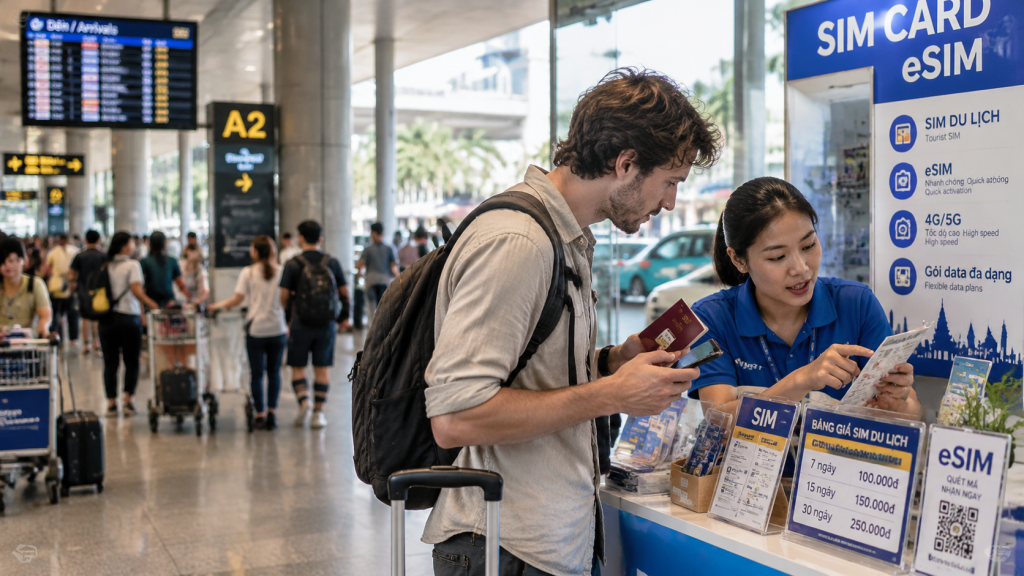
Vietnam SIM cards are the fastest way to stay online in Vietnam without getting hit by crazy roaming fees or gambling on weak airport Wi-Fi. For foreign travelers, a travel SIM, prepaid SIM, mobile data, or eSIM is usually the cleanest fix the moment the plane lands. You get maps, chats, ride apps, and backup calling without the stress.
If you are planning a beach hop, a Hanoi food crawl, or a business week in Ho Chi Minh City, Vietnam SIM cards keep the trip smooth from day one. A simple setup can save you time at the airport and help you move like a local, especially when your hotel check-in, Grab ride, or family message cannot wait. For a quick trip plan, you can also check Vietnam Crazy Tour for ideas that match real travel flow.
Featured snippet: Vietnam SIM cards are the easiest way to get reliable internet, local calls, and better coverage in Vietnam. Travelers can choose a physical SIM or eSIM depending on phone compatibility, trip length, and whether they need a local number. The best option depends on speed, convenience, and how much data you use.
In practice, the choice is simple. If your phone supports eSIM, you can activate before departure and walk off the plane connected. If not, a physical card or airport pickup works fine, especially for couples, solo travelers, and families who want one less thing to worry about. Later in the guide, you can compare plans and even pair your arrival setup with all Vietnam tours if you want to build the rest of the trip around your connection already sorted.
| Tiêu chí | eSIM | Physical SIM | Airport Wi-Fi |
|---|---|---|---|
| Setup speed | Activate before landing | Buy after arrival | Immediate, but unstable |
| Best for | Short trips and convenience | Longer stays and local number | Emergency only |
If you want a smoother arrival and less time hunting for a kiosk, start with the option that fits your phone and trip style, then upgrade later if needed. That is the smart Vietnam move, and it keeps your first hours in the country calm, connected, and ready for the real adventure.
What Vietnam SIM Cards Are and Why They Matter
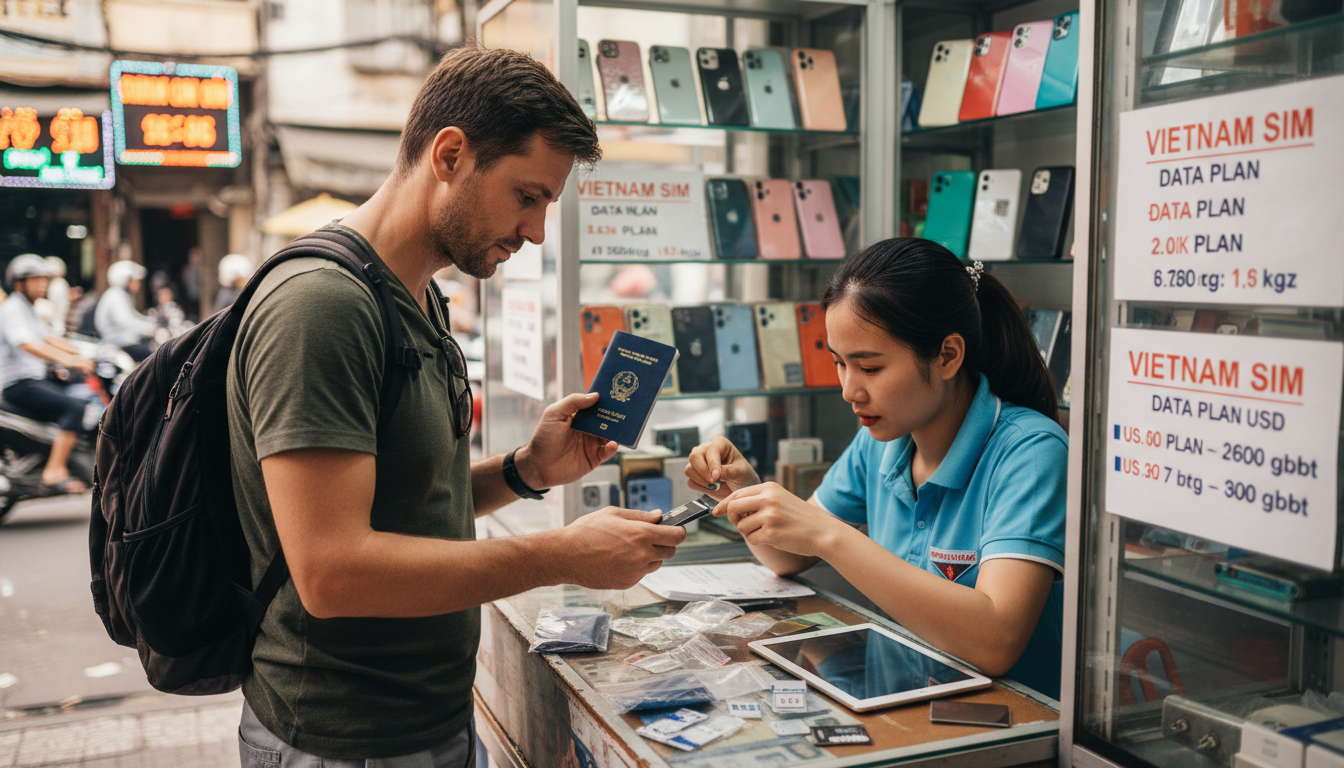
Vietnam SIM cards are the fastest way to get real mobile data and, in many cases, a local phone number the moment you arrive. For first-time visitors, that means no hunting for weak Wi-Fi in airports, cafés, or hotel lobbies. With the right SIM, your phone becomes a travel tool, ready for maps, ride-hailing, translation, and messages across the country.
If you are landing for a short adventure or settling in for a longer stay, a Vietnam SIM card helps you stay flexible from day one. It is especially useful for solo travelers, couples, and families who move between cities, book transport on the go, and want a smoother arrival. Many visitors pair this with practical planning from Vietnam Crazy Tour when they want local experiences without losing connection on the road.
Featured snippet: A Vietnam SIM card gives travelers mobile data, and often a local number, so they can use maps, rides, messaging apps, and booking tools anywhere in Vietnam. It matters because public Wi-Fi is not always reliable, especially when you are moving through airports, old quarters, beaches, or mountain roads.
A Vietnam SIM card is a small chip or eSIM plan that connects your unlocked phone to a Vietnamese mobile network such as Viettel, Mobifone, or Vinaphone. Once activated, it works like your regular mobile service, but with local rates and local coverage. If you are comparing travel styles, a quick look at all tours of Vietnam Crazy Tour can also help you plan routes where strong mobile data is a real advantage.
| Tiêu chí | Vietnam SIM card | Hotel Wi-Fi | eSIM |
|---|---|---|---|
| Best use | Everyday travel and navigation | Only when you stay in one place | Fast setup before landing |
| Local number | Usually yes | No | Usually no |
Why it matters in real life is simple: a local SIM lets you order a Grab ride after a late flight, check directions in a busy market, or confirm a homestay pickup in a remote area. Travelers who want deeper local movement often benefit from exploring cultural routes, including ghost and belief experiences, where signal and quick communication can save time.
For most visitors, the smart move is to get connected first, then enjoy the trip with less friction. That is the difference between spending your first hours solving phone problems and spending them eating, exploring, and moving like a local.
Soft tip: if you want a smoother arrival, choose your data setup before you fly, then focus on the fun part when you land. Strong connection is not a luxury in Vietnam. It is the small detail that keeps the whole trip moving.
For long days on the road, a Vietnam SIM card is not just about internet access. It supports the way you travel, the places you reach, and how confidently you move through Vietnam without depending on patchy public networks.
Bottom line: if you want real mobility, better coordination, and fewer delays, a Vietnam SIM card is one of the first things worth sorting out. It is a small purchase that quickly pays off in time, convenience, and peace of mind.

How to Get and Activate Vietnam SIM Cards
Vietnam SIM cards are the fastest way to stay online the moment you land, especially if you want Google Maps, Grab, and translation apps working without hunting for Wi-Fi. The real trick is choosing the right place to buy, then activating it cleanly so you do not waste time at the airport counter or get stuck with a dead connection.
For first-time visitors, the smart move depends on your trip style. If you want pure convenience, buy at the airport. If you want better value and a proper local setup, go to an official mobile shop in the city. Either way, bring your passport, keep your phone unlocked, and expect a quick registration step before the line goes live.
A good rule for travelers: airport SIMs are about speed, city shops are about control, and online orders are about planning ahead. If you are arriving late, tired, or traveling with family, pre-arranging service can save a lot of friction. That is why many readers pair a quick arrival setup with a longer-term plan later through Vietnam Crazy Tour style travel planning, especially when the itinerary is packed.
Where to buy depends on your risk tolerance and how soon you need data. Airport kiosks are the easiest, but prices can be a little higher and packages vary. Convenience stores are useful for top-ups, not usually the best place for a fresh start. Official mobile shops are the most reliable for registration, while online pre-order platforms are best if you want to land, scan, and go.
For practical comparison, use this simple breakdown:
| Tiêu chí | Airport | Official shop | Online pre-order |
|---|---|---|---|
| Best for | Fast arrival setup | Local plans and support | Planned arrivals |
| Main tradeoff | Higher price | Needs a short detour | Needs advance booking |
Activation is usually straightforward. Staff will scan your passport, register the SIM, insert it into your phone, and test the signal. If it is an eSIM, you will download the profile and switch data lines in your phone settings. The mini insight here: many travelers forget to turn on data roaming or choose the wrong SIM as the default line, so check both settings before walking away.
Top-up is equally simple. You can pay at convenience stores, mobile shops, or by scratch card. Give the staff your number, or enter the code in the dialer, and the balance will refresh. A soft but useful tip: if you are staying more than a few days, add a little extra credit on day one so you are not scrambling when the plan renews.
Real-world setup example: a first-time couple lands in Da Nang, buys a physical SIM at the airport, asks for help with registration, then uses Grab straight to the hotel. The next day, they visit an official store in the city for a better package, keep the airport SIM as backup, and top up once a month without stress. That is the easiest path if you want to travel light and stay connected.
If you are building a bigger Vietnam itinerary, this kind of setup gives you freedom to move between cities, book rides, and message hosts without depending on public Wi-Fi. And if you want local experiences beyond the usual tourist trail, you can still keep your phone sorted while exploring deeper with all Vietnam tours for inspiration around routes, neighborhoods, and offbeat stops.
Strong recommendation: choose one main SIM strategy before arrival, then stick to it for the first 48 hours. That avoids duplicate purchases, wrong top-ups, and confusing number switches. For most travelers, the winning formula is simple: arrive with data, register properly, top up once, and move on with the trip.
Benefits and Best Use Cases for Vietnam SIM Cards
Vietnam SIM cards are one of the easiest ways to stay connected without burning through expensive roaming fees. For travelers landing in busy cities, moving between local neighborhoods, or chasing hidden food streets, a local data plan gives you faster access to maps, ride-hailing apps, translation tools, and hotel check-ins the moment you need them.
For many visitors, the real value is not just cheaper data. It is the freedom to move like a local, especially when your trip includes street food hunts, day trips, or last-minute changes. If you are planning a flexible route, pairing connectivity with all Vietnam crazy tours can make the whole trip smoother from the first airport ride to the last night market stop.
Featured snippet: Vietnam SIM cards are best for travelers who need affordable data, reliable local connectivity, and easy access to navigation and ride-hailing. They are especially useful for tourists, digital nomads, and business travelers who want to move quickly, stay online, and avoid roaming charges in Vietnam.
Main benefits usually come down to four practical wins. Affordable data keeps daily costs low, local connectivity improves signal stability, navigation becomes easier with Google Maps, and ride-hailing apps like Grab work better when you can stay online anywhere. In Vietnam, that matters because street names, traffic patterns, and pickup points can change fast, especially in dense city areas.
| Criteria | Vietnam SIM cards | Hotel Wi-Fi | Roaming |
|---|---|---|---|
| Cost | Low daily spend | Usually free but limited | Often the most expensive |
| Mobility | Works across the city | Only in one place | Works abroad but can be costly |
Popular use cases are easy to spot. Tourists use Vietnam SIM cards to get from airport to hotel, find local cafés, and book scooters or cars without guessing. Digital nomads use them for steady data while working from cafés, co-working spaces, and coastal towns. Business travelers use them to stay reachable, join meetings on the move, and handle quick coordination without depending on unstable public Wi-Fi.
Here is the smart choice rule. If your trip includes multiple cities, late arrivals, local food stops, or a lot of spontaneous movement, a Vietnam SIM card is usually worth it. If you only stay inside one resort with strong Wi-Fi, you may not need much data. But once you start exploring local markets, temples, or offbeat neighborhoods, the SIM becomes the practical travel tool that saves time and stress.
Mini insight: solo travelers and couples often benefit the most because they rely on fast decisions and flexible transport. Families also gain peace of mind when everyone can share locations, contact each other, and check routes in real time. If your trip includes more adventurous local exploring, it is worth planning connectivity before you land so the rest of the journey feels easier and more spontaneous.
If you want a trip that feels smooth from day one, a Vietnam SIM card is the kind of small decision that quietly upgrades everything. You can compare it with airport pickup options, then decide whether you want simple data first or a fuller local setup after arrival. For travelers building a bigger route, it also pairs well with Vietnam crazy tour homepage planning for a more connected trip.
Final takeaway: choose Vietnam SIM cards when you want affordable internet, local mobility, and less friction during travel. They are smartest for visitors who value freedom, quick navigation, and on-the-go booking across Vietnam.
How to Choose the Best Vietnam SIM Cards for Your Trip
Vietnam SIM cards are the easiest way to stay connected if you plan to chase hidden alleyway coffee spots, book Grab rides, and map your next stop on the fly. The best option depends on your device, trip length, and how much data you actually use, not just on the cheapest price.
If you want zero airport stress, compare four choices first: physical SIM, eSIM, pocket Wi-Fi, and roaming. For most foreign travelers, a local SIM or eSIM gives the best mix of speed, value, and flexibility, especially if your trip includes city hopping, motorbike days, or remote coastal routes.
| Tiêu chí | Cột 1 | Cột 2 | Cột 3 |
|---|---|---|---|
| Best for | eSIM | Short trips and instant setup | Great for landing ready |
| Best value | Physical SIM | Longer stays with heavier data use | Usually cheaper than roaming |
| Least practical | Pocket Wi-Fi | Groups that stay together all day | Extra device and battery hassle |
Featured snippet: Choose an eSIM if you want instant data on arrival, a physical SIM if you need a local number and better long-stay value, pocket Wi-Fi if several people will share one connection, and roaming only if convenience matters more than cost. For most travelers, a local plan wins on price and reliability.
Here is the simple breakdown. eSIM is best for a modern phone and a quick trip, while physical SIM cards are better if you want a Vietnamese number for apps, bookings, or long-stay logistics. Pocket Wi-Fi can work for families, but it adds one more device to charge, carry, and remember. Roaming is the easiest to activate, yet it is usually the most expensive option, so it makes sense only for very light data use.
A smart move is to buy a basic data plan first, then upgrade only if your trip gets more active than expected. If you are heading beyond the main cities and want to stay flexible, pair your connectivity plan with a local adventure route from all Vietnam tours or learn more about the brand through Vietnam Crazy Tour experiences. That way, your phone is ready before the road gets wild.
Pick your plan by trip length. For 3 to 7 days, an eSIM or airport SIM is usually enough. For 1 to 3 weeks, a physical SIM with a local number is better. For families or couples sharing hotspots, calculate total data use instead of guessing: maps, ride-hailing, video calls, and social uploads can burn through data fast. If you stream often, choose a larger package; if you mostly use navigation and messaging, a smaller plan is the better buy.
Best rule: the more remote and adventurous your itinerary, the more you should value stable coverage, easy top-ups, and a local number. That is how you avoid dead spots, extra fees, and last-minute stress while still moving fast across Vietnam.
Important Tips, Common Mistakes, FAQ, and CTA
Vietnam SIM cards are the easiest way to stay connected if you are landing for the first time, exploring local neighborhoods, or moving between cities with a packed travel plan. The safest move is simple: choose the right setup before arrival, bring your passport, and avoid wasting airport time on confusing kiosks or overpriced bundles.
For adventurous travelers, the real win is not just data. It is having smooth maps, ride apps, translation, and instant access when you step out into busy streets, night markets, or remote bus stations. If you want a quick landing solution plus a stronger long-stay option, this chapter shows the common traps, the answers people ask most, and the smartest final move.
Common mistakes to avoid when buying Vietnam SIM cards
The biggest mistake is buying the first offer you see after landing. Airport kiosks can be convenient, but prices and data packages vary, and some travelers pay for more than they need. Another common problem is skipping passport rules, then getting stuck when a local store asks for ID during registration.
Here is the practical breakdown:
1. Do not assume every seller is an official carrier partner.
2. Do not buy unlimited data if you mostly use maps, chat, and taxi apps.
3. Do not forget to check if your phone is unlocked or eSIM ready.
4. Do not wait until your battery is low and your airport Wi-Fi is unstable.
A better approach is to plan ahead and keep arrival simple. If you want a secure fallback while you travel, a pre-arranged option from Vietnam Crazy Tour travel help can reduce first-day stress and leave you more energy for the actual trip.
| Criteria | Airport Buy | Pre-order Online | Official Store |
|---|---|---|---|
| Best for | Fast arrival connection | Short trips and easy pickup | Longer stays and local number |
| Main risk | Higher price or upsell | Limited plan choice | Requires passport and time |
FAQ: coverage, passport registration, data speed, dual-SIM phones
Coverage in Vietnam is generally strong in major cities, tourist routes, and most travel hubs, but speed can vary by location and carrier load. Passport registration is normal for official plans, and it is one reason local stores can offer a proper phone number instead of only data.
Dual-SIM phones are ideal because you can keep your home number active while using a local Vietnam data line. Data speed is usually enough for Google Maps, Grab, WhatsApp, and browsing, but heavy video streaming can burn through plans quickly. If you need a simple answer, the best setup for many travelers is one home SIM plus one Vietnam SIM card or eSIM.
Featured snippet: Vietnam SIM cards usually require passport registration for official plans, while eSIMs often give faster setup for travelers who only need data. Coverage is solid in most cities and tourist areas, and dual-SIM phones make it easy to keep your home number while using a local Vietnam connection.
When comparing options, match the plan to your trip style: short stay, long stay, city-hopping, or work plus travel. For more ways to build a smooth arrival plan, explore all Vietnam Crazy Tour options before you lock in the rest of your itinerary.
CTA: choose the best Vietnam SIM card before you land
If you want the easiest first hour in Vietnam, do not wait until you are tired at the airport. Choose your Vietnam SIM cards before you land, decide whether you need data only or a local number, and make sure your phone is unlocked or eSIM compatible. That one small decision can save time, money, and a lot of arrival chaos.
The smartest rule is simple: short trip, go for fast setup; longer stay, go for a real local plan after you arrive; adventurous trip across multiple cities, keep a backup connection ready from the start. If you want a travel day that feels smooth from the first taxi to the first dinner, plan ahead, then move straight into the fun part.
Start with Vietnam travel planning now, then choose the SIM setup that fits your route, your phone, and your travel pace before your plane touches down.