
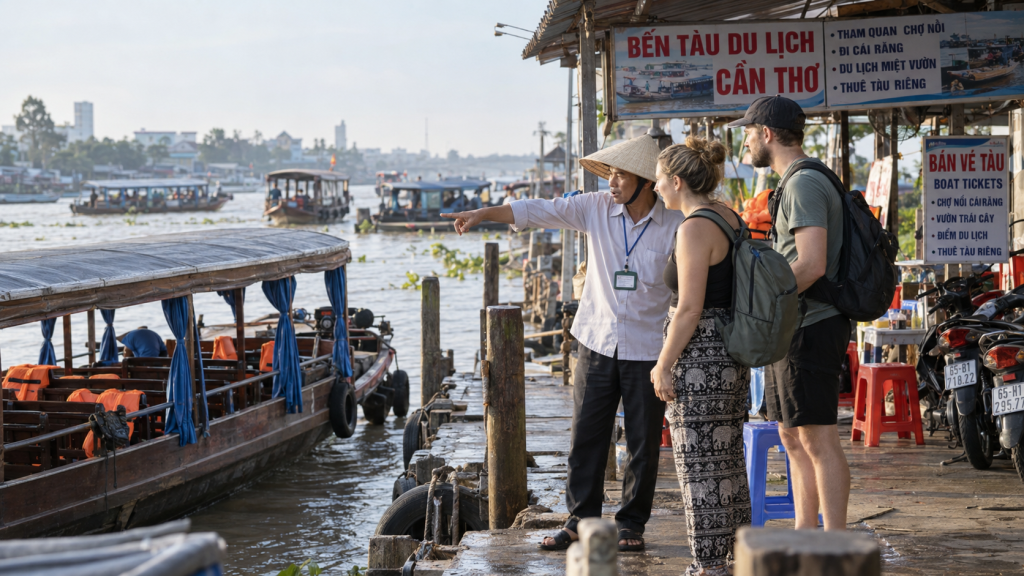
Mekong Delta transportation guide is the fastest way to stop guessing once you land in southern Vietnam. Boats, buses, ferries, and private transfers all work differently here, so first-time visitors can waste time or overpay if they choose blindly. The fix is simple: understand which option matches your route, budget, and comfort level before you move.
If you are chasing a local, adventurous trip, the Delta rewards smart planning. A short bus ride may be best for Can Tho, while a boat transfer can feel magical for travelers who want the waterway experience from the start. For a smoother start, see our all Vietnam tours and compare what fits your pace. Quick insight: the best choice is rarely the fanciest one, it is the one that saves energy for the river, markets, and countryside.
Understanding Mekong Delta Transportation Basics
The mekong delta transportation guide starts with one simple reality: the region is a mix of highways, river crossings, local ferries, and quiet village lanes. If you only plan for city-style travel, you can waste time, miss the best stops, or end up choosing the wrong transfer for your pace and budget.
For first-time visitors, the smartest move is to match transport with your travel style. Solo travelers may want flexible buses or motorbike routes, couples often prefer private transfers, and families usually need smoother logistics. If you want a broader trip plan after reading this, check all Vietnam tour options for ideas that fit your route and time.
In practice, Mekong travel works best when you think in layers: road to reach the delta, boat to feel the river life, and short local rides to move between markets, homestays, and orchards. A good rule is simple: the more remote the village, the more you should expect narrow roads, slower transfers, and fewer English speaking drivers.
This is where planning matters most. If you are coming during holiday weekends, harvest season, or floating market hours, transport availability can shift fast. A soft choice is to book your main transfer early, then keep the local movement flexible so you can stop for coffee, fruit gardens, or river views without rushing the day.
Featured snippet: Mekong Delta transportation combines highways, bridges, buses, private cars, boats, and motorbikes. The best option depends on your route, group size, budget, and how local you want the experience to feel. Book early for peak dates, and use boats or short road transfers to reach the most authentic areas.
| Tiêu chí | Road Travel | Water Travel | Best For |
|---|---|---|---|
| Speed | Faster on main routes | Slower but scenic | Short trips and relaxed plans |
| Flexibility | High with private car | Depends on boat schedule | Different travel styles and budgets |
For travelers who want a smoother local journey with less guesswork, a curated route can save a lot of time. You can explore Vietnam crazy tour for trip ideas that connect transport with real Mekong experiences, not just point to point transfers.
Final tip: if your priority is discovery, not just arrival, build your route around one major base like Can Tho or My Tho, then use short river or road hops from there. That keeps the trip adventurous, easy to manage, and far more rewarding than trying to cover too much in one day.
How to Get Around the Mekong Delta Step by Step
mekong delta transportation guide starts with one simple truth: the fastest route is rarely the best route for a local-style trip. In this region, boats, ferries, buses, and private cars each solve a different problem, so the smart move is matching transport to your pace, budget, and the kind of stops you want between canals, towns, and rural roads.
If you are a first-time visitor, the real challenge is not distance, it is flow. A good plan can turn a confusing transfer day into a smooth adventure with floating markets, riverside coffee, and countryside detours. For travelers who want to go beyond the obvious, all tours in Vietnam can be a practical shortcut when time is tight and you still want a real local rhythm.
Featured snippet: The best way to get around the Mekong Delta is to combine one main transport with short local transfers. Use a bus or private car for long stretches, then switch to boat, ferry, bicycle, or motorbike for village access. This keeps the trip efficient, flexible, and much more local.
For a real trip flow, start from Ho Chi Minh City by bus or private car, then break the journey by province. My Tho and Ben Tre work well for short river rides, while Can Tho is better for overnight stays and floating market access. If you want comfort and less planning, a private car gives you control; if you want value, buses are the cleanest budget option.
Once you are inside the delta, boats make the biggest difference. They are ideal for canals, island villages, and market hopping, but you should expect slower speed and less fixed timing. Ferries still matter in some areas, especially when bridges are far away or the route crosses wide rivers. That is why a mixed plan usually works best: road for distance, water for atmosphere, and short rides for last-mile access.
| Tiêu chí | Bus plus boat | Private car plus boat | Bike or motorbike |
|---|---|---|---|
| Best for | Budget travelers and solo visitors | Couples, families, and small groups | Adventurous travelers with time |
| Main trade-off | Less flexible but cheaper | More expensive but easy and direct | More freedom but more effort |
A useful mini insight: many travelers overbook transport and underbook time. In the delta, the winner is often the person who leaves room for a fruit stop, a ferry wait, or a random village lane that looks too good to ignore. If you want that kind of smooth, local-facing experience without stress, Vietnam Crazy Tour can help turn transport into part of the adventure instead of just a transfer.
The step-by-step rule is simple. Use one main vehicle for the long stretch, one local mode for short connections, and keep your schedule loose enough for weather, river traffic, and small-road delays. That is how you move efficiently through cities, canals, and rural areas without losing the charm that makes the Mekong Delta worth the trip.
For travelers who want the strongest local experience, book smart, move light, and let the river decide part of your day. A good route is not the one with the fewest changes, but the one that gives you the right mix of comfort, culture, and real delta life. Start with the right transport, then let the region do the rest.

Best Transportation Options for Different Travel Styles
The mekong delta transportation guide starts with one simple truth: the best way to move here depends on your travel style, not just your budget. If you want local texture, floating-market mornings, and small river-side stops, your choice matters. The wrong transport can turn a short trip into a slow headache, while the right one makes the delta feel easy, vivid, and worth every minute.
For foreign visitors, this is where planning pays off. Budget travelers can save money with public buses and shared rides, while families and first-time visitors usually prefer smoother options with fixed schedules. If you want a flexible, low-stress setup, a curated Mekong experience can remove the guesswork and still keep the trip local, adventurous, and real.
Featured snippet: Budget travelers should choose bus or shared transport, families usually do better with private transfers, and adventurous solo travelers often enjoy boats or motorbike routes. First-time visitors get the smoothest experience with a guided tour or private car, especially when timing, pickup points, and local navigation matter.
Best choices by traveler type are clear once you match comfort, time, and freedom. Budget travelers often win with public bus plus local boat rides, because it keeps costs low and still reaches authentic towns. Families usually need space, door-to-door pickup, and fewer transfers, so private cars or minivans are smarter. Solo travelers and couples who want a more local trip often like boat segments, bicycles, or motorbike routes when they are confident on the road.
Mini insight: in the Mekong Delta, slower transport is not always worse. A boat ride through a canal or a short ride across village roads can be the part that feels most memorable, especially if you like discovering places that bigger tours usually skip. If you care about culture, food stops, and easy logistics, soft planning beats improvisation every time.
| Tiêu chí | Budget travelers | Families | First-time visitors |
|---|---|---|---|
| Best option | Bus or shared boat | Private car or minivan | Guided tour or private transfer |
| Main advantage | Lowest cost and flexible timing | Comfort, space, simple pickup | Less stress and easier navigation |
| Best for | Solo trips and adventurous couples | Parents with kids or seniors | Short stays and first visits |
When deciding between tours, private transfers, or local public transport, think about how much friction you want to carry. Tours work best when you want a clean itinerary, local guidance, and no time wasted on ticket hunting. Private transfers are ideal if you value privacy, direct routes, and flexible stops for coffee, photos, or food. Public transport is the strongest choice when your main goal is to spend less and move like a local, especially on routes that are already well connected.
A smart middle path is to combine them. For example, many travelers take a bus into the delta, then switch to boat segments or bike rides once they arrive. That mix keeps the trip authentic without making it chaotic. If you want a more hands-off option that still feels local, consider local culture tours when your route includes temple visits, village stories, or belief-based traditions that are hard to understand alone.
Strong CTA: choose the transport that matches your energy, not just your wallet. If you want the easiest planning, the most local access, and a trip that still feels adventurous, book a route that fits your travel style before you arrive. That one decision can change the whole Mekong Delta experience from rushed and confusing to smooth, local, and memorable.
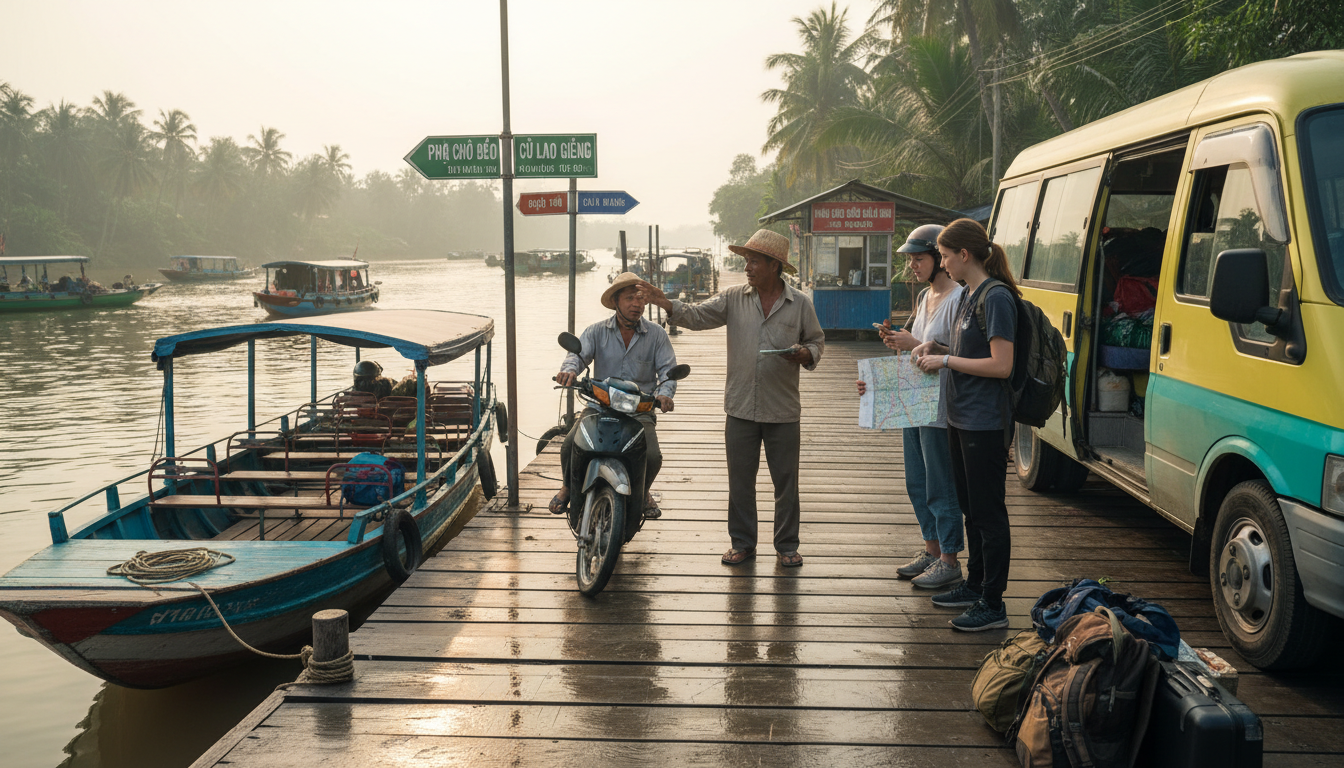
Mekong Delta Transportation Guide: Comparing the Best Routes and Transport Methods
The mekong delta transportation guide starts with one simple truth: the region is easy to reach, but the best way to move around depends on how local you want the trip to feel. If you want raw riverside life, you need slow transport and flexible stops. If you want comfort and zero planning stress, a guided route usually wins.
For first-time visitors, the real challenge is not distance, but choosing between freedom and efficiency. A bus or private car gets you in fast, while boats, bikes, and small local transfers turn the journey into part of the adventure. That is why smart travelers compare time, comfort, and access to villages before they book anything.
Featured snippet: The best transport in the Mekong Delta depends on your itinerary. Choose bus or private car for fast point-to-point travel, boat for the most local experience, bicycle for short village loops, and organized tours when you want fewer logistics and better access to riverside stops.
Local transport works best if you like freedom, but it also asks you to handle timing, tickets, and language gaps. A bus from Ho Chi Minh City can be the cheapest option, yet once you arrive, you may still need a taxi, xe om, or ferry connection to reach smaller towns. That is perfect for adventurous solo travelers, but less ideal for families with tight schedules.
Organized tours remove the friction. Many routes include pick-up in Saigon, a boat segment, lunch, and a return plan, which is useful if you want a smooth day trip without guessing where to go next. If you are comparing all Vietnam tours, look for itineraries that clearly mention river transport, not just sightseeing stops, because the delta feels very different when you travel by water.
| Criteria | Local transport | Organized tour | Best for |
|---|---|---|---|
| Flexibility | High, but you manage every transfer | Low to medium, fixed schedule | Independent travelers |
| Local feel | Very strong, especially by boat or motorbike | Good, if the route includes villages and canals | Culture-focused visitors |
| Convenience | Medium, depends on route knowledge | High, everything is arranged | Families and short-stay guests |
Mini insight: if your goal is to see floating markets, coconut workshops, and quiet river lanes in one day, a private car plus boat transfer often gives the best balance. If your goal is to feel the delta like a local, a motorbike or bicycle segment adds the kind of detail that bigger vehicles miss, especially on narrow village roads and small bridges.
Choose local transport when you want control, lower cost, and a more adventurous pace. Choose a tour when you want better efficiency, fewer mistakes, and more time actually enjoying the delta instead of coordinating it. For travelers who want a soft, reliable booking path with local context, Vietnam Crazy Tour is a practical starting point, especially for couples, families, and first-time explorers who still want that wild river energy.
The best option usually matches your route length, not just your budget. My Tho and Ben Tre work well for day trips, Can Tho is better for overnight stays, and Chau Doc makes more sense if you want a deeper Mekong loop. If you value comfort and local immersion at the same time, a mixed plan is the smartest move. Book the main transfer, then leave one part of the day open for boats, markets, or slow village wandering.
Final call: if you travel light and love uncertainty, go local. If you want smooth logistics and better time control, book a tour. If you want both, combine them. That is the real insider move in the Mekong Delta, and it keeps the trip adventurous without turning it into a transport headache.
Important Tips, Common Mistakes, FAQ, and Final Travel CTA
Mekong Delta transportation guide for first-time visitors is simple when you match the route to your travel style, not just the cheapest option. If you want a raw local vibe, small boats, ferries, and backroad transfers can feel exciting, but they work best when you plan timing, luggage, and pickup points with care.
Most travel problems happen because people expect city-style transport in a river region. Schedules can shift, roads can get narrow near local villages, and some boat operators do not handle English smoothly. A little prep saves a lot of stress, especially for solo travelers, couples, and families chasing a real Mekong adventure.
Common mistakes travelers make in the Mekong Delta usually start with booking too late, overpacking, and choosing a route that looks easy on the map but feels slow in real life. A good rule is to keep one flexible transfer slot in your day, especially if you want to stop for more local tours or add a riverside market visit without rushing.
Here is the practical breakdown:
- Do not assume every boat runs on a fixed timetable
- Do not trust only Google Maps for rural roads
- Do not arrive with heavy luggage for short boat hops
- Do confirm pickup point, final drop-off, and weather impact
| Criteria | Best for | Main risk | Best move |
|---|---|---|---|
| Bus | Budget travelers | Sold-out seats or wrong terminal | Book early and verify the exact pickup point |
| Boat transfer | Adventure seekers | Weather changes and loose timing | Keep plans flexible and travel light |
FAQ: schedules, safety, booking, and the best way to travel locally
What is the best way to move around locally? For most travelers, a mix of boat and private transfer is the smoothest choice. If you want deeper local access, pair it with a guided stop at a market or village lane where a Vietnam local travel expert can handle timing and connections.
Are Mekong Delta trips safe? Yes, if you use licensed operators, wear a helmet on motorbike rides, and avoid rushing in rain or low-light conditions. Safety improves fast when you choose daytime departures and keep your phone charged for navigation and contact.
Should I book in advance? Yes for buses, tours, and private cars, especially on weekends or holidays. For boats, early booking is smart if you want a specific departure time, but flexible travelers can still adapt on arrival.
How do I avoid tourist traps? Ask what is included, check return time, and avoid itineraries that feel overloaded with souvenir stops. The best local travel in the delta is often slower, simpler, and more personal.
Final travel CTA: If you want a trip that feels truly local, choose the transport style that matches your pace, budget, and appetite for adventure. For easy planning, real cultural stops, and flexible routing through the river region, explore all Vietnam Crazy Tour experiences and build a delta day that feels authentic from the first bridge to the last boat ride.