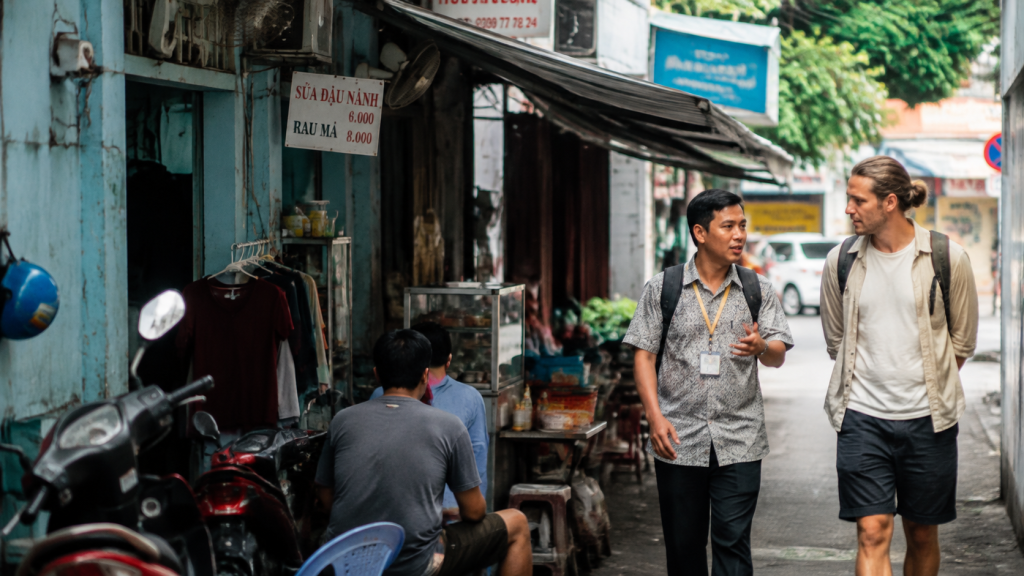
Saigon alleyways are where the city drops its tourist mask and gets loud, local, and real. If you want food, daily street rhythm, and neighborhoods that still feel lived in, these narrow lanes solve the usual Saigon problem fast: where to find the city beyond the main roads. For travelers who like a more adventurous trip, this is the shortcut.
Think of Saigon alleyways as a moving map of everyday life: open-front homes, tiny eateries, scooters squeezing past, and residents chatting from doorways. The best part is that you do not need a special route to enjoy them. A slow walk, a bit of curiosity, and basic street-smart awareness are enough. For a soft local dive, see Vietnam Crazy Tour and how it frames the city from a real-life angle.
Featured snippet: Saigon alleyways are narrow local streets hidden behind major roads, where visitors can find street food, temples, small cafes, and everyday neighborhood life. They are best explored on foot, with attention to traffic, local etiquette, and the quiet details that make each alley feel different.
| Tiêu chí | Quiet alleys | Food alleys | Mixed-use alleys |
|---|---|---|---|
| Best for | Slow walks and photos | Street food and snacks | Local life and variety |
| Visitor type | Solo travelers and couples | Families and food lovers | First-time explorers |
If you are planning a deeper neighborhood experience, some travelers pair alley walks with a local community tour for a more grounded view of the city. The key is simple: move slowly, keep your camera respectful, and let the alley decide the pace. That is where Saigon starts to feel personal.
What Saigon Alleyways Are and Why They Matter
Saigon alleyways are the narrow local lanes tucked behind the city’s main roads, where daily life runs at street level and the tourist layer drops away. For first-time visitors, they solve a common problem: how to see the real city without guessing where to go. In these lanes, you get food stalls, tiny homes, temples, and ordinary routines packed into one walkable world.
For adventurous travelers, this is where Saigon stops feeling like a postcard and starts feeling alive. The pace is slower, the space is tighter, and the details matter more. A scooter parked in front of a doorway, a kettle boiling beside laundry, a grandmother chatting with neighbors, all of it shows how the city actually works. That is why Saigon alleyways matter to people who want local texture, not just landmarks.
Featured snippet: Saigon alleyways are narrow residential lanes behind major streets in Ho Chi Minh City. They matter because they reveal local life, street food, hidden temples, small cafes, and everyday routines that most travelers miss. They are one of the best low-cost ways to understand the city on foot.
Why they matter in daily life:
• They connect homes, shops, kitchens, and small community spaces
• They support everyday food, worship, socializing, and short-distance movement
• They create a quieter human-scale environment inside a fast-moving city
In practical terms, these lanes are not random shortcuts. They are working neighborhoods. You may pass a morning noodle seller, a family altar, a motorbike repair corner, and a hidden coffee stop within a few minutes. If you want a deeper local experience, this style of exploration fits well with a local Vietnam tour lineup or a more focused city route through Vietnam Crazy Tour, especially when you prefer walking, tasting, and observing over rushing from one famous sight to the next.
When should travelers explore them? Go in the early morning for food and soft street energy, or late afternoon into evening for cooler weather and more active lanes. Solo travelers like the freedom, couples enjoy the intimacy, and families benefit from the slower pace. If you want a smart first step, choose one district, enter from a busy road, then follow the sounds, smells, and movement deeper inside.
| Tiêu chí | Best Time | Best For | Why It Works |
|---|---|---|---|
| Morning walk | 6:30 to 9:00 | Food lovers, photographers | Fresh cooking, active residents, softer light |
| Evening walk | 16:30 to 19:30 | Couples, solo travelers, families | Cooler air, street food, lively neighborhood rhythm |
Soft tip: if you want a richer local understanding, pair your alley walk with a guide who knows where people actually live and eat. That saves time and turns a simple stroll into a much sharper cultural read.
Choose alleyways when you want the city to feel personal, not packaged. Stay alert, move slowly, and let the narrow lanes show you how Saigon really breathes. If your travel style leans curious and local, this is one of the most rewarding things you can do in the city.
How to Explore Saigon Alleyways Like a Local
Saigon alleyways are the fastest way to feel the city doing its real, messy, delicious thing. If you only stay on big boulevards, you miss the small details that make Saigon unforgettable: breakfast steam, parked motorbikes, hidden homes, and tiny doors that open into whole worlds. The trick is simple: slow down, choose the right lanes, and read the street like a local.
For first-time visitors, the best approach is not to chase landmarks. Start with food streets, markets, and residential lanes, then let the alley guide you. That is where daily life happens in full color, from morning coffee to late-night snacks. If you want a deeper local angle, you can also mix in one curated experience from all Vietnam Crazy tour options to compare the city on foot and with context.
Featured snippet: Explore Saigon alleyways by starting near food streets and markets, then move into residential lanes with open doors, parked motorbikes, and family-run stalls. Look for signs of daily life, follow the smell of cooking, and stay curious. The best alley walks are slow, safe, and full of small local details.
Start with the areas where local life is already active. A market edge, a noodle street, or a lane with many open-front homes gives you the strongest first impression. In District 1, look for alleys off Tran Hung Dao; in District 3, the lanes near older homes feel calmer; in District 4, the food intensity jumps fast. The goal is not distance, but density of local activity.
Use this quick filter before you enter:
| Tiêu chí | Best sign | What it tells you | Visitor tip |
|---|---|---|---|
| Food streets | Stools, steam, delivery bikes | High local foot traffic | Visit at meal times |
| Residential lanes | Open doors, laundry, family tables | Daily home life | Walk quietly and observe |
What to look for is never just one thing. Signs painted on walls help you orient yourself, but vendors tell you where the alley is active now. Motorbikes parked in clusters usually mean homes, food, or a small business hidden inside. And hidden doors matter most: a plain gate can open to a pagoda, a café, or a small courtyard that tourists miss completely.
A useful mini insight: the more ordinary the entrance looks, the better the surprise inside often is. In Saigon, locals do not advertise every gem to the street. They let the alley do the talking, which is why walking slowly pays off. If you enjoy that kind of urban discovery, you may also like the ghost and beliefs tours for another layer of local culture.
Real examples make the pattern easy to read. In District 1, the Tran Hung Dao alley network is great for beginners because it is residential yet close to downtown. In District 3, quieter side lanes around older streets reward slow walking and coffee stops. In District 4, the vibe shifts harder toward street food, especially around Xom Chieu and Vinh Khanh, where the alleys feel alive well into the night.
If you want the safest and easiest first walk, choose District 1. If you want a richer neighborhood feel, go District 3. If your goal is food first, District 4 wins. For travelers who want structure without losing authenticity, a short Vietnam Crazy tour can help turn random wandering into a smarter local-style route.
Strong CTA: If you want to experience Saigon alleyways without wasting time guessing where to start, build your route around food, homes, and hidden entrances, then expand from there. That simple method gives you the most local value, the best photos, and the highest chance of stumbling into the kind of everyday Saigon most visitors never see.

Why Saigon Alleyways Are Worth Visiting
Saigon alleyways are where the city drops its tourist mask and starts moving at street level. If District 1 feels too polished or too loud, the alleys solve that problem fast with food, coffee, shade, and real neighborhood rhythm. For first-time visitors, they are the easiest way to see daily life without needing a complicated plan.
They are also one of the best low-pressure ways to explore Saigon on foot. You can stop for a bowl of noodles, a strong iced coffee, or a tiny local shop selling snacks, flowers, or household goods, then keep walking without commitment. That mix of freedom and discovery is why Saigon alleyways work so well for solo travelers, couples, families, and anyone who wants a trip with more texture than checklist sightseeing.
Featured snippet: Saigon alleyways are worth visiting because they combine local food, hidden cafes, small shops, and authentic neighborhood life in one walkable experience. They are ideal for travelers who want to see the city beyond major roads and discover a quieter, more human side of Ho Chi Minh City.
Street Food, Coffee, and Small Local Shops
The biggest reason to go into the alleys is simple: the best everyday eats are often tucked away from the main streets. In a few short blocks, you can find a breakfast stall, a family-run noodle counter, a coffee window, and a tiny shop selling cold drinks or household basics. That concentration makes the alleys feel like a local food map that never gets boring.
A practical way to explore is to follow your nose and the crowd. If you see plastic stools, a queue of office workers, or steam rising from a pot, that is usually the right stop. A Vietnam city adventure style walk works especially well here because the alley experience is about small decisions: eat now, coffee later, keep walking, repeat.
Mini insight: the best time for snacks is early morning or late afternoon, when the alleys feel alive but not chaotic. For travelers who like layered local experiences, these lanes give you food, movement, and neighborhood detail in one compact route.
Photo-Worthy Scenes and Authentic City Atmosphere
Saigon alleyways are photogenic because they are real, not staged. You get scooters parked beside doorways, laundry hanging overhead, neon signs, tangled cables, kids playing, and old neighbors chatting in open entrances. The visual appeal comes from density and contrast, not from postcard perfection.
For photography and atmosphere, look for three things: narrow passages, soft light, and human activity. A lane with a vendor cooking at the entrance, a motorbike squeezing past, and a child waving from a doorway gives you a much stronger city story than a wide boulevard ever could. If you want more unusual local context, a full list of local tours can help you compare what kind of neighborhood experience fits your travel style.
| Criteria | Main streets | Saigon alleyways | Best for |
|---|---|---|---|
| Noise level | High and constant | Quieter and more intimate | Slow walking |
| Experience | Traffic and transit | Food, people, daily life | Local discovery |
Mini insight: if a traveler only sees Saigon from a car window, they miss the best part of the city. The alleys reveal scale, habit, and warmth, which is exactly what makes the atmosphere feel authentic.
Best Use Cases for First-Time Visitors, Food Lovers, and Slow Travelers
Saigon alleyways are not for travelers who want a clean checklist and a fast exit. They work best for people who like to observe, pause, and follow small clues. First-time visitors get a safe, easy introduction to local life. Food lovers get endless snack stops. Slow travelers get a walk that can last 30 minutes or three hours, depending on appetite and mood.
They are also a smart option for couples and families who want something engaging without needing strenuous activity. The pace is flexible, the cost is low, and the payoff is high because every turn can reveal a shop, shrine, cafe, or tiny scene worth remembering. If you want to compare more immersive experiences in the city, local community tours can be a useful next step.
Best use cases:
- First-time visitors who want a gentle introduction to real Saigon
- Food lovers looking for casual street food and hidden coffee stops
- Solo travelers who enjoy wandering without fixed routes
- Couples who prefer atmosphere over attraction crowds
- Families who want a calm, flexible neighborhood walk
Soft CTA: If you like exploring places that feel lived-in and personal, Saigon alleyways should be on your short list. They give you the city at human speed, with enough surprise to keep every turn interesting.
Strong CTA: For travelers who want the most local side of Saigon without wasting time, start with the alleys, then build the rest of your day around food, coffee, and neighborhood discovery. That is the easiest way to turn one walk into a genuinely memorable trip.

Saigon Alleyways vs Main Streets: Which Is Better for Your Trip?
Saigon alleyways are the better choice when you want the city to feel local, walkable, and full of small surprises rather than just busy traffic and big-name sights. For first-time visitors, the real question is not whether the main streets are worth seeing, but how much of your time should go into the hidden lanes where daily life actually happens.
Main roads, malls, and tourist zones are easier, faster, and more predictable. But the narrow lanes give you the food, conversations, and street-level details that make Saigon feel alive. If you are planning a trip and want the balance right, the smartest move is to use the main streets for orientation and the alleyways for experience, then connect both in one route. If you want a broader Vietnam travel plan, all Vietnam Crazy Tour trips can help you build around that style of travel.
Alleyways compared with boulevards, malls, and tourist zones
Main boulevards are good for taxis, landmarks, and fast movement. Malls work well when you need air conditioning, clean toilets, and a simple reset after a hot day. Tourist zones are efficient if your goal is sightseeing with minimal effort.
But alleyways change the pace. You may pass a family cooking at the doorway, a tiny coffee shop with two plastic stools, or a shrine tucked between houses. That is why many travelers choose both: main streets for getting around, alleyways for getting close. A soft way to plan this is to spend your morning in the lanes, then return to a wider road for lunch or a break at Vietnam Crazy Tour home page planning ideas.
Pros and cons of exploring narrow lanes
The biggest advantage is access. In one short walk, you can see local food stalls, old homes, hidden temples, and everyday neighborhood rhythms. The second advantage is atmosphere: the deeper you go, the less the city feels like a transit map and the more it feels like a lived-in community.
The tradeoff is comfort. Some lanes are cramped, uneven, busy with motorbikes, or confusing after dark. Families with small children may prefer shorter visits, while solo travelers and couples often enjoy the adventure more. For a useful decision rule, choose alleyways when you have at least one hour, good walking shoes, and curiosity; choose main streets when you want speed, clarity, or a low-stress day.
| Criteria | Alleyways | Main Streets | Best For |
|---|---|---|---|
| Atmosphere | Local, intimate, layered | Busy, open, commercial | Travelers seeking real city life |
| Comfort | Less predictable, tighter spaces | Easy navigation, more services | Families, short stays, first-timers |
How to choose the right areas based on time, comfort, and interests
If your trip is short, pick one alley zone close to your hotel instead of trying to cover everything. If you like food, go where night markets and street stalls cluster. If you like architecture and quiet corners, choose residential lanes with open doorways and older houses. If you want a safe first step into the local side of the city, start with a guided walk from local community tour options and then explore on your own.
Mini insight: the best Saigon experience is often not a perfect route, but a flexible one. Walk one main road to understand the city, then turn into the alley when something looks interesting. That mix gives you confidence, comfort, and the kind of local discovery most visitors miss. For travelers who want more cultural depth after this chapter, ghost and belief tours can add another layer to the trip.
Featured snippet: Saigon alleyways are best if you want local food, neighborhood life, and a slower, more intimate view of the city. Main streets are better for fast movement, easy navigation, and comfort. The smartest choice for most travelers is a mix of both, using boulevards to connect the city and alleyways to experience it.
In practice, use this simple filter: time, comfort, interest. If you have limited time, stay near wide streets and one compact alley area. If you are adventurous, give yourself a few hours and let the lanes guide the day. If you want the most memorable trip, make Saigon alleyways part of the plan, not just a side note.
For a stronger local experience with clear planning support, start with one focused area, move slowly, and eat where the neighborhood is busy. That is the real win. If you want help turning this style into a full Vietnam itinerary, check all Vietnam Crazy Tour trips and build from there.
Tips, Common Mistakes, FAQ, and a Final Travel Push
Saigon alleyways are where the city drops its tourist mask and gets raw, local, and delicious. If you want hidden food, quiet lanes, and real neighborhood energy, this is the part of Saigon that rewards slow walking, good timing, and a little street sense. The big win is simple: wander smart, stay respectful, and let the alleys do the work.
The best visits are not about covering distance. They are about reading the lane, spotting family kitchens, tiny shrines, and corner coffee spots, then moving at human speed. For a deeper look at how local life feels beyond the main roads, you can compare the vibe with all Vietnam Crazy Tour routes and decide what level of adventure fits your trip.
Featured snippet: The best way to explore Saigon alleyways is to go early or after sunset, keep your phone map ready, walk slowly, and avoid blocking doorways. Choose busy local lanes, eat where residents eat, and treat private homes as private space. That is the safest, easiest, and most rewarding way to experience street-level Saigon.
Common mistakes to avoid: do not treat every alley like a photo set, do not step into open homes, and do not assume a dead end means trouble. In Saigon, many lanes look confusing but they usually reconnect. A practical rule is to follow the sound of food stalls, scooters, and conversation, then check your exit before you fully commit. If you want a gentler first step into local neighborhoods, Vietnam Crazy Tour can help frame the kind of route that feels adventurous without feeling chaotic.
FAQ: Safety is generally fine in busy residential alleys during the day and early evening. Best time to go is morning for market life or late afternoon into night for food and atmosphere. Food etiquette is easy: queue naturally, point if needed, and avoid hovering too long at a stall. Navigation is simpler than it looks because most alleys eventually reconnect to a main road.
| Tiêu chí | Cột 1 | Cột 2 | Cột 3 |
|---|---|---|---|
| Best time | Morning markets | Late afternoon food | Night lights and snacks |
| Best for | Quiet walks | Street food | Local atmosphere |
Quick CTA: if you want the city at street level, this is your cue to go. Build a half-day around a food lane, a hidden cafe, and one neighborhood with real residential texture, then move without a rigid plan. For travelers who want curated local energy instead of generic sightseeing, explore the full range at all Vietnam Crazy Tour routes and pick the one that matches your style.
Final push: Saigon alleyways are not about finding perfection. They are about finding texture, surprise, and a strong sense of place. Go with curiosity, a light bag, and comfortable shoes, and you will come back with a better feel for Saigon than most visitors ever get.
