
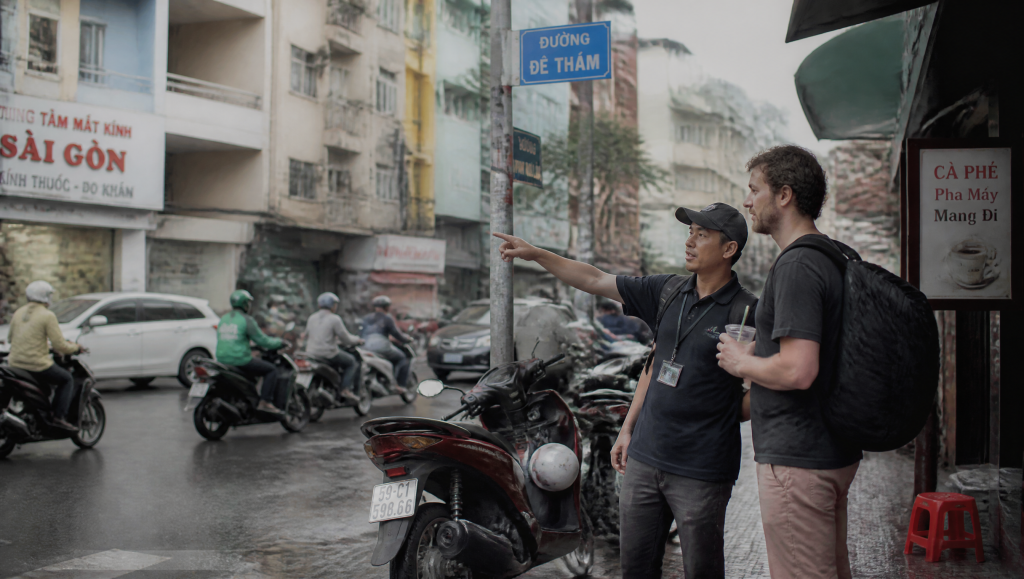
Saigon traffic congestion is the first shock many visitors feel when they land in Ho Chi Minh City: a sea of motorbikes, sudden lane changes, and rush-hour pressure that can turn a short ride into a wild delay. If you are planning local exploration, understanding the rhythm of the streets is the fastest way to save time and stay calm.
The good news is that the city is not random chaos, it follows patterns. Morning school runs, office commutes, rain showers, and late-afternoon home traffic all shape the flow, and once you read those signals, getting around becomes much easier. For a smarter start, explore Vietnam Crazy Tour experiences and learn how local movement really works before you go deeper.
Featured snippet: Saigon traffic congestion is most intense during morning and evening rush hours, especially on major arteries and around schools, offices, and markets. The easiest way to beat it is to travel outside peak times, use short local routes carefully, and keep buffer time for every trip.
Here is the practical breakdown for first-time visitors and adventurous travelers:
| Criteria | Best Choice | Why It Works | Best For |
|---|---|---|---|
| Travel time | Outside rush hour | Fewer stops and smoother movement | City sightseeing |
| Route choice | Main roads with backup options | Easier to reroute when traffic tightens | Families and solo travelers |
A small but useful insight: in Saigon, one delayed bridge or a rainstorm can affect an entire district, so the smartest move is to plan with flexibility. If you want more local-style travel ideas after this guide, the full tour list is a good next stop.
For a soft CTA, think of this city as a place to read, not fight. Once you understand the traffic rhythm, you can move smarter, see more, and enjoy the adventure without letting the road steal your energy. That is how you beat the congestion and still keep the trip fun.
What Saigon Traffic Congestion Really Looks Like
Saigon traffic congestion is the daily squeeze of vehicles, people, noise, and timing conflicts that slows movement across the city, especially on mixed-use streets and major intersections. For first-time visitors, it feels less like a delay and more like a living system that never fully pauses, even when the light turns green.
If you are planning a local adventure, the good news is that congestion in Ho Chi Minh City is predictable once you understand the pattern. A smart route, flexible timing, and one well-chosen base can turn a stressful ride into a manageable city experience, especially if you pair it with a full range of Vietnam tours that fit your pace.
Featured snippet: Saigon traffic congestion is strongest where motorbikes, cars, buses, and pedestrians share the same narrow space. It peaks during morning and evening rush hours, after rain, and around large junctions. The city does not stop moving, but it often moves in short, uneven bursts.
In practical terms, congestion here means stop-and-go traffic, lane drifting, blocked turns, and intersections that feel overloaded before they are technically full. A short trip across District 1 can take twice as long when school traffic, office traffic, and delivery riders overlap.
The main reason is the motorbike-heavy road network. Motorbikes can fill gaps fast, but they also create constant micro-conflicts at merges, U-turns, and red lights. That is why a road that looks wide on a map can still freeze in real life.
Common bottleneck triggers include:
1. Dense motorbike flows turning at the same time
2. Cars stopping for pickups, drop-offs, or parking
3. Slow lane changes near junctions and bridges
4. Rain, which reduces speed and space instantly
A useful rule for visitors is simple: if you are crossing a busy corridor near office towers, schools, or markets, expect the flow to change every minute. Even a five-minute delay can feel longer because movement becomes uneven, not just slow.
For travelers who want to see the city beyond the usual sightseeing loop, this is also where a local Vietnam adventure becomes more useful than a standard transfer. Local knowledge helps you choose streets with better flow, safer pickup points, and less wasted time.
Saigon traffic congestion is usually worst at two daily peaks. Morning rush runs roughly from 6:30 to 8:30, when commuters, students, and delivery riders all hit the road together. Evening congestion often starts around 5:00 and can last until 7:30, especially if weather or events add extra pressure.
| Tiêu chí | Cột 1 | Cột 2 | Cột 3 |
|---|---|---|---|
| Morning rush | 6:30 to 8:30 | School and office traffic | Best to leave early |
| Evening peak | 5:00 to 7:30 | Return commute and deliveries | Expect slower crossings |
Rainy season changes the whole rhythm. When heavy showers hit, motorbikes slow down, visibility drops, and small crashes or sudden stops ripple through nearby streets. A route that was fine ten minutes earlier can become messy very fast, especially near intersections and underpasses.
Major intersections are another pain point because every direction wants the same space at the same time. If you are staying near central districts, plan extra buffer time for routes that pass through large junctions, bridge entrances, or market roads. That small adjustment often saves the whole day.
Soft travel tip: if your goal is to explore local Saigon without wasting hours in traffic, choose activities that cluster by area instead of moving across the city all day. That is one reason some travelers pair city exploration with curated experiences, because fewer transfers usually means a better trip.
The real takeaway is not that Saigon is impossible to move through. It is that the city rewards timing, patience, and local awareness. Once you understand when the traffic tightens, you can plan around it and still enjoy the energy, chaos, and street-level life that make Saigon feel so alive.
CTA: If you want to experience Saigon in a way that feels local, fast-moving, and genuinely memorable, keep exploring the city with routes and activities designed for real traffic conditions, not ideal ones.
Why Saigon Traffic Congestion Happens So Often
Saigon traffic congestion happens so often because the city is growing faster than its roads, its rules, and sometimes even its patience. For first-time visitors, that can feel wild at street level, especially when a short ride turns into a slow crawl. The good news is the pattern is predictable, so you can plan smarter and move with less stress.
In simple terms, the city runs on a dense mix of motorbikes, cars, buses, delivery riders, and pedestrians all sharing limited space. Add rush-hour pressure, rainy season flooding, and sudden road disruption, and you get the classic Saigon slowdown. For local-style exploration, it helps to understand not just where you want to go, but when and how to get there. If you like discovering the city in a more flexible way, the full tour collection can help you time your plans better.
Featured snippet: Saigon traffic congestion is frequent because rapid population growth, narrow road layouts, mixed vehicle flow, and daily triggers like roadworks or school rush all stack up at the same time. The result is not random chaos. It is a repeated urban pressure pattern that hits the same corridors, especially during peak hours and bad weather.
Population growth, urban density, and rising vehicle numbers
Saigon keeps pulling in new residents, workers, students, and business traffic, while vehicle ownership continues to rise. That means more people moving through the same core districts every day. In practical terms, one extra lane worth of demand can appear without the road network actually changing. This is why even a normal weekday can feel heavy from morning to evening.
A useful mini insight: traffic here is not only about volume, but timing. When thousands of people leave homes, schools, and offices within a narrow window, the system gets overwhelmed fast. If you are staying longer and want to see the city beyond the usual postcard stops, Vietnam Crazy Tour home base is a smart place to start planning your route.
Road design limits, narrow streets, and mixed traffic patterns
Many streets in Saigon were built for older, lighter traffic, not today’s layered flow of motorbikes, cars, ride-hailing vehicles, vendor carts, and buses. Some roads are narrow, some intersections are irregular, and many routes feed directly into each other. That creates friction, because one slow vehicle can affect everything behind it within seconds.
For visitors, the biggest surprise is usually mixed traffic behavior. A bus may need more space, a motorbike may weave for a gap, and a pedestrian may cross where there is no clear buffer zone. This is exactly why Saigon traffic congestion can feel intense even when the distance looks short on a map. The layout is working against speed from the start.
| Tiêu chí | Cột 1 | Cột 2 | Cột 3 |
|---|---|---|---|
| Road factor | Narrow streets | Limited turning space | Slow flow buildup |
| Traffic mix | Motorbikes, cars, buses | Unsteady lane discipline | Frequent bottlenecks |
Common triggers like roadworks, accidents, school hours, and flooding
Even when the city is moving well, small triggers can slow everything down. Roadworks block lanes, accidents stop flow, school drop-off and pick-up times create sharp spikes, and heavy rain can turn low roads into temporary choke points. Saigon is not one long traffic jam all day. It is more like a series of pressure waves hitting different zones.
Smart travelers watch these trigger windows closely. Leave a little earlier, avoid crossing busy school corridors at peak times, and be extra cautious during rainy afternoons. If you prefer local, offbeat experiences and want to keep your day flexible, you can also browse the city and discovery tours after the rush settles. A soft planning habit here saves a lot of energy later.
So the real reason is simple. Saigon traffic congestion happens because demand is high, space is tight, and disruptions spread quickly. Once you know that, you can read the city like a local, move with better timing, and enjoy the adventure instead of fighting it.
If you are building a Saigon itinerary and want less stress on the road, plan around rush hours, choose stays near the places you want most, and keep one flexible block each day for weather or delays. For a smoother start, the tours page gives you a clear way to match your trip style with the city rhythm.

How to Navigate Saigon Traffic Congestion Like a Local
Saigon traffic congestion can feel wild at first, especially if you arrive during school runs or office rush. The good news is that locals do not fight the flow, they plan around it. If you choose the right hour, the right vehicle, and the right street, the city becomes much easier to move through.
For adventurous travelers, this is not just a transport problem, it is part of the local rhythm. A smart route can save an hour, reduce stress, and keep your energy for the real experience, from cafe stops to street food hunts and local city adventures that feel much smoother when you move like a resident.
Featured snippet: To handle Saigon traffic congestion like a local, avoid the heaviest rush windows, use motorbike taxis for fast short hops, book cars for comfort on longer crossings, and reroute around major chokepoints near schools, markets, and bridge entrances. In Saigon, timing often matters more than distance.
Best travel times to avoid peak traffic pressure
The easiest way to beat the city is to leave before the crowd forms. In most districts, traffic pressure rises fast around 6:30 to 8:00 a.m. and again from 4:30 to 7:00 p.m. If you are crossing the center, aim for late morning or early afternoon, when the roads breathe a little more.
A useful local pattern is simple: plan museum visits, cafe hopping, and riverfront walks between rush blocks, then keep dinner locations close to your last stop. If you are staying in a busy central area, a short walk can be smarter than a ten-minute ride that turns into thirty. That is the kind of small decision that keeps the trip feeling easy, not exhausting.
| Criteria | Best option | Why it works | Best use case |
|---|---|---|---|
| Rush hour crossing | Ride-hailing or motorbike taxi | Flexible and faster in dense traffic | Short to medium city hops |
| Comfort and luggage | Taxi or app car | Less exposure and better for families | Airport rides and long routes |
Smart transport choices: motorbike taxi, taxi, ride-hailing, bus, and walking
For solo travelers and couples, motorbike taxis are the fastest local-style fix when the roads jam up. They can slip through packed streets, avoid long queues, and get you to dinner on time. For families or anyone carrying bags, taxis and ride-hailing cars are the safer comfort-first choice, especially in heat or rain.
Buses are the cheapest option, but they work best when you are not in a hurry and already know your route. Walking is often underrated in compact areas like District 1 or around certain food streets, where distance looks short on the map but traffic makes riding pointless. If your plan includes deeper neighborhood exploring, combine transport with Vietnam city travel tips so you can match the vehicle to the moment.
Mini insight: In Saigon, the best transport is not the most expensive one. It is the one that matches your luggage, your schedule, and how much stress you can handle in 35 degrees of heat.
Real-life routing tips for crossing districts and avoiding chokepoints
When crossing districts, avoid assuming the shortest line is the fastest. Big intersections near schools, markets, bridges, and roundabouts often slow everything down. If a route looks too direct through a major boulevard during rush hour, the smarter move is usually one or two calmer side streets, even if the map shows extra distance.
Locals also know to watch for chokepoints near office clusters and bridge entrances, where traffic can stall without warning. If possible, cross earlier, not later, and keep a backup route in your phone before you leave. That habit matters even more on rainy afternoons, when one blocked lane can change the whole ride. For travelers who want a deeper, more local side of the city, slower routes can even pair well with experiences from all Vietnam Crazy Tour options, especially when you want to keep the day flexible.
Soft CTA: If you want to explore Saigon without wasting time in traffic, build your day around timing, not just distance. That is the local secret most first-time visitors miss.
Strong CTA: Book smarter, move lighter, and let Saigon feel exciting instead of stressful. With the right route choices, Saigon traffic congestion becomes part of the adventure, not the problem.

Saigon Traffic Congestion vs Other City Traffic Experiences
Saigon traffic congestion is not just about slow roads, it is a full urban rhythm that first-time visitors feel the moment they step outside. For adventurous travelers, the city can look wild at first, but that chaos also makes movement surprisingly adaptable when you know the rules of the street. The real challenge is not the traffic itself, but choosing the right way to move through it.
Compared with Bangkok and Hanoi, Saigon feels more motorbike-heavy, more fluid, and often less predictable at intersections. Bangkok can look more gridlocked on major arteries, while Hanoi feels denser and more formal in the old quarter. Saigon sits in the middle: fast-changing, loud, and flexible, which is why a Vietnam travel expert mindset helps when planning routes for couples, solo travelers, or families.
The simple rule is this: if you are going a short distance, Saigon traffic congestion is usually manageable by ride-hailing, motorbike taxi, or even walking in compact districts. For longer routes or peak-hour airport transfers, build in buffer time and avoid rush windows. If your trip goal is local discovery, the city becomes easier once you accept the flow instead of fighting it.
| Tiêu chí | Saigon | Bangkok | Hanoi |
|---|---|---|---|
| Traffic style | Flexible and chaotic | Heavier on main roads | Dense in central areas |
| Best for | Short local trips | Planned city moves | Slow cultural roaming |
One big advantage of Saigon is speed of choice. If one street looks blocked, another often works. That is useful for travelers booking flexible local experiences, including all Vietnam Crazy Tour options, because timing can shift without killing the day. The drawback is that crossings, turns, and lane changes demand more attention, especially for visitors not used to mixed traffic.
Best approach by trip purpose: sightseeing means travel early, keep distances short, and stay in central districts; airport or business trips need extra time; family trips work best with private cars; solo travelers can use ride-hailing to stay flexible. The bottom line is simple: Saigon rewards people who plan lightly, move smart, and respect the street rhythm.
Common Mistakes, FAQ, and Final Travel Tips
Saigon traffic congestion is not just about slow roads, it is about timing, lane choices, and how confidently you move through the city. Travelers who expect a calm, straight-line commute often get caught in the busiest windows, take the wrong vehicle for the route, or book too little buffer time between stops. The good news is that once you understand the rhythm, Saigon becomes far easier to handle.
If you are planning a local adventure, the smartest move is to treat transport like part of the experience. A short ride can still feel smooth if you leave early, choose the right pickup point, and avoid peak-hour pressure. For deeper local inspiration, some travelers also combine city movement with all Vietnam Crazy tours when they want a route that feels more curated and less stressful.
Mistakes travelers make when dealing with Saigon traffic congestion
The biggest mistake is underestimating how long a short trip can take. A 3-kilometer ride may look quick on the map, but during rush hour it can stretch far longer than expected. Another common issue is choosing the wrong transport style for the situation: walking works for very short inner-district moves, but motorbike taxi or car is usually better when the heat, rain, or luggage factor in.
Travelers also get trapped by planning too many stops back to back. In Saigon, one delay can ripple into the rest of the day. Mini insight: the city rewards flexible travelers, not rushed ones. A simple buffer of 20 to 30 minutes can save dinner reservations, day tours, and a lot of frustration. If you want a more local-style experience with less guesswork, Vietnam Crazy Tour can help you frame the day around realistic movement, not wishful timing.
| Criterion | Best choice | Why it works | Travel tip |
|---|---|---|---|
| Rush hour | Leave early | Traffic builds fast | Add 30 minutes |
| Short inner-city trip | Motorbike taxi | Fast and flexible | Confirm pickup point |
FAQ: best time to travel, safest transport, and how long short trips take
Featured snippet: The best time to move around Saigon is usually mid-morning, early afternoon, or late evening outside the main commute peaks. For safety, many visitors prefer car-based ride-hailing for rainy weather, families, or longer routes, while experienced solo travelers often choose reputable motorbike apps for short hops. A 2 to 5 kilometer trip commonly takes 10 to 25 minutes, but peak-hour traffic can double that.
Best time to travel: avoid the usual 7:00 to 9:00 a.m. and 5:00 to 7:30 p.m. windows when possible. Safest transport: for beginners, a car is easiest; for adventurous solo travelers, a motorbike ride can be efficient if you wear a helmet and stay alert. Short trips: a ride from District 1 to nearby districts may seem tiny on paper, but weather, signals, and dense intersections can change everything quickly.
One practical trick is to check your route before leaving, then decide if the trip is worth doing by road right away or after the rush. That kind of judgment matters even more if you are exploring the city with family or planning multiple stops in one afternoon.
Light CTA: plan smarter routes and enjoy Saigon with less stress
Plan smarter routes, give yourself breathing room, and use transport that matches your comfort level. Saigon feels much friendlier when you stop fighting the flow and start moving with it. If your trip includes local culture, food, or offbeat neighborhoods, build the day around fewer transfers and better timing.
For travelers who want a more adventurous local pace, this approach keeps energy high and stress low. When you are ready to turn that idea into a real itinerary, check Vietnam Crazy tour options and choose a route that fits your style, your group, and your tolerance for the city’s wild rhythm.