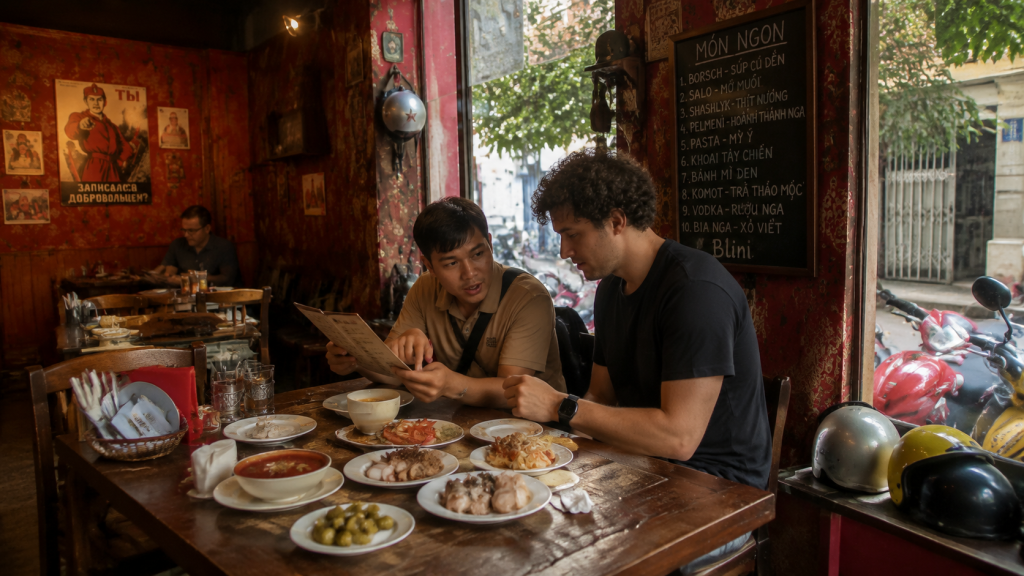
Soviet cuisine in Saigon is one of those search terms that surprises even seasoned food lovers, because this city is better known for pho, banh mi, and loud street stalls than for rye bread, borscht, or salo. If you are an expat, a curious traveler, or a local chasing something different, the real question is simple: does Soviet-style food actually exist here, and is it worth the trip?
This guide answers that gap with practical clarity, from what Soviet cuisine means to where Russian food and Eastern European dishes appear in Saigon today. You will see how nostalgic comfort food shows up on the plate, what makes the experience feel authentic, and how to spot the best places without wasting time on generic tourist traps. For a wider taste of the city’s local side, you can also explore Vietnam Crazy Tour and compare it with other hidden experiences.
| Tiêu chí | Cột 1 | Cột 2 | Cột 3 |
|---|---|---|---|
| What to look for | Hearty soups | Rye bread and cured fish | Warm nostalgic setting |
| Best for | First-time visitors | Expats and couples | Local food explorers |
Soviet cuisine in Saigon is not about chasing a trend, it is about finding a very specific dining mood: rich flavors, shared plates, and a space that feels both unfamiliar and oddly familiar. If you want the short answer, this guide will show you the real food experience, a few smart ways to judge the menu, and the easiest route to a memorable meal. Later, you can use all Vietnam tour options to pair it with a bigger local adventure.
What Soviet Cuisine in Saigon Really Means
Soviet cuisine in Saigon is a compact way to describe Russian and broader Eastern European dishes that were adapted for local diners, then rebuilt with Saigon hospitality. It is not a museum piece. It is a live dining style shaped by migration, memory, and curiosity, which is why travelers keep finding it in a city known for fast change.
For first-time visitors, the easiest way to read this cuisine is simple: think hearty bread, cured meats, salads, soups, and rich dairy served in a setting that feels both nostalgic and slightly theatrical. If you want to explore Saigon beyond the usual street-food route, start with a place that shows how food carries identity, such as Vietnam Crazy Tour, where local context makes every bite easier to understand.
Featured snippet: Soviet cuisine in Saigon means restaurants serving Russian and Eastern European comfort food adapted for local tastes, often with heavy bread, meat, pickles, soups, and dairy. The experience is less about authenticity alone and more about migration history, nostalgia, and a dining scene that rewards curious travelers.
A simple definition of Soviet-inspired food is this: it is filling, practical, and built for cold-climate comfort. In Saigon, that becomes a cultural contrast travelers can feel immediately. One table may hold borscht, kotleta, Olivier salad, rye bread, and salo, while the room itself uses Soviet decor to shape the mood. The food is the message, but the setting does half the storytelling.
| Tiêu chí | Local dining | Soviet-inspired dining | Best for |
|---|---|---|---|
| Flavor profile | Bright herbs, rice, fish sauce, grilled meats | Hearty, creamy, salty, bread-forward | Curious eaters wanting contrast |
| Dining mood | Fast, casual, street-focused | Slow, communal, nostalgia-driven | Couples, families, solo travelers |
Why this cuisine appears in Saigon’s food scene comes down to history and demand. Vietnamese people studied, worked, and lived in the Soviet Union, then brought flavors, memories, and recipes home. At the same time, modern travelers want unusual local discoveries, so restaurants can build both cultural value and business value from the same menu. That is exactly why a spot like all Vietnam tours can make sense for visitors who want food-led exploration, not just sightseeing.
Mini insight: this is not a random fusion trend. It is a memory economy. The menu often speaks to older Vietnamese guests who recognize the story, while younger diners and foreigners experience it as a high-contrast, adventure-friendly meal. If you understand that, you will know what to expect before you sit down: rich portions, slower pacing, and a dining room built for conversation.
For adventurous solo travelers, couples, and families, Soviet cuisine in Saigon works best when you treat it as a cultural stop, not just dinner. Order one cold dish, one warm dish, and one soup, then compare textures and richness. That approach gives you a clearer read on the cuisine and a better story to take home. If you are building a deeper Saigon food plan, this style pairs well with other offbeat experiences, including ghost culture tours.
In practice, the appeal is very simple: Vietnamese street food is usually fast and sharp, while Soviet cuisine is slow and heavy in a way that surprises the palate. That difference is the hook. It gives travelers a real reason to leave the usual café circuit and step into a room where butter, bread, pickles, and soup do the heavy lifting. For many visitors, that first contrast is exactly what makes Saigon feel unforgettable.
Soft CTA: If you want more hidden dining ideas in Saigon, plan your route around places with a strong story, because story-driven restaurants usually deliver the strongest memories.
Key takeaways:
- Soviet cuisine in Saigon is Eastern European comfort food shaped by migration and nostalgia.
- The dishes are hearty, bread-heavy, and designed for shared dining.
- Its appearance in Saigon comes from real historical ties and strong traveler curiosity.
- Best experience: order a mix of cold dishes, soup, and one rich main to understand the style fast.
For travelers who want the most local and most unexpected side of the city, this is the kind of stop that turns a meal into a memory. To keep discovering more unique routes across Vietnam, book a deeper local tour and let the city surprise you beyond the obvious stops.

How Soviet Cuisine in Saigon Shows Up on Menus
Soviet cuisine in Saigon shows up on menus as a mix of comfort food, nostalgia, and very specific cold-climate flavors that feel rare in a tropical city. For travelers who want something local in a different way, this is one of the most interesting food scenes to decode because the dishes are familiar enough to order, but distinct enough to feel like a small trip across continents.
The easiest way to understand it is to look for hearty plates, bread-first starters, creamy salads, cured fish, and soups that lean rich rather than spicy. If you are planning a food-focused day in the city, this style fits well with a slow urban crawl and can pair nicely with a broader all tours collection when you want to balance dining with local exploration.
Featured snippet: Soviet menus in Saigon usually center on rye bread, borscht, salo, Olivier salad, shashlyk, and medovik. Expect buttery, filling, mildly tangy flavors, often served in restaurants that use Soviet decor, family recipes, and a nostalgic dining style that feels both local and imported.
The common dishes tell the whole story fast. Rye bread often opens the meal, followed by mustard, butter, dill, or raw garlic. Olivier salad brings creamy potato, egg, and pickle energy, while borscht adds beet sweetness and a sour finish. Shashlyk and kotleta usually deliver the protein hit, and desserts like napoleon or medovik make the menu feel complete rather than symbolic.
| Tiêu chí | Common Picks | Flavor Signal | Best For |
|---|---|---|---|
| Starters | Rye bread, salo, pickles | Salty, fatty, sharp | First-time tasters |
| Main dishes | Borscht, shashlyk, kotleta | Hearty, savory, filling | Lunch or dinner |
Mini insight: this cuisine is not about spice chasing. It is about depth, texture, and the kind of meal that keeps you full for hours. That is exactly why many visitors remember it as a relief after long city walks, especially couples or solo travelers looking for a calm meal break between market stops and evening plans.
Real-world examples are easiest to spot in Soviet-style cafes and family-run restaurants with red decor, wood furniture, and menus that name dishes in transliterated forms. CCCP Saigon is the clearest reference point, where visitors often order borscht, cured fish platters, and kvass in one sitting. The atmosphere matters as much as the food, because the room itself helps frame the meal as a cultural experience rather than just dinner.
Soft travel tip: if you enjoy deeply local food stories and unusual dining spaces, you can combine this stop with a city route that also includes Vietnam Crazy Tour home for a broader look at Saigon beyond the usual tourist trail. For adventurous readers, that combination keeps the day flexible without feeling overplanned.
In practice, Soviet cuisine in Saigon works best when you order by balance: one cold salad, one hot main, one bread-based starter, and one dessert. That structure gives you the strongest read on the menu and avoids over-ordering. Families usually like the broad flavors, while expats and Europe or North America visitors tend to appreciate how the dishes feel both foreign and oddly comforting at the same time.
Strong CTA: if you want more than a meal and prefer experiences that feel local, unusual, and easy to remember, build this into a food-first Saigon plan. Browse the full Vietnam tours list, then choose the route that matches your pace, whether you travel solo, as a couple, or with family.
Why People Seek Out Soviet Cuisine in Saigon
Soviet cuisine in Saigon draws people in for three clear reasons: nostalgia, cultural curiosity, and the kind of comfort food that feels heavier, warmer, and more memorable than a standard lunch. For many travelers, it is not about chasing a trend. It is about finding a meal that tells a story, especially in a city where local food is usually the headline and this format feels like a hidden side quest.
That is why adventurous visitors, expats, and solo explorers keep adding it to their Saigon food map. They want something that feels local to the city yet unusual enough to stand out in memory. If you enjoy all Vietnam Crazy tour experiences, this kind of stop fits the same mindset: go beyond the obvious, eat with curiosity, and let the meal become part of the journey.
Featured snippet: People seek out Soviet cuisine in Saigon because it combines nostalgic flavor, cultural discovery, and satisfying comfort food. It appeals most to travelers who want a meal with personality, a historic mood, and a dining experience that feels different from typical Vietnamese street food.
The strongest pull is emotional. Some guests grew up with Eastern European flavors, while others are simply curious about the old Soviet visual language, the hearty plates, and the familiar structure of bread, soup, meat, and pickles. A first bite of borscht or kotleta can feel rich and practical at the same time, which is exactly why it works for colder weather, jet lag, or a long day of walking.
Mini insight: this cuisine is especially attractive to people who do not want a light tasting session. They want a full meal that slows them down.
When you are deciding whether to try it, look at your situation. It works best for:
- Travelers who want a local hidden gem with a strong story
- Expats who miss hearty winter food and bread-forward meals
- Couples looking for a quirky dinner with conversation value
- Families who want a sit-down break from street food overload
- Solo travelers who enjoy checking off rare food experiences
For visitors who like culture through cuisine, a stop like this can pair naturally with a ghost and beliefs experience or any other offbeat city route. Soft CTA: if your Saigon plan already includes hidden alleys and unusual local stops, add one Soviet meal and treat it like a cultural detour, not just dinner.
| Tiêu chí | Good fit | Why it matters | Best time |
|---|---|---|---|
| Nostalgia seekers | Very strong | Familiar flavors trigger memory | Lunch or dinner |
| Food explorers | Strong | Rare concept adds novelty | After market visits |
Strong CTA: if you are building a Saigon itinerary around local discovery, this is one of the easiest ways to turn a meal into a memory. Book time for it, arrive hungry, and stay long enough to notice the details in the room, the menu, and the rhythm of the table. That is where the real value shows up.

How to Choose the Right Soviet Cuisine Spot in Saigon
Soviet cuisine in Saigon can be a brilliant pick if you want something local in spirit, slightly nostalgic in design, and very different from the usual pho-and-banh-mi circuit. The challenge is that some places lean hard into decor, while others focus on comfort food with real Eastern European roots. If you want the right balance of taste, price, and vibe, you need a quick checklist before you sit down.
For adventurous travelers, this is not just about eating. It is about finding a spot where the menu feels sincere, the room feels lived in, and the bill still makes sense after a big shared meal. That matters for couples, solo explorers, and families who want a reliable stop without losing the fun of discovery. A little structure helps you avoid tourist traps and land on a place worth your time.
Soviet cuisine in Saigon is best judged by three things: authenticity, value, and atmosphere. The most reliable spots usually have simple, hearty dishes like borscht, kotleta, shashlyk, rye bread, and cured fish, not just a heavily themed dining room. Price should match portion size, because these meals are often built for sharing. Atmosphere matters too, especially if you want a place that feels warm, local, and not overdone.
Look at the menu first, then scan the room, then check how the staff guide first-time visitors. If the menu includes both classic dishes and clear explanations, that is a good sign. If you are planning a broader food day in the city, you can pair this stop with a handpicked Vietnam food tour list to compare experiences. Vietnam Crazy Tour home base also helps when you want to mix local dining with other offbeat sightseeing ideas.
| Tiêu chí | Best choice | Watch out for | Why it matters |
|---|---|---|---|
| Authenticity | Classic dishes and clear roots | Only decor, weak menu | Tells you if the food has real depth |
| Value | Fair price for sharing plates | Small portions at premium cost | Helps groups and families budget better |
What to look for before you visit is simple: recent reviews, clear opening hours, and a menu that does not feel inflated for tourists. A strong spot often has weekday lunch crowds, steady repeat customers, and dishes that arrive hot, not rushed. If you see a restaurant with a balanced mix of locals, expats, and curious travelers, that usually signals a healthy reputation rather than a one-time gimmick.
One useful mini insight is that Soviet-style comfort food tends to shine most when shared. Order one soup, one bread-based starter, and one meat dish, then judge whether the kitchen handles texture and seasoning well. If you like deeper cultural experiences in the city, even a themed meal can pair well with local belief and ghost culture tours afterward, because both reveal how Saigon mixes memory, identity, and everyday life.
Before booking, check these fast signals: menu clarity, portion size, service speed, and whether the dining room feels practical or purely decorative. For a family or couple, the best Soviet cuisine spot is usually the one that makes ordering easy, keeps the bill fair, and leaves you curious enough to return. If you want more than a meal, choose the place that feels like a small cultural stop, not just a photo backdrop.
Soft tip: if the restaurant already looks busy with people who know what they are ordering, follow the crowd and ask for the house specialties. Strong CTA: choose well, and your Soviet food stop in Saigon becomes more than lunch; it becomes one of those rare local finds you will talk about long after the trip ends.
Tips, Mistakes to Avoid, and Quick FAQ
Soviet cuisine in Saigon is easiest to enjoy when you treat it like a local discovery, not a full-course mission. The biggest win is knowing what to order first, how to pace the meal, and when to go with friends or a private table. If you want the full nostalgia-meets-adventure vibe, start with a place that feels lived in, and then explore deeper through all Vietnam Crazy tour experiences.
For first-time visitors, the smartest move is simple: go for one bread starter, one hearty main, and one cold drink, then share if you are unsure. That keeps the table fun, avoids food waste, and lets you taste more textures. If you are comparing places before booking a day out, the Vietnam Crazy Tour homepage is a good starting point for a softer local travel plan.
Featured snippet: Common mistakes with Soviet cuisine in Saigon include ordering too much too fast, skipping shared plates, and arriving without enough time for slower dishes. The best approach is to begin with bread, cured items, soup, or salad, then move to grilled meat or dumplings, and finish with a dessert. This makes the experience easier for beginners, couples, families, and solo travelers.
Common Mistakes First-Time Visitors Make
The most common mistake is expecting Soviet cuisine in Saigon to feel light or fast. It is usually hearty, creamy, and built for sharing, so a solo traveler who orders four heavy dishes may end up too full before the best course arrives. Another trap is ignoring wait times for grilled items, especially when the kitchen is busy during dinner.
A quick decision table helps:
| Tiêu chí | Best Choice | Avoid | Why It Matters |
|---|---|---|---|
| First visit | Start with bread and salad | Ordering only heavy mains | Gives you balance and room for more flavors |
| Group meal | Share platters and dessert | One dish per person only | Lets everyone taste more without rushing |
Mini insight: the best Soviet-style meal often feels slow on purpose, and that pace is part of the charm. If your group likes adventurous local dining, keep the table flexible and ask staff about portion sizes before you commit.
For travelers who enjoy culturally layered food stops, pairing a Soviet meal with a city experience can be surprisingly fun, especially if you want something more than a regular restaurant night. When you are ready to browse broader options, Vietnam Crazy tour experiences can help you build a smarter day out.
Top Questions About Soviet Cuisine in Saigon and a Soft CTA
What should I try first? Start with rye bread, borscht, or a cold starter such as salad or cured fish. Is it suitable for families? Yes, because the menu is filling and easy to share. Is it good for couples? Absolutely, especially if you like a cozy, slightly nostalgic setting with dishes that invite conversation.
Is Soviet cuisine in Saigon too heavy for hot weather? Not if you order carefully. A simple mix of soup, bread, and one main can feel satisfying without becoming too much. Can solo travelers enjoy it? Very much, but the smartest play is to order fewer dishes and save space for dessert.
If you want a local food stop that feels unusual but still comfortable, this is a strong pick. For a softer next step, check the Vietnam Crazy Tour homepage and choose an adventure that fits your pace. If your style is more offbeat and story-rich, the full tour collection is the easiest way to start planning a memorable Saigon day.
Quick FAQ: What is the best time to go? Go earlier in the evening for a calmer dining flow. Do you need prior knowledge of Soviet food? No, because the menu is approachable even for beginners. Should you book if you are visiting as a couple or family? Yes, especially on weekends, when a reserved table makes the experience smoother and more relaxed.
