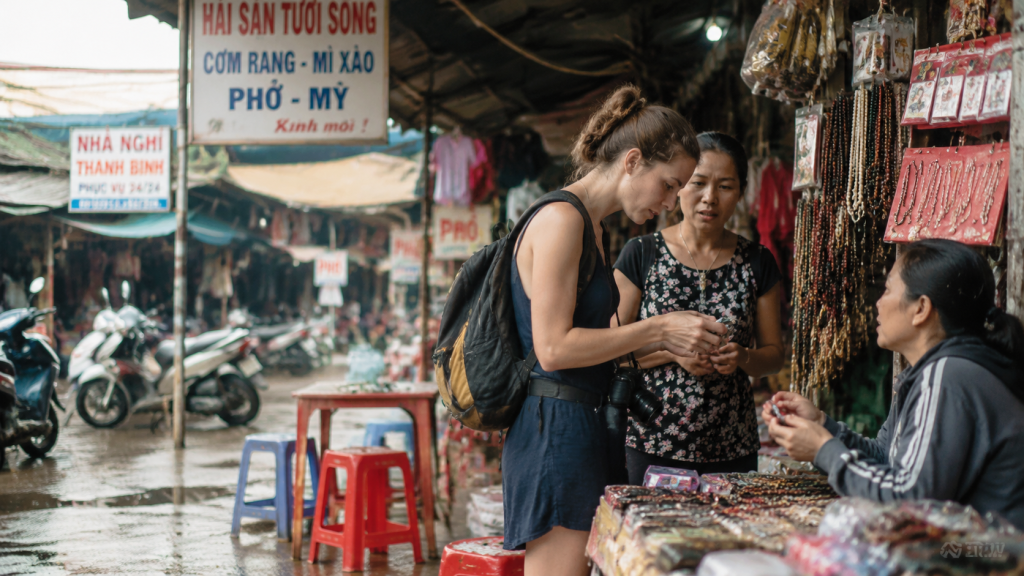
How to haggle in Vietnam starts with one simple rule: stay friendly, stay curious, and never treat the price like a battle. In busy markets, taxi rides, and small souvenir stalls, a calm smile and a polite question can save you money without creating awkward vibes. That is the real travel win.
This guide shows you how to haggle in Vietnam with local etiquette, quick phrase tips, and practical bargaining moves that fit real street life. You will learn where bargaining makes sense, where fixed prices are normal, and how to spot fair deals fast. For a deeper local adventure mindset, you can also explore Vietnam Crazy Tour experiences while you plan your trip.
Featured snippet: Haggling in Vietnam works best in markets, street stalls, and some tailor shops. Start with a polite lower offer, keep your tone light, and be ready to walk away. If the seller stays firm, accept it gracefully. Respect matters more than squeezing every last dong.
| Tiêu chí | Cột 1 | Cột 2 | Cột 3 |
|---|---|---|---|
| Best for bargaining | Markets and street stalls | Polite, flexible prices | Higher chance of a deal |
| Not for bargaining | Supermarkets and malls | Fixed, labeled prices | Pay the posted amount |
All Vietnam tours are a smart add-on if you want local context before shopping, because knowing the neighborhood vibe helps you read prices faster. A soft approach usually gets the best result, especially for first-time visitors, couples, solo travelers, and families who want the experience to feel easy, fun, and very Vietnam crazy in the best way.
Where Haggling in Vietnam Is Normal
How to haggle in Vietnam starts with knowing where it is part of daily life and where it would feel out of place. In local markets, street stalls, and some taxi rides, bargaining is normal and often expected. In fixed-price places, pushing too hard can make you look out of touch, so the real skill is reading the room fast.
For adventurous travelers, this is one of the easiest ways to blend into the local rhythm without losing money or momentum. A calm smile, a fair counteroffer, and a little patience can turn a price check into a friendly exchange. If you want deeper street-level travel energy, explore Vietnam Crazy Tour and see how local culture feels when you move beyond the usual tourist lane.
Featured snippet: Haggling in Vietnam is normal in markets, street stalls, some taxis, and tourist shops. It is usually not appropriate in supermarkets, malls, chain stores, or fixed-price businesses. The best approach is to stay friendly, ask for the price, make a respectful counteroffer, and walk away if the deal does not feel right.
What haggling means in local shopping culture: it is a quick negotiation, not a fight. Sellers may start higher because they expect some back-and-forth, especially with travelers. The goal is a price that feels acceptable to both sides, not winning at all costs.
| Tiêu chí | Cột 1 | Cột 2 | Cột 3 |
|---|---|---|---|
| Best for bargaining | Markets and street stalls | Some taxis and tourist shops | Small souvenir stands |
| Usually fixed price | Supermarkets and malls | Chain cafes and convenience stores | Online platforms and branded shops |
Markets, street stalls, taxis, and tourist shops are the main places where bargaining can happen, but each one has a different code. In a wet market, a vendor selling fruit or sandals may expect you to negotiate. In a taxi, it is better to confirm the fare first or use an app when possible. In tourist shops, prices can be flexible, especially for clothing, crafts, and quick buys. If you want a more immersive local experience, a soft add-on like all Vietnam tours can help you compare how everyday spending works across regions.
When bargaining is appropriate and when it is not comes down to context, not ego. Bargain for handmade items, souvenirs, street goods, and some transport situations where the price is unclear. Do not haggle in supermarkets, branded stores, pharmacies, or places with clearly printed prices. Mini insight: if a place looks modern, organized, and labeled in plain view, the price is probably not a negotiation starter. Stay polite, stay light, and your Vietnam trip stays smooth.
Soft CTA: if you are building a local-first trip, learn the rhythm of the streets before you chase the discount.
Strong CTA: use this rule on your next stop in Vietnam, then book the kind of tour that puts you close to real local life, not just souvenir aisles.

How to Haggle in Vietnam Step by Step
How to haggle in Vietnam works best when you stay calm, smile first, and treat the price like a friendly conversation, not a fight. In local markets, street stalls, and small souvenir shops, vendors expect a little negotiation, especially when you are a foreign visitor carrying tourist energy and no local context.
The goal is not to win every dong. The goal is to pay a fair local price, keep the vibe warm, and avoid overpaying for simple items like fruit, sandals, dried snacks, or handmade gifts. If you want a smoother trip, this is one of the most useful street skills you can learn before exploring deeper with all Vietnam adventure tours.
Featured snippet: Start with a smile, ask the price, offer a polite lower number, and be ready to walk away if needed. Use simple English, count in VND, and keep your body language relaxed. In Vietnam, friendly energy often gets better results than hard pressure, especially in busy local markets.
| Tiêu chí | Good move | Bad move | Why it matters |
|---|---|---|---|
| First approach | Smile and greet | Rush in silently | Sets a friendly tone |
| Price talk | Ask and counter politely | Argue or mock the price | Protects respect on both sides |
Step 1: start with a smile, a simple hello, and a tiny bit of small talk. A vendor in Hanoi Old Quarter or a market stall in Hoi An will usually respond better when you act like a guest, not a calculator. You do not need perfect English. You need calm energy and a friendly face.
Step 2: ask the price, then pause. If the number feels high, counter politely with something lower, but not ridiculous. A simple line like How much for this? followed by Could you do a better price? is enough. If the seller hesitates, that is normal. Use the pause, smile, and let them respond.
Step 3: use the walk-away tactic only when the number is not moving. Say no thank you, turn slowly, and leave with no drama. Many stalls will call you back if they still want the sale. If they do not, you already showed respect and kept your bargaining power intact.
Mini insight: the strongest hagglers do not look desperate. They look relaxed, curious, and ready to buy only when the deal feels fair. That is why simple English, clear numbers, and open body language matter so much. Point to the item, show the amount on your phone calculator, and keep your hands visible and neutral.
If you are the type who likes raw, local, adventurous travel, this skill helps you move with more confidence through street food lanes, weekend markets, and tiny village shops. It also pairs well with a real local experience, such as choosing a Vietnam Crazy Tour that goes beyond the usual tourist script.
Use these phrases and habits:
- How much?
- Can you make it a little cheaper?
- Too expensive
- No thank you
- Count prices in VND, not in your home currency
When you follow this simple rhythm, you will haggle with less stress and more success. The trick is not aggression. The trick is timing, smile, and clarity. That is the real step by step method for how to haggle in Vietnam without looking lost or overpaying like a rookie.

Best Haggling Tips for Better Prices
How to haggle in Vietnam starts with one simple rule: know the real market range before you open your wallet. In local stalls, prices can shift fast depending on location, season, and how touristy the area feels. If you walk in blind, you are already negotiating from the weaker side.
For adventurous travelers, that means a quick scan of two or three stalls before buying. Ask casually, compare the same item, and watch how locals move through the market. This is not about being cheap. It is about paying fair prices with confidence, especially in busy places where first offers often start high.
The fastest way to build a good deal is to make the seller see you as an easy, respectful buyer, not a rushed tourist. A relaxed pace also helps you spot small differences in quality, size, and material. That matters in places where one scarf, bag, or souvenir can look identical but differ a lot in value.
Use a simple decision rule: if you know the local range, you can judge whether the first price is close, inflated, or ridiculous. When in doubt, take five minutes and compare. That short pause often saves more money than aggressive bargaining ever will.
| Criteria | Good Move | Risky Move | Best Use |
|---|---|---|---|
| Price check | Compare 2 to 3 stalls first | Buy from the first quote | Markets and street vendors |
| Negotiation style | Friendly and calm | Pushy or angry | Local shopping spots |
Featured snippet: To haggle well in Vietnam, check the price range at a few stalls, start with a respectful lower offer, and compare before you buy. The best deals usually come from calm timing, cash payment, and a friendly tone, not from pressure or drama.
Buying multiple items can unlock better pricing, especially when the seller sees a bigger total sale. If one item feels too expensive, ask for a better rate on two or three. Paying cash can also help, because it removes card fees and makes the deal smoother for both sides. In some local markets, this tiny detail changes the final quote more than people expect.
Try this in real life: one vendor offers 180,000 VND for a handmade item. Instead of arguing about one piece, ask what the price would be for two. Compare the answer with another nearby stall, then decide. If one shop gives a stronger bundle price, you have a clean reason to buy without looking hard to please.
For travelers who like deeper local experiences, this is also where the atmosphere matters. A smile, eye contact, and a respectful tone often do more than a loud counteroffer. If you want more local-style travel ideas after the market, check out Vietnam Crazy Tour experiences for routes that put you closer to real neighborhood life.
Timing is the final piece. Late afternoon can be good if vendors want to clear stock, while early hours may reward polite first customers. Confidence matters too, but it should look calm, not pushy. If a price still feels off, move on. In Vietnam, the next stall is often only a few steps away, and that is your real bargaining advantage.
When you combine timing, confidence, and a respectful tone, you stop feeling like a tourist and start negotiating like someone who understands the room. That is the sweet spot for solo travelers, couples, and families who want better prices without killing the vibe. If you are planning a bigger adventure, browse all Vietnam Crazy tours to match your market stops with local-style trips.
Strong CTA: Use these haggling tips on your next Vietnam market run, compare a few stalls, and buy only when the price feels fair. That is how you keep the experience fun, local, and wallet-friendly at the same time.
Common Mistakes to Avoid When Haggling
How to haggle in Vietnam works best when you stay calm, polite, and realistic. The biggest mistake is treating the price talk like a fight, because local sellers read your attitude fast and will often close the conversation before the deal even starts.
In busy markets, street stalls, and local craft spots, the goal is not to win hard. It is to land on a fair number, protect the relationship, and keep the experience enjoyable. That is especially true for adventurous travelers who want the real Vietnam, not just the cheapest souvenir.
Featured snippet: Common haggling mistakes in Vietnam usually come from three things: being too aggressive, trying to negotiate in fixed-price places, and ignoring product quality or the final agreed amount. A smart traveler stays respectful, checks whether bargaining makes sense, and confirms every detail before paying.
A good rule is simple: if the seller is smiling, keep it light; if the shop looks formal, assume the price is fixed. For a deeper cultural experience, pair your market visits with a local-style day out from all Vietnam crazy tours, where understanding local behavior matters as much as saving a few dong.
| Tiêu chí | Avoid | Do Instead | Result |
|---|---|---|---|
| Seller tone | Mocking or pushing hard | Friendly back and forth | Better chance of agreement |
| Price setting | Haggling in fixed-price spots | Check for posted prices first | Less awkward, faster buying |
| Final check | Paying without confirming details | Verify quality and amount | Fewer mistakes |
Being aggressive, mocking the seller, or bargaining too hard is the fastest way to lose trust. In Vietnam, a respectful smile can do more than a sharp comeback, especially in local markets where people value face and mood. If you sound rude, the vendor may simply give you a higher price or stop negotiating entirely.
Real example: a traveler offers a very low price, laughs at the first quote, and keeps pressing after the seller already said no. The seller may still sell, but the atmosphere turns cold. A better approach is to counter once or twice, then pause. That small pause shows confidence without disrespect.
Mini insight: if your offer is too extreme, the seller assumes you are not serious. That is why the best hagglers sound relaxed, not desperate. Keep your voice easy, your face open, and your numbers realistic.
Overusing the tactic in places with fixed prices is another common trap. Convenience stores, malls, chain cafes, supermarkets, and many modern shops have clear pricing, so bargaining there only makes you look uninformed. If the menu, tag, or cashier screen already shows the final amount, save your energy for open-air markets and local stalls.
That said, fixed-price places are still useful for comparison. You can learn the normal range, then return to market stalls with better judgment. If you want more local-style travel moments, browse Vietnam Crazy Tour homepage for ideas that focus on real neighborhood life instead of tourist theater.
Ignoring quality, authenticity, and final agreement can cost more than overpaying by a little. A cheap item that breaks in one day is not a deal. Check stitching, material, weight, smell, and packaging before you commit. For food, souvenirs, or handmade goods, ask what is included so you do not discover missing parts after the sale.
Before paying, repeat the final number clearly and confirm the item details. A simple recap avoids misunderstandings about size, quantity, color, or delivery. This is where how to haggle in Vietnam becomes practical, not performative: good negotiation ends with both sides knowing exactly what was agreed.
Soft CTA: If you are planning a more local and adventurous trip, choose experiences that already understand real market behavior, because that makes every conversation easier and every purchase safer.
See all local-style Vietnam tours and build a trip that mixes culture, value, and comfort without the awkward bargaining mistakes.
FAQ: How to Haggle in Vietnam the Smart Way
How to haggle in Vietnam works best when you stay polite, start low, and read the setting before you name a price. In markets and street stalls, bargaining is normal; in malls, chain restaurants, and ride apps, the price is usually fixed. The smartest move is to treat haggling as a short, friendly exchange, not a fight.
For first-time visitors, the real win is not just saving money. It is avoiding overpaying while keeping the vibe easy, especially in busy local areas where vendors meet tourists all day. If you want a deeper local-style experience, pair your market walk with Vietnam Crazy Tour and learn how everyday negotiation feels on the street.
Featured snippet: A fair starting counteroffer in Vietnam is often around 30 to 50 percent below the asking price in tourist markets, then move up slowly to a middle point both sides can accept. Be friendly, compare a few stalls, and stop when the price feels reasonable for the item and location.
What is a fair starting counteroffer?
A fair opening offer is usually 30 to 50 percent below the first price if you are in a tourist-heavy market. If the seller says 200,000 VND for a souvenir, a smart reply might be 80,000 to 100,000 VND, then let the price settle somewhere in between. For higher-value items like custom clothing or handmade goods, aim a little higher so the offer still feels respectful.
| Tiêu chí | Tourist market | Local market | Fixed-price place |
|---|---|---|---|
| Start point | 30 to 50 percent lower | Closer to 20 to 30 percent lower | Do not haggle |
| Best move | Compare 2 to 3 stalls | Use a gentle ask | Pay the listed price |
Mini insight: if you only want one item, do not push too hard. Vendors often respond better when they see you are calm, curious, and ready to walk away. That is why how to haggle in vietnam is less about winning and more about finding the right number fast.
Is it rude to haggle in Vietnam?
No, haggling is not rude in the right places. In many markets, it is expected and even part of the social rhythm. What feels rude is being aggressive, mocking the price, or acting offended when the seller does not accept your first offer. A smile and a light tone go much further than hard pressure.
If you are buying snacks, fruit, or small souvenirs from a street vendor, keep the exchange short and respectful. If you want a more immersive look at local life, browse all Vietnam tours that place you closer to real neighborhood energy instead of polished tourist lanes.
Quick rule: if the seller seems relaxed, bargaining is fine. If the shop has clear price tags, a checkout counter, or menu prices, pay what is written. That simple filter saves awkward moments and keeps your trip smooth.
Can you haggle in malls, restaurants, or ride apps?
Usually no. Malls, chain restaurants, supermarkets, and ride apps work on fixed pricing, so trying to bargain there looks awkward and wastes time. Some street food stalls may adjust prices slightly for add-ons or special requests, but the base price is normally set. In ride apps, the app already calculates the fare, so negotiate only if you are booking a private car outside the platform.
If you are deciding where to save your energy, use this simple split: haggle in open-air markets and souvenir stalls, but do not haggle in modern retail spaces. That is the easiest way to keep your trip efficient and avoid looking like a confused rookie.
What are the most useful Vietnamese phrases for bargaining?
The most useful bargaining phrases are simple, short, and easy to remember. Try these in a friendly tone: Bao nhiêu tiền for how much, Đắt quá for too expensive, and Giảm giá được không for can you give a discount. You do not need perfect pronunciation. A polite attempt already signals respect and often softens the conversation.
Good body language matters too. Point at the item, smile, show the number on your phone, and ask again if needed. That combination helps solo travelers, couples, and families move through a market without stress, especially when the seller speaks limited English.
Useful phrase set:
- Bao nhiêu tiền for price check
- Giảm giá được không for a discount ask
- Đắt quá for soft pushback
- Cảm ơn for polite exit
Quick recap and gentle travel CTA
Here is the smart version of the game: start low, stay calm, know where bargaining is normal, and leave places with fixed prices alone. Carry small bills, compare a few stalls, and do not turn a small purchase into a long debate. That is the cleanest path for anyone learning how to haggle in vietnam without killing the vibe.
If you want more local insight and a more adventurous way to explore the country, check Vietnam Crazy Tour adventures and build a trip that feels real, human, and wildly memorable. Bargain with a smile, keep it light, and let the next market deal be part of the story.
