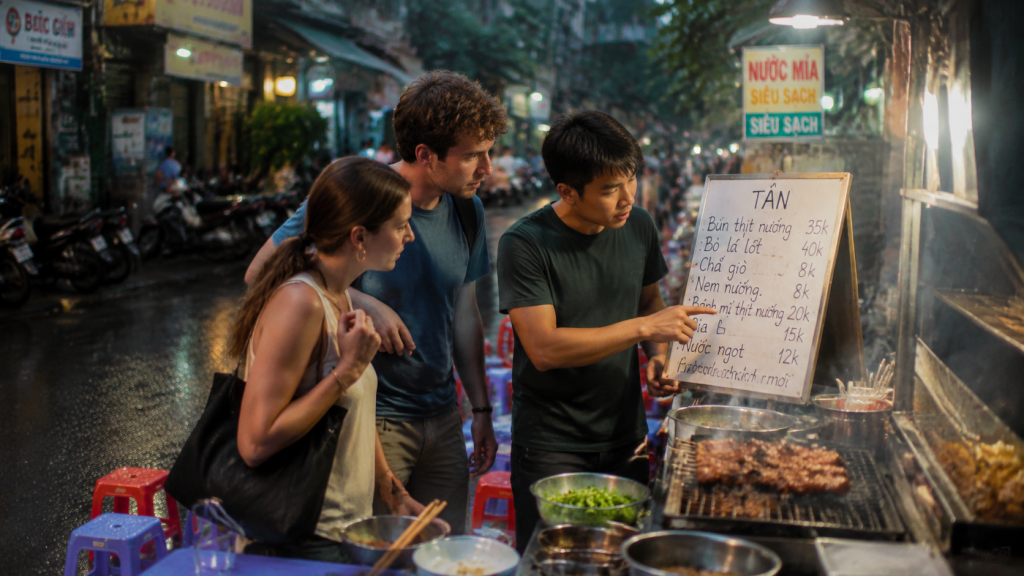
Street food in Ho Chi Minh City is the fastest way to feel the city for real, but many first-time visitors still worry about what to try, where to sit, and how to avoid the usual beginner mistakes. This guide solves that by showing you how the local food scene works, which dishes are worth your appetite, and how to choose stalls with more confidence than guesswork.
The magic is not only in the food, it is in the full street-level experience: plastic stools, smoky grills, loud chatter, and dishes arriving hot in front of you. If you want a smart starting point, follow local clusters, read the crowd, and compare a few spots before ordering. For broader Vietnam trip ideas, you can also check Vietnam Crazy Tour travel ideas and use this guide as your food map. A quick rule: busy tables usually mean fresh turnover, and that matters more than fancy signage.
| Criteria | Best Choice | Why It Works | Good For |
|---|---|---|---|
| Busy stall | High turnover | Food is usually fresher | First-time visitors |
| Local crowd | Neighborhood favorite | Better taste and value | Solo travelers and couples |
Featured snippet: Street food in Ho Chi Minh City is a lively local dining scene built around open-air stalls, sidewalk seating, and affordable dishes. The best approach is to start where locals eat, order one or two signature items, and focus on places with steady customer flow, visible cooking, and simple menus. That keeps the experience tasty, efficient, and safe.
If you want to explore beyond eating on your own, a soft way to level up the experience is to join a local route or curated walk, especially on your first night in the city. It saves time, removes hesitation, and helps you understand what you are looking at before you start ordering freely. For more organized options, see all Vietnam Crazy Tour tours when you want to turn curiosity into a full food adventure.
Simple starter steps: arrive hungry, bring cash, scan the menu, watch what locals order, and choose dishes that are cooked to order. That small checklist turns street food in Ho Chi Minh City from confusing to addictive.
Strong CTA: Start with one neighborhood, one meal, and one open mind. If you want a deeper local experience with less stress and more flavor, book a curated Vietnam Crazy Tour route and let the city guide your appetite the proper way.

What Makes Street Food in Ho Chi Minh City So Special
Street food in Ho Chi Minh City is not just a meal, it is a full local experience built into the rhythm of the city. For first-time visitors, the challenge is knowing why one corner feels chaotic, another feels family-friendly, and a third feels like a hidden culinary jackpot. The answer is simple: Saigon turns sidewalks, alleys, and storefronts into a living dining room.
If you want the real flavor of the city, start by understanding the local logic behind each food lane. That is where the magic happens, and it is exactly why street food in Ho Chi Minh City keeps pulling travelers back for more. For a bigger picture of the country’s food culture, you can also explore Vietnam Crazy Tour as a broader travel starting point.
The local Saigon context is easy to define: food sold at street level, cooked fast, priced fairly, and eaten in a social setting. You will see tiny plastic stools, open grills, and bowls passed across busy sidewalks. That is not a tourist gimmick, that is daily life. A good example is a breakfast stall serving bánh mì beside a family noodle shop, both packed before 8 a.m.
What makes the city special is density and variety. In one short walk, you can move from southern noodle soups to Chinese-inspired dumplings, seafood grills, and sweet desserts. Each district has its own flavor map, so the best approach is to follow the crowd, the smoke, and the smell. If you enjoy local immersion, some travelers pair food exploring with all Vietnam tours that focus on authentic street-level experiences.
| Criteria | Street Food Lane | Restaurant Zone | Best For |
|---|---|---|---|
| Atmosphere | Busy, open, social | Controlled, formal | People who want local energy |
| Food style | Quick, varied, regional | More standardized | Travelers who want discovery |
The city is one of Asia’s most exciting food destinations because it rewards curiosity. A solo traveler can snack safely and flexibly, couples can share a slow evening meal, and families can choose familiar dishes plus adventurous bites. The best streets come alive late afternoon through night, when office workers, students, and neighborhood regulars all hit the pavement at once. That is the moment when Saigon feels most alive.
Mini insight: the real benchmark is not fame, it is flow. If a street has constant turnover, hot pans, and mixed local diners, it is probably worth your time. For travelers who want food plus culture in one trip, a softer next step is booking with ghost and beliefs tours or other local experiences that reveal how Vietnamese daily life connects with food, ritual, and neighborhood identity.
Street food in Ho Chi Minh City means affordable local dishes eaten in lively public spaces, usually on sidewalks or narrow alleys. It is special because the food, the setting, and the crowd work together. The best time to enjoy it is from late afternoon to late evening, when each district becomes a different kind of open-air dining scene.
If you are planning your first food walk, go with an open route, not a rigid checklist. Choose one busy area, order small portions, and keep moving. That is the smartest way to taste more, see more, and understand why the city has such a strong reputation among adventurous travelers.
Street food in Ho Chi Minh City becomes memorable because it is never only about eating. It is about watching a grill fire up beside a sidewalk, hearing people bargain in local accents, and noticing how every stall fits into the neighborhood’s daily pulse. That is the real Saigon vibe, and it is exactly what makes the scene unforgettable.

Must-Try Street Food in Ho Chi Minh City
Street food in Ho Chi Minh City is the fastest way to understand the city, because the real magic happens at sidewalk level, not in polished restaurants. If you are a first-time visitor, the challenge is not finding food, it is knowing what to trust, what to order, and how to read the local rhythm without feeling lost.
The good news is that the city makes this easy once you know the core dishes. From sizzling pancakes to noodle soups, each plate tells a different story about migration, climate, and daily life. This chapter gives you the must-try bites, the drinks worth chasing, and the flavor clues that help you eat like a local instead of just passing through.
Featured snippet: The best street food in Ho Chi Minh City is cheap, fast, and deeply local. Start with a few signature dishes, choose busy stalls with steady turnover, and eat where office workers, families, and students already queue. That is the simplest way to find fresh food and a real Saigon street scene.
Signature dishes every first-time visitor should know are the ones that instantly show why street food in Ho Chi Minh City has such a strong following. For a beginner, the safest and most rewarding starters are phở, bánh mì, cơm tấm, bánh xèo, and bún thịt nướng. These are not just famous names, they are daily meals with clear personality: broth, crunch, smoke, rice, herbs, and dipping sauce all doing different jobs at once.
For example, bánh mì gives you a French-influenced baguette with Vietnamese fillings, while cơm tấm turns broken rice into a full comfort plate with grilled pork and pickles. A smart first route is to try one soup, one rice dish, and one snack in the same evening, then compare textures. If you want a smooth starting point, see all Vietnam tours for ideas that keep the food adventure easy and local.
| Tiêu chí | Bánh mì | Cơm tấm | Bánh xèo |
|---|---|---|---|
| Best for | Quick snack or light meal | Hearty lunch or dinner | Sharing and tasting together |
| Flavor profile | Crisp, savory, bright | Smoky, sweet, rich | Crispy, herbal, slightly earthy |
Street snacks, meals, and drinks that define the city are often the easiest way to build confidence, especially for solo travelers, couples, and families who want variety without overthinking every stall. Look for gỏi cuốn for a fresh roll, bún bò Huế for a spicier noodle bowl, hủ tiếu for a southern-style soup, and grilled skewers when you want something casual and social. In the evening, the sidewalks turn into a mix of steam, smoke, and plastic stools, which is exactly where the city feels most alive.
Drinks matter too. Fresh sugarcane juice, avocado smoothie, coconut coffee, and iced tea are all part of the local pace, and they reset the palate between richer dishes. This is also where a smart traveler learns pacing: order smaller portions, share plates, and save room for dessert like chè or coconut ice cream. A little snack hopping goes a long way, and it keeps the night moving without food fatigue.
Local ingredients and flavors shape each dish in a very practical way. Saigon cooking leans on rice, herbs, fish sauce, pork, seafood, coconut, and tropical vegetables because they are abundant, affordable, and suited to the southern climate. That is why dishes often feel brighter and sweeter than in the north, with more herb lift and more dipping sauce. The city also absorbs Chinese, Khmer, and French influence, so a single street can move from dumplings to noodle soup to grilled meat in a few steps.
Mini insight: the best stalls usually keep one or two specialties and repeat them all day, which is a good sign of focus and freshness. If you are building a food-focused itinerary, it helps to pair tasting routes with local context, and Vietnam Crazy Tour homepage is a useful place to start when you want a trip that stays grounded in real neighborhood energy. For travelers who like rougher, more human local scenes, the same approach works across the city, from family-run counters to busy alley food courts.
In Ho Chi Minh City, the real win is not just eating well, it is eating in the middle of the city’s daily pulse. Choose one signature dish, one snack, one drink, then sit where locals sit and watch how the whole system works. That is where the flavor, the pace, and the atmosphere finally lock together.
How to Enjoy Street Food in Ho Chi Minh City Like a Local
Street food in Ho Chi Minh City is easiest to enjoy when you stop thinking like a tourist and start moving like a regular diner. The city rewards curiosity, but it also rewards small habits: watch how locals order, follow the busiest tables, and choose the right time of day. That is how you get better flavour, faster service, and a far more local experience.
For first-time visitors, the main challenge is not finding food, but reading the room. Some stalls look chaotic and are actually very organised, while others look polished but feel empty for a reason. If you want a smooth start, combine Vietnam Crazy Tour inspiration with a simple rule: eat where the turnover is high, the setup is clean enough, and the menu is short enough to trust.
Featured snippet: To enjoy street food in Ho Chi Minh City like a local, order by pointing or naming one dish, sit where locals sit, and choose busy stalls with fast turnover. Go early for breakfast streets, late afternoon for snacks, and after 6 pm for the full night-food atmosphere.
Simple ordering habits and dining etiquette matter more than most travellers expect. At a typical stall, you can point to the dish, ask for no ice if needed, and keep your order direct. Locals often eat quickly, share tables, and do not treat the meal like a long event. A small gesture, like moving aside after paying or not blocking the counter, makes you fit in immediately.
Here is the local rhythm to follow:
- Stand or sit where the flow is already moving
- Watch one table before ordering if you are unsure
- Use cash in small bills when possible
- Keep your bag close and your phone out of the food zone
- Tip only when service feels extra helpful, not mandatory
Mini insight: in Ho Chi Minh City, confidence matters more than perfect pronunciation. Say the dish name slowly, smile, and point if needed. Most vendors understand basic English, but they appreciate calm, respectful body language even more.
How to spot busy, trustworthy food stalls is a practical skill, not a guessing game. A strong stall usually has a steady stream of Vietnamese customers, visible cooking, and ingredients that move quickly from prep to plate. If the grill is hot, the broth is active, and the seller is constantly restocking, that is a very good sign. If the same dishes sit untouched for too long, keep walking.
Use this quick check before you sit down:
| Tiêu chí | Cột 1 | Cột 2 | Cột 3 |
|---|---|---|---|
| Customer flow | Mostly locals | Mixed but steady | Almost empty |
| Food turnover | Fast and fresh | Acceptable | Slow and stale |
Mini insight: locals often trust a stall because the same families return every day. That is why a narrow alley with constant movement can feel more reliable than a glossy restaurant with perfect signage.
Best times of day to explore street food streets and markets depend on what you want to eat. Breakfast is ideal for noodle soups, broken rice, and fresh bread. Late afternoon works best for snack streets and market browsing because vendors are setting up and the energy is building. After sunset, the city shifts into its loudest, brightest food mode, and that is when places like all Vietnam Crazy tour adventures style streets feel most alive.
If you want the best timing by food style, use this simple guide:
- 6:30 am to 9:00 am for breakfast bowls and coffee
- 3:00 pm to 5:30 pm for snacks, desserts, and lighter bites
- 6:00 pm to 9:30 pm for full street food dinners
- After 10:00 pm for flower markets, late noodles, and night eats
Mini insight: some of the best stalls are not the most famous ones, but the ones serving the same dish at the same hour every day. That consistency is often the real local signal.
For adventurous travellers, the smartest move is to build your route around the district, not around random cravings. Start with one crowded street, sample two or three dishes, then move on before you get too full. If you want a deeper local angle, ghost and beliefs tours can complement a food night with cultural context, especially in older neighbourhoods where food, ritual, and family life overlap.
Soft CTA: if you like exploring hidden corners, go slow, stay curious, and treat each stall like a local recommendation rather than a checklist stop. That is where the real flavour lives.
In short, the local way to enjoy street food in Ho Chi Minh City is simple: pick busy stalls, order cleanly, respect the pace, and time your visit around the street’s natural rhythm. That approach gives you better food, fewer mistakes, and a much more memorable night in the city. If you want help planning a deeper food-focused route, start with Vietnam Crazy Tour and let the city do the rest.
Strong CTA: choose one neighbourhood, arrive at the right hour, and eat with confidence. That is how a first visit turns into a real local-style food experience.
Best Areas to Find Street Food in Ho Chi Minh City
Street food in Ho Chi Minh City is not spread evenly, and that is exactly why area choice matters. Some streets are built for big variety, some for late-night energy, and some for quiet, local eating with fewer tourists. If you want the real deal, the trick is to match the neighborhood to your pace, appetite, and travel style.
For first-time visitors, the city can feel wild fast: traffic, noise, steam, and menus with no English. The good news is that the best food areas each solve a different problem. Some are easy to navigate, some feel deeply local, and some are perfect for adventurous couples or solo travellers who want to eat where residents actually gather after dark.
Featured snippet: The best areas for street food in Ho Chi Minh City depend on your style. Choose District 4 for seafood and chaos, District 5 for Chinese-Vietnamese classics, District 10 for dense local eating, and District 1 side streets for convenience. Night markets and alleyways are best for variety, but quieter neighborhoods often deliver the most authentic experience.
Popular food districts and what each area is known for
District 4 is the no-messing-around choice for seafood, grilled shellfish, and loud plastic-table energy. It is a strong pick for groups, couples, and travelers who want a big local atmosphere without trying too hard. District 5 and 11 lean into Chinese-Vietnamese food, especially dumplings, hotpot, and herbal drinks, which makes them ideal for food lovers who enjoy regional depth and older urban character.
District 10 is a solid all-rounder for people who want heavy local density and lots of snack options in one walkable zone. Streets here often feel more lived-in than curated, which is good news if your goal is discovery. If you want a softer entry point, District 1 side streets like Cô Giang still offer Vietnam crazy tour style convenience, with easy access and enough local food to keep things interesting.
Mini insight: the busiest area is not always the best one for taste. In Saigon, a smaller street with steady local traffic often beats a famous strip packed with hype.
Night markets, alleyways, and local neighborhoods worth visiting
Night markets are useful when you want variety in one stop, but alleyways usually bring the stronger local feel. Hồ Thị Kỷ is the classic example: a narrow food lane beside a flower market, full of tiny tables, mixed menus, and late-night movement. It works well for solo travellers and adventurous couples because you can wander, sample, and stop without pressure.
Alleyways also help families avoid the harshest traffic and give children or older travelers a calmer eating rhythm. In places like Cô Giang, Nguyễn Thượng Hiền, and the side lanes around District 4, the real action often sits a few steps off the main road. If you like exploring neighborhoods on foot, this is where the city starts to feel personal rather than performative. For travelers comparing different food-focused experiences, check all tours of Vietnam Crazy tour for more local-style ideas.
| Tiêu chí | District 4 | District 5 | District 10 |
|---|---|---|---|
| Best for | Seafood, grilled dishes, nightlife | Dumplings, hotpot, Chinese-Vietnamese food | Dense local street eats and snacks |
| Travel style | Adventurous, social, high-energy | Culture-focused, curious, food-led | Explorer, repeat eater, neighborhood walker |
How to choose the right area based on your travel style
If you want easy logistics, stay close to District 1 and use nearby streets for a low-stress first taste of the scene. If you want a more local adventure, head toward District 4 or District 10 after sunset, when the atmosphere feels most alive. Couples usually enjoy a district with strong sit-down options and room to linger, while solo travellers often prefer alleyways where it is easy to sample one dish at a time.
Families should look for places with stable seating, clearer menus, and not too much motorcycle chaos at the curb. Food-first travelers who care more about flavor than comfort should prioritize neighborhood streets over polished markets. The best rule is simple: choose the area that matches your energy, then eat what the locals are lining up for. If you want a deeper, guided way to explore, a ghost and beliefs tour can pair naturally with evening street wandering in the city.
Strong CTA: If you only have one night, choose one food district and go deep instead of rushing across the city. That is how Ho Chi Minh City street food stops being a checklist and starts becoming a real local experience.
Street Food Safety Tips, Common Mistakes, and FAQ
Street food in Ho Chi Minh City is one of the easiest ways to eat like a local, but first-time visitors often overthink it, panic too early, or miss the best stalls because they are looking for perfect cleanliness instead of smart signs. The real move is simple: choose busy vendors, eat food that is cooked fresh, and know a few basic safety habits so you can enjoy the chaos with confidence.
If you want the fun without the headache, this chapter gives you the practical rules that matter on the ground. Whether you are traveling solo, as a couple, or with family, the goal is not to play it safe in a boring way. It is to eat well, stay comfortable, and still feel the electric energy of Vietnam crazy tour style street dining.
Featured snippet: The safest way to enjoy street food in Ho Chi Minh City is to pick busy stalls, order food that is cooked hot in front of you, avoid raw ice or questionable water, and start with small portions. Most stomach problems come from rushing, overeating, or choosing empty stalls with food sitting out too long.
Common mistakes first-time visitors make with street food
Many visitors think the cleanest-looking stall is always the safest, but in reality a spotless setup with no customers can be a bad sign. A better clue is turnover. If locals are lining up and dishes are disappearing fast, the ingredients are likely fresher and the kitchen is active. Another common mistake is ordering too many dishes at once and overwhelming your stomach before it has adapted.
Watch for these classic errors:
- Choosing an empty stall just because it looks neat
- Eating too much fried food on the first night
- Drinking untreated ice or tap water
- Ignoring food that should be served hot but arrives lukewarm
A useful rule is to start with grilled, boiled, or noodle dishes before trying heavier seafood spreads. If you are exploring a lively local zone and want to move between safe options, our all tours in Vietnam page can help you match food plans with neighborhood style.
How to eat safely and avoid issues without missing the fun
Eat at stalls where the cooking happens in front of you and the crowd is steady. The heat does most of the safety work for you. Ask for less chilli if you have a sensitive stomach, and begin with small bites so you can test how your body reacts before going all in.
| Tiêu chí | Best choice | Avoid | Why it matters |
|---|---|---|---|
| Cooking style | Freshly grilled or boiled | Food sitting uncovered | Heat reduces risk |
| Stall traffic | Busy with locals | Completely empty | High turnover means fresher food |
Mini insight: the safest street food is usually the food that looks busy, smells fresh, and leaves the pan fast. If you want a softer way to explore local food culture beyond restaurants, you can also browse ghost and belief tours for a different kind of neighborhood experience.
Quick safety steps: wash or sanitize hands before eating, carry tissues and wet wipes, drink bottled water, and do not mix too many new dishes in one sitting. That keeps the adventure high and the risk low.
FAQ: what to eat, how much it costs, and whether it is safe
What should I eat first? Start with grilled pork rice, banh mi, noodle soup, or fried pancakes. These are easier for most visitors than raw herbs, fermented seafood, or very rich shellfish dishes.
How much does it cost? Most street dishes cost around 1 to 3 USD, while bigger seafood or hotpot meals can cost more. Even then, Ho Chi Minh City stays one of the best-value food cities in Asia.
Is it safe? Yes, for most travelers, street food is safe when you choose busy stalls, cooked-to-order dishes, and bottled water. Sensitive stomachs should pace themselves, especially on the first day.
If you want a structured way to explore local food without wasting time hunting for the wrong streets, Vietnam Crazy Tour can help you turn a food crawl into a smooth, high-energy day out. The best approach is simple: eat where locals eat, keep portions sensible, and stay open-minded enough to enjoy the full Saigon street-food buzz.
