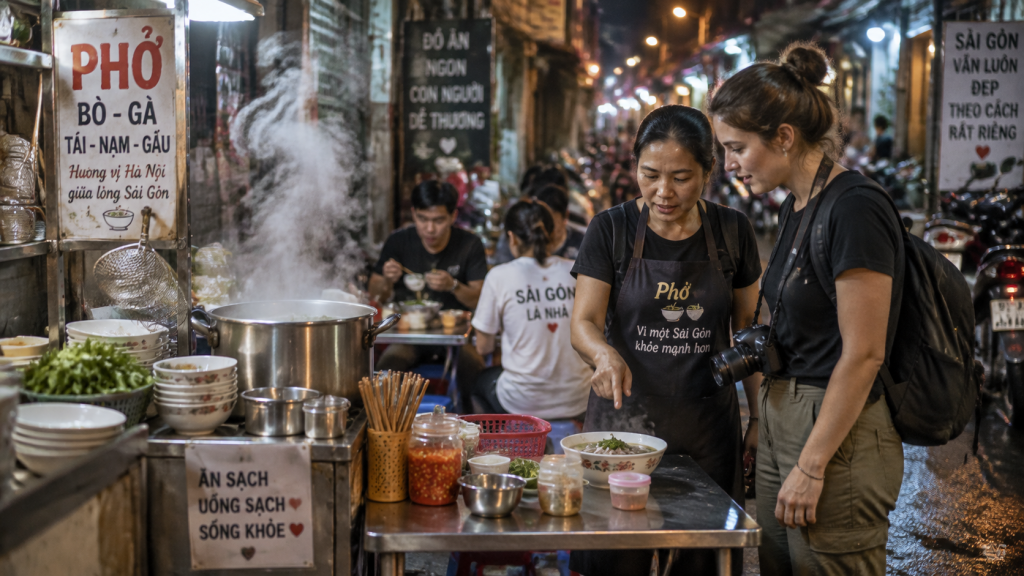
Street food safety in Vietnam is not about avoiding the best stalls, it is about reading the scene fast and eating smart. If you are landing in Hanoi, Ho Chi Minh City, Da Nang, or a tiny local lane packed with scooters, the real challenge is choosing food that feels adventurous without turning your trip into a stomach problem. This guide gives you simple, field-tested signals so you can enjoy the street food chaos with confidence.
For first-time visitors, solo travelers, couples, families, and curious expats, the safest approach is balance. Look for hot food made to order, busy vendors with quick turnover, and clean prep habits you can spot in seconds. That is how street food safety in Vietnam becomes practical, not stressful, and how you still get the full Vietnam crazy tour energy without second-guessing every bite.
Featured snippet: Street food safety in Vietnam comes down to three fast checks: choose stalls with strong local traffic, pick food cooked fresh and served hot, and avoid anything exposed for too long. If a place looks busy, clean, and moving quickly, it is usually a better bet than an empty stall with food sitting out.
When you walk through a night market or a sidewalk noodle spot, use a simple decision filter. all Vietnam tours can inspire your route, but your stomach needs local logic more than travel hype.
| Tiêu chí | Safer Choice | Use More Caution | Why It Matters |
|---|---|---|---|
| Food temperature | Hot, cooked to order | Room temperature dishes | Heat lowers common food risk |
| Stall activity | Busy with locals | Almost empty or slow turnover | High turnover usually means fresher food |
Soft tip for your trip: if you want a deeper taste of real local life beyond food lanes, the local community tour style of travel helps you understand how Vietnamese neighborhoods eat, move, and trust their favorite vendors. That context makes your choices sharper, safer, and way more fun.
Think of this guide as a quick street-side survival playbook. Watch the heat, the crowd, the cleanliness, and the pace, then eat like someone who knows the city instead of someone just passing through. That is the easiest way to enjoy Vietnam boldly and stay comfortable from the first bowl to the last late-night snack.

What Street Food Safety in Vietnam Really Means
Street food safety in Vietnam means more than avoiding a random bad bite. It is the practical mix of hygiene, food handling, water quality, and stall cleanliness that helps you eat confidently on busy sidewalks and night markets. For first-time visitors, the goal is not perfection. It is choosing places that cook fast, stay busy, and look cared for.
That matters because most travelers want the full local experience without spending the rest of the trip guessing if a stall is safe. The good news is that the signals are usually visible. Clean tools, hot food, covered ingredients, and a steady flow of locals often tell you more than any online warning. If you want a deeper local perspective, explore Vietnam Crazy Tour and compare how real food scenes work across neighborhoods.
In simple terms, street food safety is the combination of what you see, what you smell, and how the stall operates. A safe-looking vendor usually has fresh turnover, clean hands, dry surfaces, and food that is cooked to order rather than sitting around. Water and ice matter too, because they affect drinks, soups, and sauces even when the dish itself looks perfect.
| Tiêu chí | Cột 1 | Cột 2 | Cột 3 |
|---|---|---|---|
| Food handling | Cooked to order | Left sitting warm | Choose the first option |
| Stall cleanliness | Dry counters and covered tools | Sticky surfaces and open dust | Look for the cleaner setup |
For travelers, backpackers, and solo explorers, this matters because your trip rhythm changes when your stomach feels off. A little observation at the start saves time later, especially in packed markets where choices move fast. Start with hot dishes, ask for bottled water if needed, and notice how locals order at the busiest stalls. That is the real shortcut to better food decisions.
Mini insight: in Vietnam, the safest stall is not always the fanciest one. It is often the one with fast turnover, visible cooking, and people who clearly trust it every day. If you are planning a food-focused route or want a lighter local adventure, you can also browse all Vietnam tours for experiences that balance culture, comfort, and street-level discovery.
Featured snippet: Street food safety in Vietnam means checking hygiene, food handling, water quality, and stall cleanliness before you order. Look for hot food, clean tools, steady local traffic, and covered ingredients. These simple cues help travelers enjoy Vietnamese night markets with more confidence and less guesswork.
Soft CTA: If you want to explore Vietnam like a local without overthinking every meal, keep following the small safety cues that locals use naturally. They are simple, practical, and they work.
Quick safety checklist:
• Choose stalls with steady local turnover
• Prefer food cooked fresh in front of you
• Check that water, ice, and condiments look handled well
• Avoid stalls with dirty surfaces or too much exposed food
• Start with hot dishes before trying more delicate options
Street food safety in Vietnam is not about fear. It is about reading the scene well enough to enjoy the meal, the market, and the whole local atmosphere without stress. When you know what to look for, every bowl, skewer, and snack feels more open, more relaxed, and a lot more worth the stop.
Strong CTA: If you are ready to turn that confidence into a real trip, choose experiences that put you close to local life while still keeping the journey smooth. Vietnam is best enjoyed when you can eat boldly and move smart.

How to Judge a Safe Street Food Stall in Vietnam
street food safety in Vietnam starts with simple observation, not guesswork. If you know what to scan in the first 30 seconds, you can eat boldly, enjoy the local rhythm, and avoid the stalls that feel off before you place an order.
For solo travellers, couples, and families chasing the most local Vietnam moments, the trick is to read the stall like a pro. Look at crowd flow, cooking heat, utensil handling, and the vendor’s habits, then let those signals guide your choice with calm confidence.
Featured snippet: A safe street food stall in Vietnam is usually busy, cooks food to order, keeps tools tidy, and serves from an organized setup. The best stalls show high turnover, visible heat, clean hands or utensils, and a vendor who handles money and food separately as much as possible.
Step-by-step checklist for street food safety in Vietnam:
- Check the crowd: locals lining up often means fast turnover and fresher ingredients.
- Watch the cooking: food should hit high heat and come out steaming hot.
- Inspect utensils: tongs, ladles, and cutting boards should look used with care, not randomly stacked.
- Study the prep area: ingredients should be covered, organized, and not sitting in open chaos.
- Read the vendor: a calm, efficient seller usually runs a tighter stall than one juggling food and cash in the same hands.
A practical example: a tiny noodle stall with ten locals waiting, broth simmering hard, and bowls assembled to order is often a better pick than a quiet cart with food already plated for hours. That is the kind of street rhythm you want. If you like this kind of local discovery, explore more Vietnam experiences where the real-life vibe matters as much as the food.
Another smart sign is food turnover. If the vendor keeps refilling a tray too slowly, walk away. If the counter is clean but the ingredients are uncovered under heat and dust, that is a weak trade-off. A safe stall usually feels busy, structured, and a little too efficient to be casual.
| Tiêu chí | Safer sign | Riskier sign | What to do |
|---|---|---|---|
| Crowd size | Busy with locals | Almost empty | Choose the busy one |
| Cooking setup | Freshly cooked to order | Food sitting out | Prefer visible heat |
| Prep area | Organized and covered | Cluttered and exposed | Move on if messy |
Mini insight: the safest stalls are rarely the flashiest. They are the ones where locals come in waves, the food moves quickly, and the vendor has a clean, repeatable process. That pattern is your best shortcut to street food safety in Vietnam without killing the adventure.
If you want to keep your local food crawl relaxed, choose one hot dish first, then expand from there. For travelers who want more than just eating, the same instinct helps you spot Vietnam tours worth joining because the best experiences usually feel authentic, active, and well-managed from the start.
Real-world safer choices: a banh mi made fresh to order, a pho cart with a constant line of office workers, a grilled skewer stall where meat is cooked over strong charcoal, and a soup stand with utensils stored in a tidy container. These are not guarantees, but they are strong, practical signs that the stall is operating with care.
In short, trust the stall that looks alive, organized, and fast. If the food is cooked hard, turnover is high, and the setup stays clean under pressure, you are usually in the right place. That is how adventurous eating in Vietnam stays fun, local, and low-stress.
Best Practices for Eating Street Food Safely in Vietnam
Street food safety in Vietnam becomes much easier when you know what to look for before your first bite. The real trick is not avoiding local food, but choosing the right stall, the right drink, and the right first plate so your stomach can settle while you still get the full crazy local experience.
For travelers who want the authentic side of Vietnam without guesswork, a few smart habits go a long way. Watch how food is handled, keep your hands clean, and start with freshly cooked dishes. That simple approach helps solo travelers, couples, and families eat confidently while staying close to the energy that makes Vietnam so addictive.
Featured snippet: The safest way to eat street food in Vietnam is to choose busy stalls with high turnover, eat freshly cooked dishes, drink sealed or filtered water, and avoid raw garnish, unsafe ice, and anything that has been sitting out too long.
Smart habits before, during, and after your meal
Before you eat, wash or sanitize your hands, then check whether the stall is cooking to order. A busy vendor with hot pans, steaming broth, or a grill working nonstop is usually a better sign than a quiet stall with food sitting exposed. If you want a deeper local experience beyond food stops, a curated day with Vietnam crazy tour can help you explore neighborhoods where real local eating culture happens naturally.
During the meal, keep your first drink simple. Bottled water is the safest default, and if you are unsure about ice, ask for it without ice on your first days. Many travelers do fine with factory-made ice in reputable places, but the safer move is to judge the stall first, then decide.
After eating, give your stomach a little time before trying another rich dish. A useful rule is:
- Start with hot food, not cold food
- Use your own sanitizer if no hand wash station is available
- Avoid mixing too many new dishes in one meal
- Choose places with fast turnover and visible cooking
This is where all Vietnam Crazy tour experiences can also fit your trip planning, especially if you want local streets, markets, and food zones without wasting time on random stops.
| Tiêu chí | Safer choice | Riskier choice | Best move |
|---|---|---|---|
| Drink | Sealed bottled water | Unknown tap water | Ask for bottled water first |
| Meal style | Freshly cooked and served hot | Food sitting out uncovered | Choose high-turnover stalls |
Common travel-safe picks and riskier items
When it comes to street food safety in Vietnam, the safest travel picks are usually dishes made fresh in front of you, like pho, grilled meat skewers, stir-fried noodles, or soup that comes straight off the heat. These are easier for most beginners because temperature is your friend, and hot food reduces a lot of uncertainty.
Be more careful with raw garnish, pre-cut fruit, undercooked seafood, and ice from places you do not trust yet. A small bowl of herbs or sliced fruit may look harmless, but if it has been rinsed in unknown water or exposed for a long time, it can be the weak point in an otherwise great meal. The same goes for seafood that is only lightly cooked. It may be a delicious local specialty, but it is not always the best first choice for sensitive stomachs.
A simple decision rule helps a lot:
- Good first picks: hot broth, grilled items, fried items made to order
- Use caution: raw herbs, sauces in open containers, shared condiments
- Skip early on: pre-cut fruit, questionable ice, undercooked seafood
If you want to enjoy the most local streets without overthinking every bite, start with the safest plates and then expand. That balance keeps the adventure high and the stress low, which is exactly how Vietnam tastes best.
For travelers who want local depth with less trial and error, ghost and beliefs tours can also add a cultural layer to your journey, making your Vietnam trip feel richer than just a food crawl.
Soft CTA: If you are planning a Vietnam route and want to combine local food, culture, and real neighborhood energy, use these safety rules as your base and build the rest of the trip around them.
Strong CTA: Stay curious, stay smart, and eat like a local with confidence. That is the fastest way to turn Vietnam street food from a question mark into one of the best parts of your trip.
Street Food Safety in Vietnam vs. Eating at Restaurants or Hotels
Street food safety in Vietnam is usually the first concern for first-time visitors, especially when the choice is between a lively sidewalk stall, a casual local eatery, or a hotel restaurant. The real decision is not simply about risk. It is about matching your stomach, your travel style, and your comfort level with the way Vietnamese food is served.
For adventurous travelers, street food can be the most rewarding option because it is fast, cheap, and deeply local. But if you are arriving after a long-haul flight, have a sensitive stomach, or are traveling with kids, a restaurant or hotel can be the smarter start. The goal is to eat confidently, not cautiously forever, and to enjoy Vietnam in a way that still feels fun.
Featured snippet: Street stalls are usually the most authentic and affordable choice, casual eateries balance comfort and price, and hotel restaurants offer the most controlled hygiene. For most travelers, the safest path is to start with hot, freshly cooked dishes, watch turnover, and choose the setting that fits your stomach and destination.
Across the three options, street stalls win on price and local flavor, casual eateries win on balance, and hotel restaurants win on consistency. A busy stall in Hanoi or Ho Chi Minh City may serve one perfect dish all day, while a hotel venue may feel cleaner but less exciting. If you want a deeper local experience, you can combine food exploration with a Vietnam tour collection that already routes you through trusted neighborhoods and real local food spots.
| Tiêu chí | Street stalls | Casual eateries | Hotels and tourist restaurants |
|---|---|---|---|
| Cost | Lowest, best for daily eating | Moderate, good value | Highest, pays for comfort |
| Safety feel | Depends on turnover and cooking style | Usually easier to judge | Most controlled and predictable |
| Authenticity | Highest local vibe | Strong, but more relaxed | Often adapted for travelers |
Mini insight: the safest-looking place is not always the best choice, and the busiest place is not always the right one either. What matters is heat, freshness, and how fast food is moving. A bowl of pho cooked to order is usually a better first pick than cold items sitting out, even if the stall looks simple.
If your stomach is sensitive, start with hot soups, grilled items, and rice dishes, then test raw herbs, sauces, and ice later. If you are traveling as a couple or family, hotels are useful for your first breakfast or late-night meal, while daytime street food keeps the trip adventurous. For travelers who want more than food and enjoy local culture in a bigger way, Vietnam Crazy Tour can help shape a local-first route with less guesswork.
Choose street stalls when you want maximum authenticity, casual eateries when you want a balanced middle ground, and hotels when you need a reset after a long flight or a rough day on the road. In practice, many smart travelers mix all three. That mix gives you the real flavor of Vietnam without forcing your body to prove anything.
Soft CTA: If you are planning a food-focused trip, map out your meals by neighborhood, not by fear. The best Vietnam days usually come from one great street breakfast, one easy lunch, and one comfortable dinner.
Strong CTA: Pick the setting that fits your pace, eat what is cooked hot in front of you, and keep moving toward the next local bite. That is how you enjoy Vietnam with confidence, not hesitation.
Common Mistakes, FAQs, and Final Travel Tips
Street food safety in Vietnam starts with one simple shift: stop judging a stall by looks alone and start judging it by freshness, flow, and how fast food moves. Many first-time visitors get caught by shiny setups, then miss the better signs right in front of them. The safest choice is usually the busiest one, where dishes are cooked hot and served fast.
If you are planning a local-food day in Hanoi, Da Nang, or Saigon, this is where smart pacing matters. A good route can keep the adventure fun and calm, especially if you are traveling solo or with family. For a broader taste of the country, you can also explore our Vietnam adventure tours and build your food stops around trusted local areas.
One common mistake is choosing by appearance instead of freshness. A clean signboard, fancy lights, or a polished counter do not tell you if ingredients are moving quickly. What matters more is whether locals are lining up, whether the cook is making food to order, and whether dishes are arriving hot. Another mistake is eating too fast on day one. Your stomach needs a little runway.
| Tiêu chí | Good choice | Risky choice | What to do |
|---|---|---|---|
| Stall flow | Many locals, steady turnover | Empty stall at peak meal time | Wait for busier options nearby |
| First meal | Hot cooked dishes | Raw toppings and heavy sauces | Start light and build up slowly |
Featured snippet: For street food safety in Vietnam, choose busy stalls with hot, freshly cooked dishes, avoid food sitting in the sun, and ease in slowly on your first days. Watch local crowd patterns, drink safe water, and stop eating if a place feels off.
FAQ time, straight and practical. Is street food in Vietnam safe for tourists? Yes, when you choose busy vendors, eat food cooked to order, and avoid anything that looks stale or exposed. What should you avoid? Uncovered condiments, raw items handled poorly, food near heavy exhaust, and anything sitting out too long. If you have a sensitive stomach, begin with soup, noodles, grilled meat, and bottled water.
If you get sick, stop the food adventure for a few hours, hydrate, and rest. Most mild stomach issues settle when you give your body time. If symptoms are strong or persistent, seek local medical care or your travel insurance help line. That is not drama, it is smart travel. For travelers who want deeper local experiences beyond food, Vietnam Crazy Tour can connect you with trips that feel real, social, and safely run.
Final travel tips: eat a little, wait, then eat more; keep sanitizer and bottled water in your day bag; and trust crowd patterns more than online theory. If you want to enjoy street food every day, mix your choices across the city, alternate rich and light meals, and let your body adapt. The goal is not perfection. The goal is to eat like a local with confidence.
If you want a stronger cultural angle after mastering food safety, some travelers pair street food days with local belief and ghost culture tours or other guided experiences that show the city from a different side. That keeps the trip adventurous without turning it stressful, and it helps you understand why local habits matter so much in Vietnam.
