
Food Allergies in Vietnam: How to Eat Safely
Food allergies in Vietnam can make adventurous meals feel uncertain: unfamiliar dishes, shared cooking surfaces, and sauces such as fish sauce or shrimp paste may hide ingredients that are not obvious on a menu. From a busy street stall to a family-run local restaurant, travelers need to think beyond the dish name and ask how it is prepared. Understanding common Vietnamese food allergens helps you make safer choices without missing the joy of exploring.
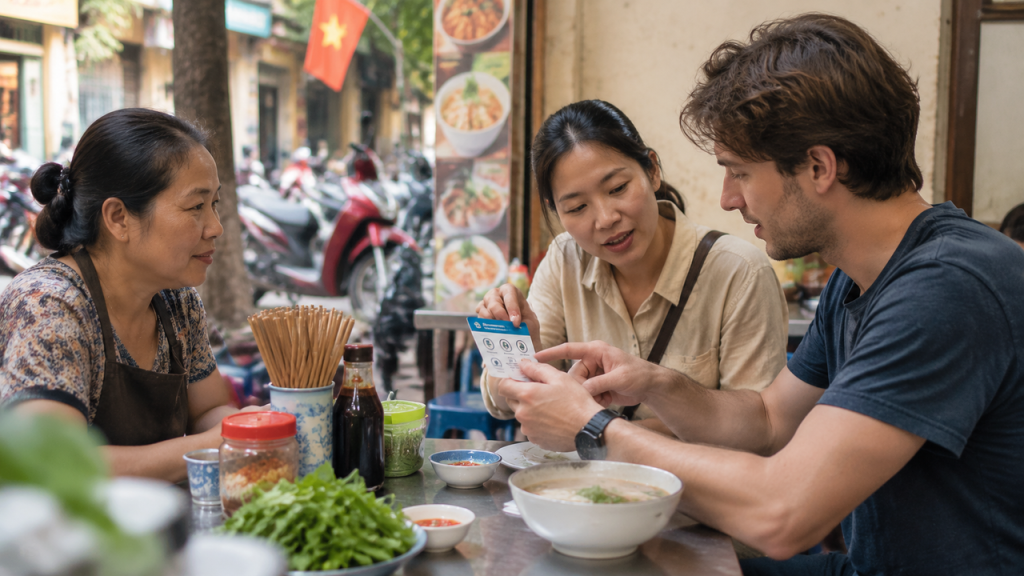
Planning ahead, explaining your allergy clearly, and carrying prescribed emergency medication can help you make informed dining decisions as a solo traveler, couple, or family. A written Vietnamese allergy card can support the conversation, and when booking local Vietnam tours, tell the operator about your needs before the day begins. Still, no translation, restaurant reassurance, or precaution can guarantee an allergen-free meal, so assess each situation carefully and follow your clinician’s advice.
Understanding Food Allergies in Vietnam
Quick answer: Food allergies in Vietnam need extra care because familiar dishes may contain hidden ingredients or share cooking surfaces. Common allergens include peanuts, tree nuts, shellfish, fish, soy, eggs, and wheat. Ask about sauces, broths, marinades, and preparation methods before ordering, and explain whether even trace contact is unsafe for you.
Common allergens on local menus
Peanuts may appear as a topping or in dipping sauce; shellfish and shrimp paste can flavor noodle soups and condiments. Fish sauce is widely used in dressings, marinades, and cooked dishes. Soy, eggs, and wheat may be less visible in sauces, batters, noodles, or baked items.
- Peanuts and tree nuts: toppings, sauces, desserts
- Shellfish and fish: broths, seafood dishes, fish sauce, shrimp paste
- Soy, eggs, and wheat: seasoning, noodles, batter, and bread
Hidden ingredients and cross-contact
A dish that looks safe may be finished with a shared sauce or cooked in a wok used for another order. At a lively street stall, utensils, oil, and chopping boards may also be shared. Tell staff the specific allergen and the seriousness of your reaction; a translation card can help, but it cannot guarantee a safe kitchen.
| Check | Ask about | Why it matters |
|---|---|---|
| Sauce or broth | Fish sauce, shrimp paste, soy | Ingredients may be hard to see |
| Preparation | Separate pan and utensils | Shared equipment can cause contact |
Before joining a food-focused outing, share your needs with the operator in advance; explore Vietnam tour options and confirm arrangements directly. Carry prescribed emergency medication and follow your clinician’s travel advice. If staff cannot clearly confirm ingredients or safe preparation, choose another dish or venue.
How to Communicate Food Allergies in Vietnam
Food allergies in Vietnam need clear communication because ingredients can be hidden in sauces, broths, marinades, and shared cooking equipment. A menu description alone may not reveal what is in a dish.
Carry a concise allergy card translated professionally into Vietnamese. State the specific allergen, that even a small amount may be unsafe, and whether shared utensils or cooking oil are a concern. Keep prescribed emergency medication with you and do not rely on a restaurant to provide medical advice.
Quick answer: Show restaurant staff a professionally translated allergy card, name the exact allergen, and ask about ingredients, sauces, cooking methods, and shared utensils. Explain that this is a medical allergy, not a preference. If staff cannot confidently confirm safe preparation, choose another dish or restaurant.
Make your allergy understood
Use short, direct wording on the card rather than a broad statement such as I cannot eat certain foods. Ask a staff member to read it and confirm they understand. When arranging a local experience, share dietary needs before booking so the operator can discuss practical options in advance.
Ask about the whole preparation
- Does this dish contain my allergen, including in stock, seasoning, or dipping sauce?
- Is it cooked in the same pan, oil, or grill as that ingredient?
- Can clean utensils and separate preparation space be used?
- Can the kitchen confirm these steps before I order?
| Situation | What to say | What to check | Next step |
|---|---|---|---|
| Severe allergy | A small amount may be unsafe | Sauces and cross-contact | Avoid if uncertain |
| Dietary preference | I prefer not to eat this | Ingredients and alternatives | Choose a suitable dish |
A preference and a severe allergy are not interchangeable: staff need to know when accidental contact could cause a medical reaction. For adventurous meals, be especially careful at busy stalls where separate cookware may not be available. If the answer is uncertain, politely decline and choose a place that can explain its preparation clearly.
Choosing Safer Meals and Places to Eat in Vietnam
Food allergies in Vietnam are easier to manage when you check ingredients, sauces, and cross-contact before ordering. A busy local stall can serve a memorable meal, but fast service and shared utensils make clear communication essential.
Choose a place where staff can pause, confirm preparation details, and tell you honestly if they are unsure. Carry a written allergy card in Vietnamese, and do not rely on removing a garnish after the dish is prepared.
Quick check: Before ordering, explain the allergy, ask about hidden ingredients and shared cooking surfaces, then confirm whether the kitchen can prepare the meal safely. If staff cannot verify these details, choose another dish or place.
Assess the place before ordering
Look for visible food handling and ask a specific question rather than simply asking whether a dish is safe. In a crowded market, for example, shared tongs may touch seafood and vegetables; at a hotel, the kitchen may be able to check packaged ingredients or prepare a simple alternative.
| Place | Check | Safer choice |
|---|---|---|
| Street-food stall | Shared grill, oil, utensils | Order only if staff can explain preparation |
| Market or food court | Shared serving tools and sauces | Choose made-to-order food with separate utensils |
| Restaurant or hotel | Broth, marinades, packaged sauces | Ask staff to confirm with the kitchen |
Check familiar Vietnamese dishes carefully
Pho and other noodle soups may include fish sauce, shellfish-based seasonings, or shared broth equipment. Banh mi contains wheat bread and may use sauces with soy or other allergens. Bun cha often comes with a dipping sauce, while spring rolls may be served with peanut sauce. Recipes vary, so confirm each component, including garnish and condiments.
For a locally guided Vietnam experience, share serious allergies with the operator before booking and carry prescribed emergency medication. No restaurant or guide can guarantee an allergen-free meal, so skip anything staff cannot verify.
Planning for Food Allergies in Vietnam and Handling Reactions
Featured snippet: Before traveling with food allergies in Vietnam, pack prescribed medication in your hand luggage, arrange travel insurance that covers emergency care, and save local emergency contacts. Carry a clear allergy card and identify nearby hospitals. If a serious reaction is suspected, use prescribed emergency medication as directed and seek urgent medical help immediately.
Prepare before you travel
Tell your clinician about your itinerary and confirm how to store and use your medication. Keep it accessible rather than packed in checked luggage, and bring enough for the trip plus a reasonable delay. Save your insurer’s assistance number, your accommodation address, and emergency contacts offline.
Food stalls and family-run restaurants can be part of an adventurous trip, but ingredients and shared cooking equipment may be difficult to verify. Carry a translated allergy card that names your allergen and says cross-contact must be avoided. When arranging an outing, share your needs in advance with the operator; review Vietnam tour options and contact the team before booking to discuss meal arrangements.
- Check your insurance for emergency treatment and medical transport.
- Locate a hospital or clinic near each overnight stop.
- Keep medication instructions and emergency contacts readily available.
| Situation | What to do |
|---|---|
| Before departure | Pack prescribed medication and verify coverage |
| Possible severe reaction | Use prescribed emergency medication and seek urgent care |
What to do after a suspected reaction
Follow your personal emergency plan. If symptoms are severe or rapidly worsening, use your prescribed epinephrine auto-injector as instructed and call Vietnam’s ambulance emergency number, 115, or ask someone nearby to call. Do not wait to see whether symptoms pass, and do not rely on antihistamines instead of prescribed epinephrine. Even if symptoms improve, seek urgent medical assessment and do not travel alone to care.
Ask a companion or staff member to bring your medication, insurance details, and allergy card. For a safer local adventure, contact Vietnam Crazy Tour before booking to explain your allergy and confirm what can be arranged.
Food Allergies in Vietnam: Common Mistakes and FAQs
Quick answer: To manage food allergies in Vietnam, name the allergen in writing, ask about sauces and shared cooking equipment, and confirm the kitchen can follow your needs before ordering. A translation card helps communicate, but it cannot guarantee an allergen-free meal or prevent cross-contact.
Common mistakes to avoid
A dish that looks safe may still contain a hidden ingredient. Fish sauce, shrimp paste, peanut toppings, marinades, and shared woks can change the risk. For example, a plain-looking grilled meat dish may be seasoned with fish sauce, while a separate sauce arrives with the meal.
- Do not rely on a verbal request alone; show a clear, translated allergy card.
- Ask about every sauce, garnish, broth, and cooking surface, not just the main ingredients.
- Do not assume staff can prevent cross-contact. If they are unsure, choose another option.
When booking an experience, share your allergy details in advance with the operator, including severity and emergency needs. You can also review Vietnam Crazy Tour experiences and contact the team before confirming a food-related stop.
| Situation | Safer next step | Key caution |
|---|---|---|
| Fish allergy | Ask about fish sauce and seafood ingredients | Fish sauce is not safe to assume harmless |
| Severe allergy | Confirm kitchen precautions before ordering | A card cannot prevent cross-contact |
FAQs
Can restaurants accommodate severe allergies? Some may try, but practices and kitchen controls vary. Never treat accommodation as guaranteed; if staff cannot clearly explain ingredients and preparation, do not eat there.
Is fish sauce safe for fish allergies? No. It is commonly made from fermented fish, so avoid it unless your healthcare professional has specifically advised otherwise.
Can a translation card prevent cross-contact? It can make your request clearer, but it cannot verify ingredients or ensure separate utensils and surfaces.
What should travelers carry? Bring your prescribed emergency medication, keep it accessible, and carry an allergy card that explains the allergen, severity, and what to do in an emergency. Before departure, prepare the card and discuss your itinerary and medical plan with a healthcare professional.