
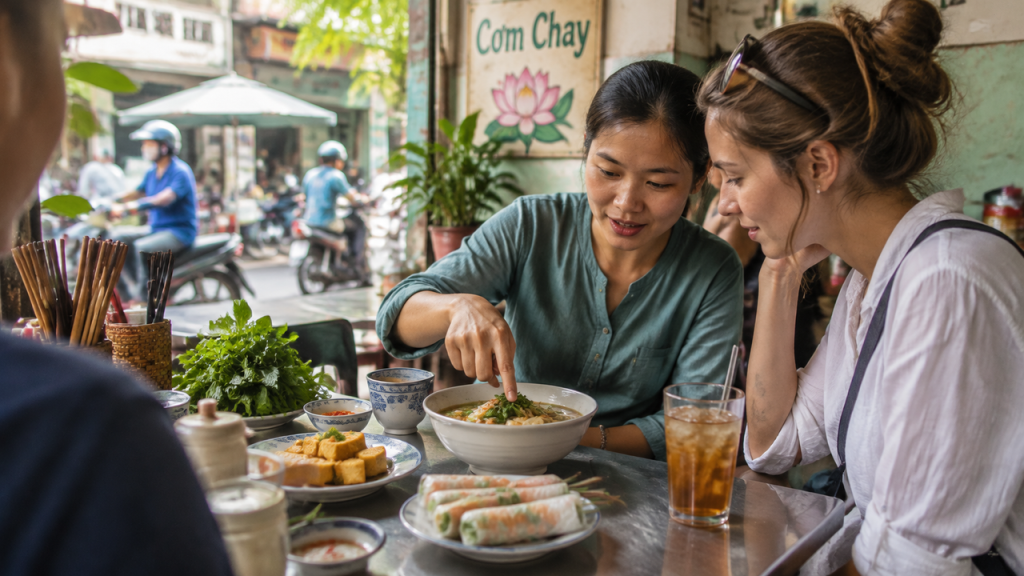
Vegetarian in Vietnam: What to Eat and How to Navigate
Vegetarian in Vietnam can be easier than you expect, but ordering safely takes more than asking for vegetables. Fish sauce often seasons dipping sauces and stir-fries, while meat-based broth may hide beneath noodle soups; shrimp paste can appear in otherwise plant-forward dishes. The challenge is not finding greens; it is confirming what went into the pot before your first bite.
You will find classic Vietnamese vegetarian food, from fresh herb-filled rolls to tofu dishes and meat-free noodle bowls, plus useful phrases and ordering checks that help you explain your needs. We will show how to ask about broth, fish sauce, and shared cooking surfaces, so solo travelers, couples, and families can choose confidently. For a wider look at guided local adventures, explore Vietnam tour options while planning your route.
What Being Vegetarian in Vietnam Means
Vegetarian in Vietnam can describe anything from a meat-free meal to a fully vegan diet, so the label alone may not tell you what is on the plate. The local phrase for eating vegetarian is commonly associated with Buddhist practice, but it is also used in everyday dining.
For some Vietnamese diners, choosing vegetarian food is part of a religious observance on particular days. Others eat this way for health, family tradition, personal ethics, or simply because a plant-based dish is affordable and satisfying. You will find it in dedicated eateries as well as ordinary restaurants.
Quick guide: Vegetarian eating in Vietnam usually means avoiding meat, but it does not always mean avoiding every animal product. Some people include eggs or dairy; vegan diners avoid both, along with meat and seafood. Recipes and individual customs vary, so explain your exact needs when ordering.
| Dietary need | What to clarify |
|---|---|
| Meat-free | Ask whether fish sauce, seafood, or meat broth is used. |
| Vegan | Also specify no eggs, dairy, or animal-based sauces. |
For example, a vegetable noodle soup may look suitable but still use meat stock, while a tofu dish may contain fish sauce. Pointing to ingredients you avoid is often clearer than saying only that you are vegetarian. Travelers exploring local food and traditions can browse Vietnam Crazy Tour experiences and plan questions around their own dietary needs.
The useful takeaway is simple: state what you do and do not eat, especially about broth, fish sauce, eggs, and dairy. That small step makes it easier to enjoy local meals with confidence, whether you are dining at a neighborhood stall or joining a family-style food experience.
How to Eat Vegetarian in Vietnam
How to Eat Vegetarian in Vietnam
Eating vegetarian in Vietnam is manageable when you explain your needs clearly and check how each dish is cooked. A bowl of vegetable noodles or a plate of greens may still contain fish sauce, shrimp paste, meat broth, or dried seafood, so do not rely on appearance alone.
Quick guide: Tell the server which ingredients you avoid, ask whether the broth and sauces contain animal products, and confirm the kitchen can prepare the dish without them. For strict requirements, show a translated phrase card or use a translation app to make your request clear.
Order with confidence
- State whether you avoid meat only, or also fish, seafood, eggs, and dairy.
- Ask about soup stock, marinades, dipping sauces, and cooking oil.
- Confirm the dish can be made fully vegetarian, then repeat your key restriction when ordering.
For example, vegetable pho can be cooked in meat stock, while stir-fried morning glory may be seasoned with fish sauce. A short written explanation is useful in busy street kitchens, where staff may have little time to discuss ingredients.
| What to check | Ask about | Why it matters |
|---|---|---|
| Noodle soup | Broth and toppings | Stock may contain meat |
| Vegetable dishes | Fish sauce and shrimp paste | Seasonings are easy to miss |
Vegetarian restaurants and Buddhist eateries can make ordering simpler, but still explain whether you need fully plant-based food. If you want to explore local food culture with a guide, browse Vietnam Crazy Tour experiences and ask about dietary arrangements before booking.
Vegetarian in Vietnam: Dishes and Where to Find Them
Eating vegetarian in Vietnam is often easier than first-time visitors expect, especially in larger cities and around Buddhist communities. The key is to check what goes into the broth, seasoning and dipping sauce, since a meat-free dish name does not always mean every ingredient is vegetarian.
Look for these familiar options, then ask how each one is prepared:
- Cơm chay: rice with seasonal vegetables, tofu and sometimes a plant-based savory dish.
- Phở chay: rice noodles in vegetable broth, with herbs and tofu or mushrooms.
- Bánh mì chay: a baguette filled with tofu, vegetables and herbs; confirm the spread is meat-free.
- Fresh greens, stir-fried vegetables and tofu are common choices at casual eateries.
Dedicated quán chay restaurants are the simplest starting point. You may also find meat-free kitchens near pagodas, vegetarian sections on restaurant menus, and plant-based dishes at larger-city cafés. In local neighborhoods, a small sign or a busy lunchtime counter can lead to a memorable meal; explore Vietnam with local insight and ask your guide for nearby options.
Quick guide: Vegetarian food in Vietnam is easiest to find at dedicated vegetarian restaurants, temple-area eateries and city cafés. Try cơm chay, phở chay or bánh mì chay, but confirm the broth, sauces and spreads are meat-free. Recipes and availability vary by region and by restaurant.
| Where to eat | Best for | What to check | Ease |
|---|---|---|---|
| Quán chay | Clearly meat-free meals | Eggs or dairy if relevant | Easiest |
| Local café or restaurant | Flexible city dining | Broth, fish sauce and shared cooking oil | Ask before ordering |
One useful detail: fish sauce may appear in vegetable dishes, and some cooks use meat stock in noodle soup. Explain your needs simply and confirm the ingredients rather than relying on the dish name alone. Availability changes by region, season and establishment, so keep a backup choice in mind.
For a more adventurous food day, combine a market wander with a neighborhood meal and ask locally where people eat at lunchtime. Browse Vietnam Crazy Tour experiences to plan a local-led outing, then tell your guide about dietary requirements before departure.
Choosing Where to Eat as a Vegetarian in Vietnam
Choosing Where to Eat as a Vegetarian in Vietnam
Quick answer: Choose a dedicated vegetarian restaurant when ingredient certainty matters most; choose a regular Vietnamese eatery for local dishes if staff can confirm what goes into the broth, sauces, and cooking oil. Major cities usually offer more choice, while smaller towns and rural areas may require planning ahead and flexibility.
For vegetarian in Vietnam, the best restaurant depends on how strict your diet is, not just how many meat-free dishes appear on the menu. A vegetable stir-fry may still use fish sauce, and a noodle soup described as vegetarian may be made with meat stock. If you avoid all animal products, ask about eggs, dairy, fish sauce, and shared cookware as well.
Compare your options
| Choice | Ingredient checks | Local variety | Where it is easier to find |
|---|---|---|---|
| Dedicated vegetarian restaurant | Often simpler, but confirm sauces and cooking methods | Meat-free versions of familiar Vietnamese dishes | More common in major cities |
| Regular local eatery | Ask specifically about broth, fish sauce, and shared pans | More chance to try everyday neighborhood food | Available widely, with fewer choices in rural areas |
In Hanoi, Ho Chi Minh City, or Da Nang, you can usually compare several dedicated places and check recent menus before setting out. In a small town, a family-run restaurant may be the only option; a simple rice meal with tofu and vegetables can be easier to arrange than a modified noodle dish. Carry a translated dietary note, and ask staff to confirm each ingredient rather than relying on a dish name.
For an adventurous meal, a regular eatery can be rewarding when communication is clear. A dedicated venue is the safer starting point for strict diets or first-time visitors. Travelers exploring local neighborhoods can also browse Vietnam Crazy Tour experiences and plan food stops around their route; availability varies by destination, so confirm directly with each restaurant.
Before you go, save a nearby backup and check opening hours, especially outside major cities. For more ideas on exploring Vietnam with local context, discover Vietnam Crazy Tour and choose an experience that fits your trip.
Common Mistakes, FAQs, and Planning Tips
Eating vegetarian in Vietnam can be rewarding, but a dish that looks plant-based may still contain fish sauce, meat-based broth, or other hidden ingredients. A few clear questions can help you enjoy local noodle shops and family-run eateries without turning every meal into guesswork.
The key is to explain what you avoid, not rely on a dish name alone. This matters especially when exploring smaller towns, where menus may be brief and staff may not speak much English.
A quick guide to ordering safely
Vegetarian food is widely available in Vietnam, especially in cities and near Buddhist temples. Outside major centres, choices can be less predictable, so plan a backup meal and check ingredients before ordering.
- Chay usually means vegetarian, but it does not always mean vegan. Ask about eggs, dairy, and animal-based seasoning.
- Check dipping sauces for fish sauce, often called nước mắm, and ask whether broth is made with meat or seafood.
- Describe your needs clearly: Tôi ăn chay, không thịt, cá, nước mắm means I eat vegetarian, no meat, fish, or fish sauce.
For a more reliable order, ask whether the dish and its broth are vegetarian, then confirm the sauce separately. A simple tofu-and-vegetable dish with rice is often easier to clarify than a complex noodle soup. If you are joining a local outing, browse Vietnam Crazy Tour experiences and plan meal stops around your route.
Common mistakes and quick decisions
| What to check | Common assumption | Safer approach | Useful question |
|---|---|---|---|
| Chay label | Always vegan | Check eggs and dairy | Does this contain egg or milk? |
| Soup and sauce | Dish name confirms ingredients | Check broth and dipping sauce | Is there fish sauce or meat stock? |
Frequently asked questions
Is it easy to eat vegetarian in Vietnam?
Generally, yes. Vegetarian restaurants and chay dishes are common in many areas, but availability varies by neighbourhood and town. Ask about sauces and stock rather than judging by appearance.
Does chay mean vegan?
No. It signals vegetarian food, but recipes can include eggs or dairy, and practices vary. State your restrictions specifically.
What should I say when ordering?
Say Tôi ăn chay for I eat vegetarian, then add what you cannot eat, such as meat, fish, eggs, or fish sauce. A translated note on your phone can help.
Can I find vegetarian food outside major cities?
Often, but selection may be limited. Look for chay eateries, temple-area restaurants, or simple rice dishes with tofu and vegetables; confirm the cooking broth.
How can I check for fish sauce?
Ask directly whether nước mắm is used in the dish or served on the side. When communication is difficult, show a written translation and request plain vegetables, tofu, and rice without fish sauce.
Plan a couple of reliable meal options before heading into a remote area, then stay open to discovering local flavours. Ask about ingredients whenever something is unclear, and you can explore with more confidence while keeping meals enjoyable.