
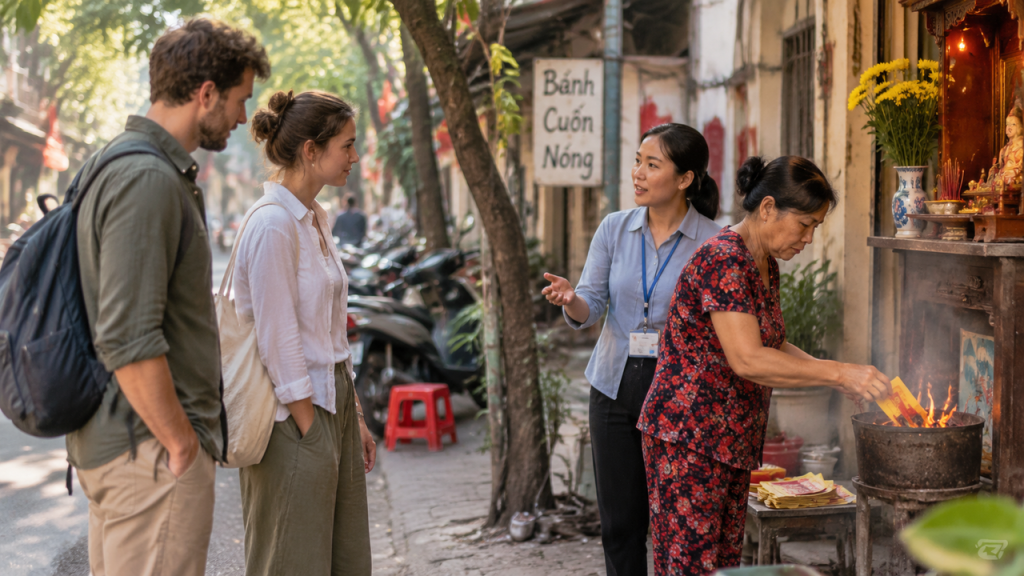
Joss Paper Burning in Vietnam: Meaning, Rituals, and Etiquette
Joss paper burning in Vietnam can catch visitors by surprise: families may be burning paper offerings beside a home altar, outside a temple, or near a roadside shrine. The practice is connected to ancestor veneration and the belief that offerings can reach loved ones in the afterlife. Customs differ between families and regions, so a small neighborhood ritual may look quite different from a larger seasonal observance.
This guide explains what the paper offerings symbolize, when families commonly burn them, and how to observe respectfully without interrupting a private act of remembrance. It also distinguishes joss paper from incense, which carries prayers or marks devotion, and food offerings, which are presented rather than burned. For travelers curious about local spiritual traditions, a Ghost and Beliefs tour can add cultural context to what you encounter on the street.
What Joss Paper Burning in Vietnam Means
Joss paper burning in Vietnam is a ritual in which families burn paper offerings as a symbolic way to send care, money, or useful objects to ancestors and spirits in the afterlife. The practice expresses remembrance and respect, though beliefs and customs vary from one household to another.
Joss paper includes imitation banknotes and crafted images of everyday or luxury goods. During family observances, the items are burned at an altar or in a designated outdoor burner. For visitors, the meaning lies less in the objects themselves than in the family connection they represent.
What joss paper is and what paper offerings symbolize
Offerings may include paper money, clothing, food, houses, or other objects. Within some Vietnamese spiritual traditions, burning is understood to transfer these symbolic gifts to the spirit world. It is a gesture of provision, not a literal transaction, and families choose offerings according to their own beliefs.
- Paper money represents resources for the afterlife.
- Images of useful goods symbolize comfort and care.
- Incense and offerings can accompany prayers or remembrance.
Visitors curious about local spiritual customs can learn more through a respectful ghost culture experience, where guides can explain context without treating private rituals as a spectacle.
Ancestor veneration, spiritual beliefs, and family traditions
Burning joss paper reflects ancestor veneration: the belief that deceased relatives remain part of family life and deserve remembrance. Some families observe the custom at death anniversaries, during Tet, or on other meaningful dates; others may use different offerings or interpret the ritual differently.
In brief: Joss paper is symbolic paper money or objects burned as an offering to ancestors or spirits. Many families see the ritual as a way to express respect, remember loved ones, and provide for them in the afterlife. Practices differ, so there is no single rule followed by every household.
| Offering | Common symbolism | Meaning depends on |
|---|---|---|
| Paper money | Resources for the spirit world | Family belief |
| Paper goods | Comfort or practical care | Local custom |
If you encounter a family making an offering, keep a respectful distance, avoid photographing without permission, and follow any local guidance around fire. To explore Vietnam beyond familiar tourist routes, browse local guided tours and choose an experience that treats community traditions with care.
How Joss Paper Burning in Vietnam Is Practiced
Joss paper burning in Vietnam usually follows a simple family ritual: prepare a clean altar or designated outdoor area, arrange symbolic paper offerings with food or flowers, light incense, and say a prayer before burning the paper in a suitable burner. Customs vary by household, so visitors should observe quietly and follow local guidance.
The practice is an act of remembrance, not a performance for visitors. You may encounter it during a family observance or see paper offerings in specialist shops; a respectful cultural guide can help explain what you are seeing without intruding on a private ceremony.
Common steps, from preparing offerings to burning them
Families typically clear an altar or use a metal burner in a permitted outdoor spot, then arrange the offerings. A family member may light incense and offer a short prayer before placing the joss paper in the fire. Ash is left to cool and handled according to household custom.
For safety, never assume an open flame is allowed. Keep a respectful distance, do not photograph people without permission, and follow posted rules. These details are part of what a ghost culture experience can help visitors understand.
Paper offerings, altars, and examples from family rituals
Offerings may include paper money, clothing, or symbolic household goods. Families often place them beside incense, flowers, fruit, tea, or other foods on an altar, choosing items that reflect the person they remember.
Quick guide: Joss paper burning is a family offering ritual. Common steps are to arrange the paper and altar items, light incense, say a prayer, and burn the paper safely where permitted. The paper may represent money, clothing, or everyday goods for ancestors.
| Ritual element | Common examples | Visitor guidance | Purpose |
|---|---|---|---|
| Paper offerings | Money, clothing, symbolic goods | Observe without touching | Remember and honor ancestors |
| Altar items | Incense, flowers, fruit | Keep space clear | Frame a family offering |
Curious about local beliefs beyond the ritual itself? Explore Vietnam cultural tours for a guided introduction to everyday traditions.
Why Vietnamese Families Burn Joss Paper
Joss paper burning in Vietnam is usually an act of remembrance and care, not a spectacle for visitors. If you see a family fire in a neighborhood, the meaning may be private and specific, so understanding the occasion helps you observe respectfully rather than assume every household follows one rule.
Families may burn paper offerings during ancestral death anniversaries, Lunar New Year, Qingming, Vu Lan, funerals, and local observances. The date, items, and whether a family burns anything at all can vary by region, belief, and household.
When families burn paper offerings
Offerings may be part of a home altar ceremony or a larger family gathering. At Tet, a family might honor ancestors as the new year begins; on a death anniversary, relatives may gather to remember one particular person. Qingming and Vu Lan also offer occasions for honoring family ties, while funeral customs can mark a loved one’s passing.
There is no single calendar that applies to every Vietnamese family. A local observance may matter deeply to one community and be unfamiliar to another.
What the ritual means
For many practitioners, burning joss paper expresses remembrance, gratitude, respect, or a wish to care for ancestors and spirits. Some understand the offerings as symbolic provision for the afterlife; others focus on the act of honoring family. Not everyone shares the same interpretation, and some households do not practice the ritual.
In brief: Vietnamese families may burn joss paper at funerals, ancestral anniversaries, Tet, Qingming, Vu Lan, and local observances. The ritual can express remembrance, gratitude, respect, or care for ancestors and spirits, but its timing and meaning differ between families. It is best understood as a personal cultural practice, not a uniform custom.
| Occasion | Common context | Why customs vary |
|---|---|---|
| Death anniversary | Remembering a family member | Family traditions differ |
| Tet or seasonal observance | Honoring ancestors or spirits | Timing and practice are local |
If you encounter a ceremony while exploring a local neighborhood, keep a respectful distance and avoid photographing people without permission. To learn more about how belief traditions appear in everyday life, explore Vietnamese ghost culture with a knowledgeable local guide.
Curious to explore beyond the usual tourist route? Find a local culture tour and experience Vietnam with context, respect, and room for discovery.
Joss Paper, Incense, and Other Offerings: Key Differences
Joss paper burning in Vietnam is one way families symbolically send money or useful goods to deceased relatives. It is not the same as lighting incense or placing food on an altar, even when all three appear during one remembrance ritual.
Joss paper is burned as a symbolic transfer to the spirit world. Incense marks prayer, respect, or remembrance, while food is presented on an altar as an offering for ancestors. Families may combine these acts, but each has a distinct purpose, and no single sequence is followed everywhere.
How joss paper differs from incense and food offerings
| Offering | Typical role | What visitors may see |
|---|---|---|
| Joss paper | Symbolic goods for the deceased | Paper money or crafted items burned safely |
| Incense | Prayer, respect, or remembrance | Sticks placed in a holder or altar |
| Food | A shared or symbolic altar offering | Fruit, tea, or prepared dishes |
For example, a family might set out fruit, light incense, and later burn paper in a designated outdoor container. The combination varies; burning paper is not required for every prayer or family gathering. Travelers curious about local beliefs can explore them respectfully through a ghost and belief culture tour.
Regional, generational, and personal variations
The type and amount of paper, as well as the occasions observed, differ between households and communities. Some families keep the custom for Tet or death anniversaries; others choose simpler offerings, adapt the practice, or do not burn paper. Younger relatives may also approach the ritual differently from older family members.
If you encounter a neighborhood offering, observe quietly, keep a respectful distance from flames, and ask before taking photographs. To discover more locally led experiences in Vietnam, browse Vietnam Crazy Tour experiences.
Etiquette, Safety, and FAQs for Visitors
Joss paper burning in Vietnam may appear in a doorway, temple courtyard, or neighborhood burner, but it is a personal act of remembrance. For visitors, the best approach is simple: watch quietly, keep a respectful distance, and let the family or host set the pace. A little awareness helps you avoid turning a meaningful moment into an uncomfortable one.
Respectful observation, common mistakes, and fire safety
Joss paper is symbolic offering paper burned in remembrance of ancestors or other spirits. Families may burn it during Tet, death anniversaries, funerals, or other observances, though customs vary by household and region. Visitors can follow a few practical courtesies:
- Ask before photographing people, family altars, or private rituals.
- Do not touch offerings, incense, or ritual objects.
- Stay clear of flames and smoke, and never add paper to a burner.
- Follow local instructions, use designated burners, and leave no litter.
For example, if you see a small metal burner outside a home, pause out of the way rather than stepping closer for a photo. A guide familiar with local customs, such as those encountered on Vietnamese belief and culture tours, can explain what is appropriate without interrupting the family.
Frequently asked questions and a respectful next step
What does joss paper represent? It represents a symbolic gift or provision for ancestors and spirits.
When is it commonly burned? It may be used at Tet, funerals, death anniversaries, and some lunar observances; timing differs between families.
Is it burned at temples or homes? Both are possible. Many ceremonies take place at home, while some temples provide designated areas.
Do all Vietnamese people practice it? No. Beliefs and customs vary, and not everyone participates.
| Situation | Respectful choice |
|---|---|
| Private family ritual | Observe from a distance and ask before taking photos |
| Public designated burner | Keep clear, follow posted rules, and do not add offerings |
When unsure, ask your local guide or host what is appropriate in that specific place. A considerate question often leads to a richer understanding than a close-up photograph.