
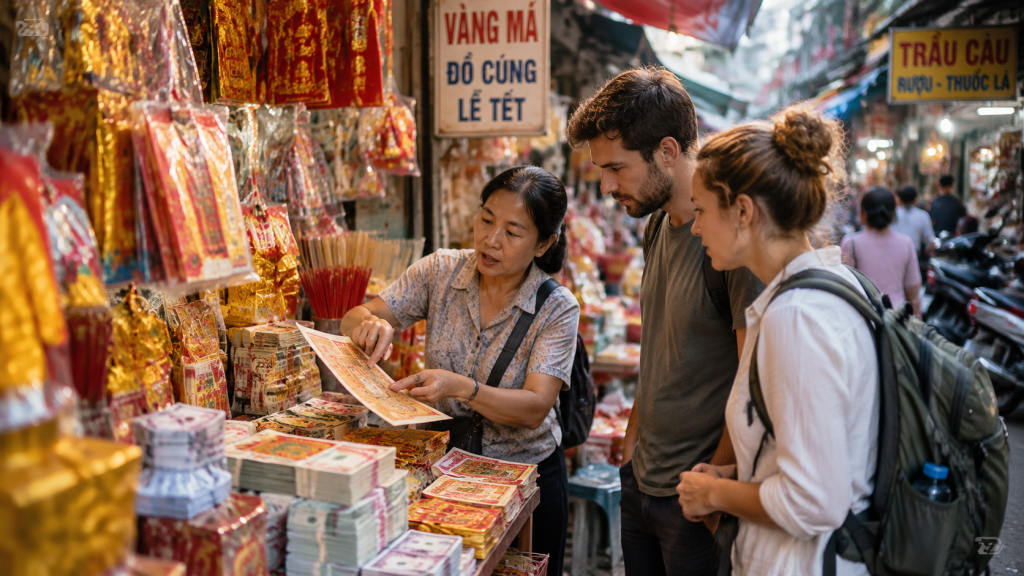
Joss paper in Vietnam is one of those details travelers spot everywhere, from temple altars to roadside shops, then pause and wonder what it really means. If you have ever seen paper money, paper clothes, or tiny paper phones being burned, the scene can feel mysterious at first. This guide clears up the confusion and shows how locals use it with real intention, not random ritual theater.
For visitors, the key is simple: joss paper in Vietnam is tied to remembrance, respect, and spiritual exchange, especially in family ceremonies and temple life. You do not need to memorize every rule, but you do need context so you can observe it politely and understand the logic behind it. If you are planning deeper cultural experiences, you can also explore Vietnam crazy tour experiences that connect travel with local belief systems.
What Joss Paper in Vietnam Really Means
Joss paper in Vietnam is a ritual offering made for ancestors, wandering spirits, and family protection. If you are seeing it for the first time, the smoke can feel mysterious, but the meaning is practical inside local belief: people send symbolic money and goods to the spirit world during important moments in family life.
For travelers, the key is simple. This is not random burning, and it is not just a photo moment. It is part of ancestor worship, folk religion, and seasonal rituals that still shape daily life in many neighborhoods. If you want to understand joss paper in Vietnam without awkward guessing, start with how locals use it at home, on sidewalks, and at temples.
Featured snippet: Joss paper is symbolic paper money and paper goods burned as an offering to ancestors and spirits. In Vietnam, it is used in family rituals, death anniversaries, Tết, and Hungry Ghost month to show respect, maintain spiritual balance, and ask for protection.
What joss paper is and how it is used in Vietnamese ancestor worship and folk beliefs
Joss paper is usually folded, stacked, or shaped into paper money, clothes, houses, phones, or other daily items. The logic is direct: what matters in life may also matter after death. In many homes, this practice appears beside incense, fruit, tea, and prayers, especially when families remember parents, grandparents, or other relatives.
In real life, you may see different levels of detail. Some families burn a small amount as a sign of respect, while others prepare more elaborate offerings at a cemetery or altar. If you are interested in how belief looks in everyday streets, the ghost and beliefs tour gives useful local context without turning the ritual into spectacle.
| Tiêu chí | Simple offering | Traditional family ritual | Public festival use |
|---|---|---|---|
| Purpose | Respect and remembrance | Honor ancestors at home | Support wandering spirits |
| Common setting | House altar or temple | Death anniversary or Tết | Hungry Ghost month |
The cultural and spiritual context behind burning joss paper in Vietnam
Burning paper is tied to the idea that the spirit world still needs support, status, and comfort. Local belief often treats the afterlife as a continuation of social ties, so descendants show care through offerings. That is why the smoke is not only symbolic; it is part of a living relationship between family, memory, and duty.
There is also a strong social side. In crowded markets and alleyways, people often buy ready-made sets because they fit busy modern life. You will see everything from paper money to paper credit cards and smartphones, which tells you how tradition adapts fast. For a wider look at Vietnamese street culture and local rhythm, the Vietnam Crazy Tour homepage is a useful starting point.
When people usually offer or burn joss paper during rituals and special occasions
Most locals burn joss paper during death anniversaries, Tết, Hungry Ghost month, house blessings, and other ancestor-focused ceremonies. The timing matters more than the object itself. If the occasion is about family continuity, prayer, or protection, paper offerings are often nearby.
Travelers should notice the pattern, not just the flame. A small offering in front of a home altar, a larger pile at a temple, or a market purchase before a memorial day all show the same cultural logic. If you are building a deeper local itinerary, browse the full Vietnam tour list for experiences that connect culture, streets, and ritual life in a grounded way.
Soft booking insight: if you want to understand these customs in real neighborhoods, choose a local guide who can explain what is respectful, what is seasonal, and what is private. That is the difference between seeing a ritual and actually understanding it.
In short, joss paper in Vietnam is not just burning paper. It is a practical language of respect, memory, and spiritual care that still lives inside modern city life. When you know when and why people use it, the practice stops feeling strange and starts making cultural sense.
If you want more than a surface look, join a local experience that goes beyond tourist spots and into everyday belief, family rituals, and street-level culture. That is where Vietnam gets real.
How Joss Paper in Vietnam Is Used in Daily Rituals
Joss paper in Vietnam is used as a ritual bridge between the living and the dead, especially in family worship, memorial days, and temple offerings. For first-time visitors, the key is simple: observe the sequence, respect the smoke, and understand that the act is about care, not performance. If you join a local ritual, knowing the flow helps you stay confident and avoid awkward mistakes.
The basic offering process usually follows three steps: preparation, prayer, and burning. Families arrange incense, fruit, tea, and paper items on a clean altar or a small outdoor table, then say a short prayer before lighting the paper. In many homes, this happens quietly at dawn or before an important family meal. If you are exploring local belief culture deeper, a ghost culture experience can help you read these rituals with more context.
Typical offerings include paper money, paper clothes, paper shoes, houses, phones, and even luxury goods. These items are symbolic, not random, because they reflect what the family believes the ancestor or spirit may need in the afterlife. A small bundle may be enough for everyday worship, while larger sets appear during major dates. For a quick decision guide, compare the common types below.
| Tiêu chí | Daily altar use | Festival use | Funeral use |
|---|---|---|---|
| Paper money | Simple bundle for ancestors | More quantity, often with incense | Core offering for farewell rites |
| Symbolic goods | Basic clothes or shoes | Full sets with modern items | Personal items and status symbols |
In real life, the ritual changes by setting. At funerals, joss paper is burned to support the deceased on the journey onward. At ancestral altars, it is offered on death anniversaries and lunar new year visits. During festivals, families may prepare larger sets for collective blessings and peace. At temples, visitors often burn paper with a softer, more respectful pace, following the local rules of the space. If you want to see how belief works in everyday Vietnam, browse the all tours list for cultural routes that fit your travel style.
Mini insight: the value of the ritual is not in how expensive the paper looks, but in how carefully it is prepared. That is why locals focus on order, intention, and timing. For travelers, this is the best takeaway: watch first, ask politely, and let the smoke be part of the story rather than the spectacle. If you want a deeper local perspective, a quiet visit with a guide can turn a confusing ritual into a meaningful cultural lesson.
To understand it fast, remember this rule: prepare the altar cleanly, offer with respect, and burn only what the family or temple accepts. That simple rhythm explains why the practice remains visible across houses, markets, and sacred sites. For travelers who prefer local culture with real-world depth, Vietnam Crazy Tour can connect you with experiences that make these traditions easier to read, safer to join, and more memorable.
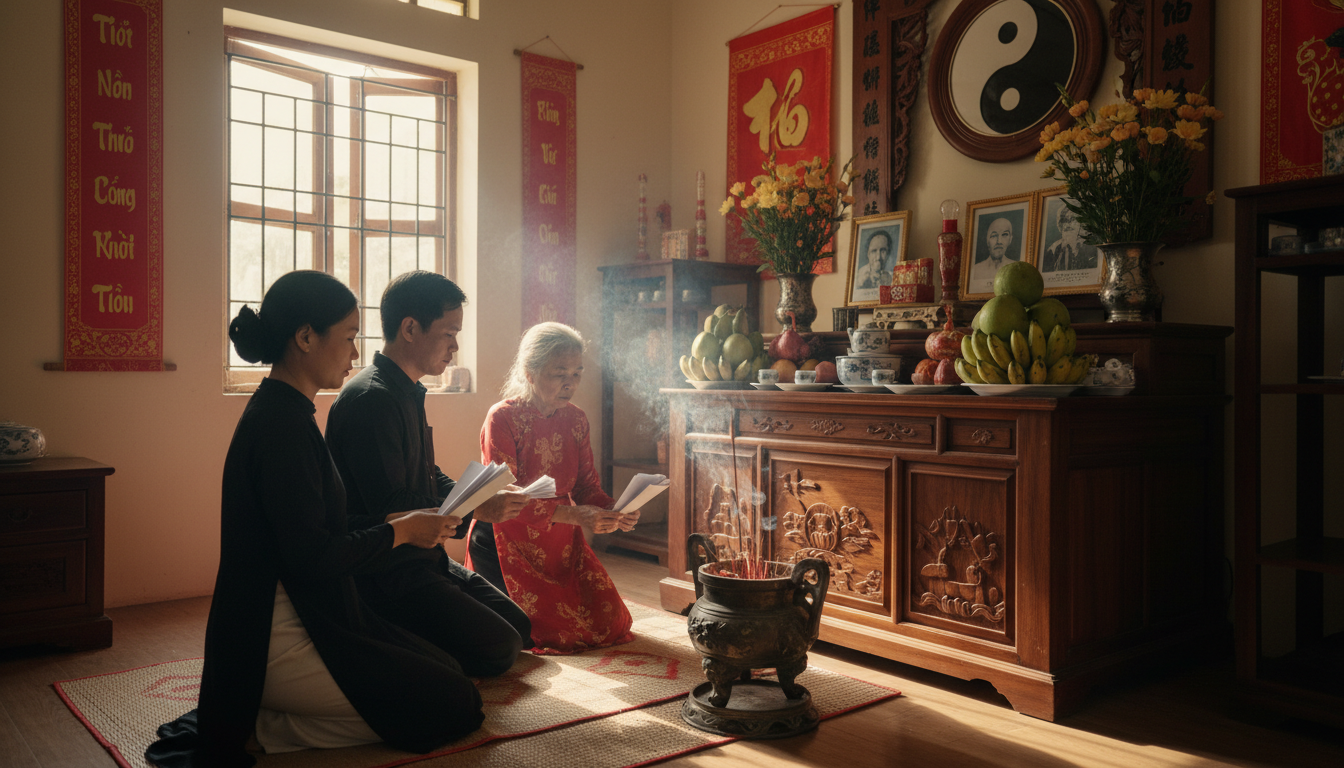
Why Joss Paper in Vietnam Matters to Local Beliefs and Family Traditions
Joss paper in Vietnam matters because it helps many families express respect, remembrance, and practical care for ancestors. For first-time visitors, it can look like a dramatic street ritual, but the deeper meaning is simple: people believe the family bond does not end at death, and offerings are one way to keep that bond active.
This is why you may see paper money, paper clothes, or paper houses burned at home, in front of temples, or near family altars. If you want to understand the logic behind the ritual before joining a local experience, ghost and belief culture tour can help you read the scene with more confidence.
Featured snippet: Joss paper is a symbolic offering burned for ancestors and spirits in Vietnamese culture. It represents respect, remembrance, and support, especially during death anniversaries, Tet, and Ghost Month. For many families, it is not about superstition alone, but about duty, luck, and maintaining balance between the living and the dead.
The main spiritual meaning is family duty. In many homes, the eldest generation teaches younger members that offering joss paper is part of filial piety, the idea that descendants should repay what they received from their ancestors. A practical example is the death anniversary meal, where the family prepares food, incense, and paper goods together before burning them as a sign of care.
There is also a strong luck belief attached to the practice. Some families use special paper money or modern paper items such as phones and clothing to show that ancestors will not be left behind in the afterlife. That is why the ritual feels both old and surprisingly modern, especially in busy urban areas where local shops sell everything from simple paper notes to luxury-style sets. If you enjoy cultural street scenes, explore all Vietnam crazy tour options for deeper local discovery.
| Tiêu chí | Important | Optional | Typical example |
|---|---|---|---|
| Family ritual | Death anniversary, Tet, Ghost Month | Small daily household worship | Burning paper at the ancestor altar |
| Visitor behavior | Follow local guidance respectfully | Join only if invited | Watching quietly at a market or temple |
When does it feel important versus optional? It is important when the family is honoring a close ancestor, during major festivals, or when a household follows traditional beliefs very closely. It becomes optional when the setting is more symbolic, when a family prefers a simpler form of worship, or when younger members choose a lighter approach. In everyday life, the meaning matters more than the quantity burned.
For travelers, the smartest move is not to judge the practice too fast. Watch the emotion, not just the smoke. If you want a soft, local-minded way to experience Vietnamese belief culture, consider a belief and heritage walk that explains the ritual context on the ground.
In short, joss paper matters because it turns belief into action. It connects ancestors, family duty, and the hope that life continues in some form beyond death. When you see it in Vietnam, you are looking at more than paper. You are seeing a living family tradition shaped by memory, luck, and deep local respect.
Ready to go beyond the surface and experience the real local side of Vietnam in a respectful way? Check the Vietnam Crazy Tour homepage and choose a trip that matches your style, from cultural streets to offbeat local stories.
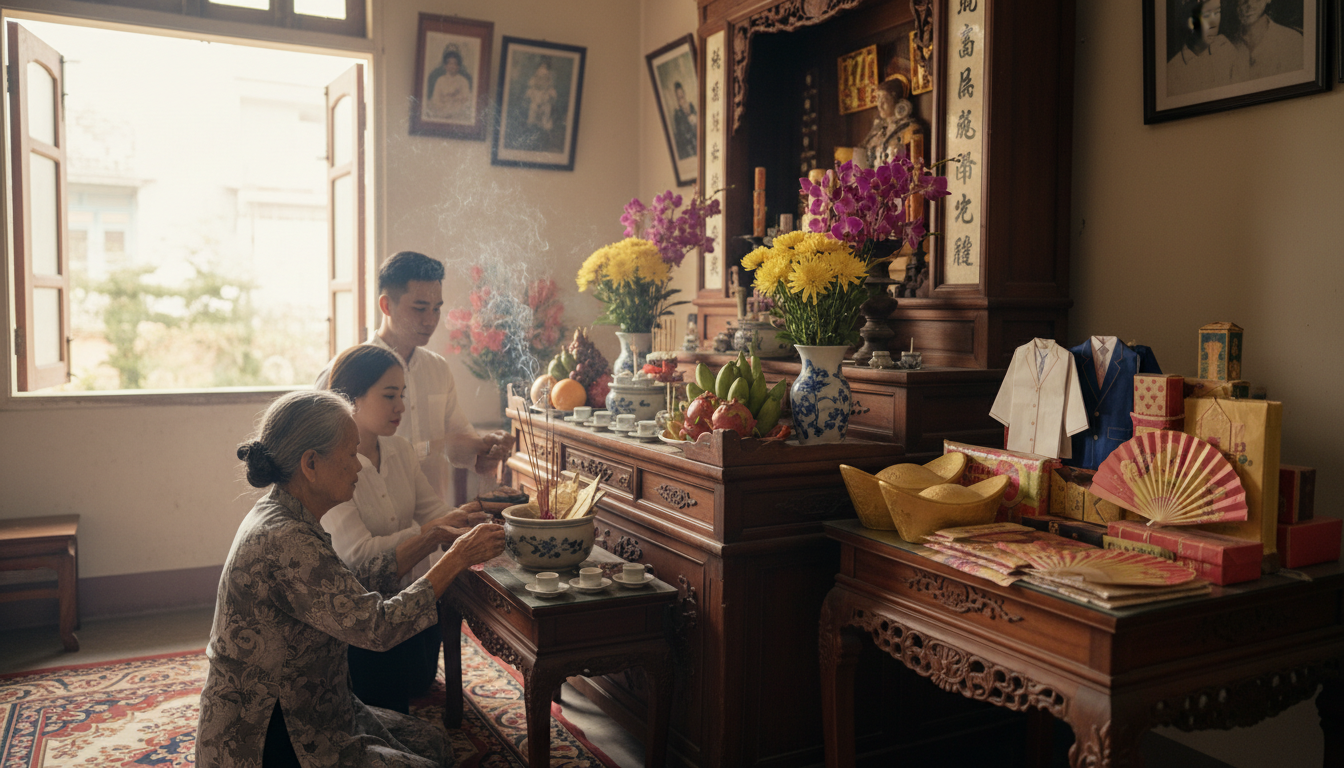
Joss Paper in Vietnam vs Other Ritual Offerings
Joss paper in Vietnam is not the same as incense, fruit, or paper lanterns, and that difference matters when you want to show respect the right way. Many visitors see all offerings as one ritual bundle, but each item carries a different function, timing, and meaning. If you are exploring local temples or family ceremonies, understanding the role of each offering helps you avoid awkward mistakes and read the ritual like a local.
In practical terms, incense connects the living to the spiritual space, fruit shows gratitude and purity, while joss paper is usually burned as a transfer of wealth or daily comfort for ancestors and wandering spirits. At a busy pagoda, you may see a family place fruit first, then light incense, then burn paper money outside the main altar. That sequence is small, but it tells you a lot about Vietnamese ritual logic.
For travelers on a cultural route, this is where the experience becomes more vivid. You may notice the same offering style in a city alley shrine and at a countryside death anniversary, but the details shift by region and family custom. If you are curious about the wider belief landscape, our ghost culture journeys can help you see how ritual choices connect with local life, not just temple aesthetics.
| Tiêu chí | Incense | Fruit offerings | Joss paper |
|---|---|---|---|
| Main role | Invites connection with spirits | Shows respect and sincerity | Transfers symbolic wealth |
| Best use | Temples and home altars | Offerings for ancestors or deities | Death anniversaries and Ghost Month |
There are pros and cons to using joss paper in modern rituals. The pro is cultural continuity: many families still feel it is the clearest way to honor ancestors in a language older than words. The con is that excessive burning can feel wasteful, unsafe, or out of place in smaller urban homes. In some temples, the staff may even guide you toward simpler offerings if the ritual space is crowded or fire risk is high.
A useful rule is to match the offering to the setting, not to your assumptions. At a Buddhist temple, incense and fruit are usually enough; at a family death anniversary, joss paper may be expected; in some regions, paper lanterns appear during seasonal ceremonies or ancestor commemoration. If you want a softer introduction to local spiritual customs, Vietnam Crazy Tour offers routes that show how beliefs live inside everyday neighborhoods, markets, and temples.
Quick decision guide: if the ritual is public and temple-based, keep it minimal; if it is family-led and ancestor-focused, ask what the household normally burns; if you are a guest, follow the host first, then copy the local rhythm. One small observation can save you from a clumsy move and also make the experience feel more authentic. In Vietnam, good ritual etiquette is less about performance and more about reading context with care.
For travelers, the smartest approach is simple. Watch what locals do, ask before adding anything extra, and choose the offering style that fits the place, the region, and the family’s tradition. If you want to see these customs in real street settings, from pagodas to neighborhood shrines, explore all Vietnam crazy tours for cultural experiences built around real local life.
Joss Paper in Vietnam: Common Mistakes, FAQ, and Respectful Tips
Joss paper in Vietnam can look simple from the outside, but for many travelers it becomes confusing fast. Is it a gift, a ritual, or just something people burn for tradition? If you are visiting temples, family altars, or local neighborhoods, the safest move is to observe first and copy the pace of the people around you.
The good news is that you do not need to understand every belief to show respect. A calm attitude, quiet voice, and basic awareness already go a long way. If you want to explore deeper spiritual customs on the road, check Vietnam Crazy Tour experiences for routes that help you see local life without stepping over cultural lines.
Featured snippet: Joss paper is a paper offering used in Vietnamese spiritual practice, often burned for ancestors, the deceased, or unseen beings. It is not always burned in the same way everywhere. Visitors can usually watch respectfully, avoid touching offerings, and ask before joining any ritual.
| Tiêu chí | Observe only | Join respectfully | Avoid |
|---|---|---|---|
| Temple or home altar | Stand back and watch | Ask before helping | Touch items without permission |
| Neighborhood offering | Keep quiet and respectful | Follow local guidance | Block the space or joke loudly |
Common mistakes travelers make are usually small, but they matter. Some people step too close to the burning area, take photos without asking, or treat the ritual like a performance. Others assume every offering must be burned completely or think the same rules apply in every region. In reality, local families may use different forms of paper, different timing, and different levels of formality.
A useful rule is simple: do not lead the ritual, let the host do that. If you are invited, follow the rhythm, stay quiet, and keep your hands to yourself unless someone asks for help. For travelers who enjoy local belief systems and hidden cultural routes, the ghost and beliefs tours can be a strong fit because they frame customs in context instead of just showing the surface.
FAQ: What is it for? It is a way to send symbolic gifts, money, or practical items to ancestors and spirits. Is it always burned? Often yes, but not always in the same form, and some families use other offerings too. Can visitors join? Yes, if invited, but only after asking politely and following the host’s lead.
If you want to observe well, use this quick step list: arrive quietly, watch first, ask one short question if needed, and never interrupt the offering. A simple phrase like May I watch, or May I join if appropriate, is enough. For travelers planning a deeper cultural route, browse all Vietnam Crazy Tour routes and choose the ones that match your pace and curiosity.
When you travel through Vietnam, the best experience often comes from respect, not participation alone. If you are curious, be polite. If you are invited, be humble. If you are unsure, observe. That is the easiest way to learn more about Vietnamese spiritual customs without making the moment awkward for the people who live it every day.
For a stronger local experience, keep your questions short, your camera low, and your tone friendly. If you want a trip that mixes culture, street life, and real neighborhood atmosphere, start with the homepage and build from there through Vietnam Crazy Tour. The right guide can help you read the scene before you ever step into it.