
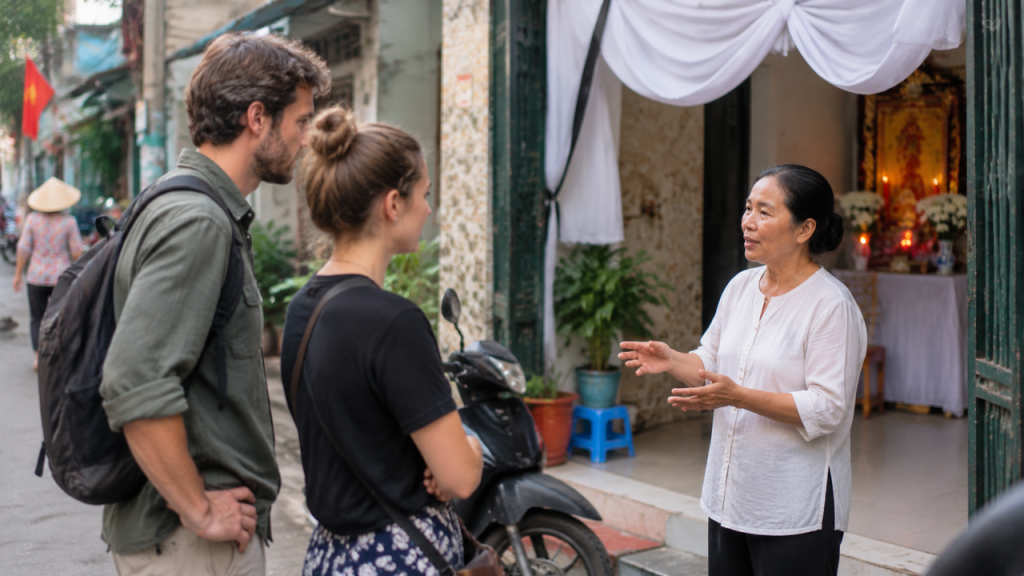
Vietnamese funeral rituals can feel unfamiliar to visitors, especially when mourning clothes, food offerings, incense, and family roles differ from what they know at home. These customs are acts of respect and remembrance, not performances for travelers. A little context about Vietnamese spiritual beliefs can help explain why ceremonies carry meaning beyond their visible gestures.
Vietnamese funeral customs are not identical across the country: regional traditions, religious beliefs, and each family’s wishes shape what happens. This guide introduces the usual sequence of a funeral, the beliefs behind common practices, and practical etiquette for visitors who may encounter a ceremony while exploring a neighborhood. Knowing when to keep your distance, speak quietly, or follow a host’s guidance helps you show respect without making assumptions.
What Vietnamese Funeral Rituals Mean to Families
Vietnamese funeral rituals honor the dead while reaffirming family bonds. Ancestor reverence, filial duty, and beliefs about the afterlife shape prayers, offerings, and mourning. Relatives gather to care for the deceased, support the bereaved, and show respect. Customs vary by region, religion, and family, so visitors should follow the hosts’ lead.
Ancestor reverence, filial duty, and the afterlife
For many families, death changes a person’s place in the family rather than ending the relationship. Ancestors may be remembered at a home altar, and funeral prayers or offerings can express gratitude and ask for a peaceful passage. Buddhist, Catholic, folk, and other traditions influence practices differently; there is no single ritual followed by every Vietnamese household.
Filial duty is visible in the care relatives give the deceased and in the way children participate in paying respects. In some homes, visitors may see incense, flowers, food offerings, or family members taking turns beside the coffin. A respectful guest can observe quietly and let the family or host explain what is appropriate. For more context on local spiritual beliefs, explore Vietnamese beliefs and culture.
Family, community, and mourning
A funeral is also a shared responsibility. Relatives organize practical details, while neighbors and friends visit, offer condolences, and help the household through the days of mourning. For example, in a neighborhood home, visitors may arrive in small groups, bow or offer incense, then sit with the family rather than treating the ceremony as a performance.
- Follow the family’s cues before approaching the altar or coffin.
- Dress modestly and keep your voice low.
- Ask before taking photographs, and accept no as the answer.
| Moment | Family meaning | Visitor response | Best approach |
|---|---|---|---|
| Incense offering | Respect and remembrance | Wait for guidance | Observe quietly |
| Condolence visit | Community support | Offer a gentle greeting | Keep the visit brief |
The key insight for travelers is simple: presence matters more than understanding every symbol. If you want to discover local customs with care, explore cultural tours in Vietnam and choose an experience led by a knowledgeable local guide.
How Vietnamese Funeral Rituals Usually Unfold
Vietnamese funeral rituals vary by region, religion, family preference, and whether burial or cremation is chosen. For visitors, the key is to understand the usual sequence without assuming every family follows the same customs.
At a glance: A funeral commonly moves from preparing the body and announcing the death to a wake, farewell rites, a procession, and burial or cremation. Relatives coordinate ceremonies, welcome visitors, and offer incense or condolences. The timing, prayers, clothing, and offerings differ across families and communities.
From preparation to burial or cremation
After a death, close relatives arrange the body, notify family and community, and prepare a funeral space, often at home or a funeral hall. A wake gives relatives, neighbors, and friends time to pay respects; visitors may bow, offer incense, or leave a condolence envelope.
The family then holds farewell rites before a procession carries the coffin to a cemetery or crematorium. For example, a procession may pass through neighborhood streets, while a Buddhist family may include chanting. Cremation is increasingly common in cities, but practices are not uniform. Follow the family’s lead, keep a respectful distance, and ask before taking photographs.
Offerings, family roles, and mourning
Common items include flowers, incense, candles, fruit, and paper offerings. Immediate family members usually lead rites and receive guests; extended relatives help with arrangements, food, and seating. White clothing or a mourning band may signal grief, though details vary. For wider context on local spiritual traditions, explore Vietnamese beliefs and customs.
| Stage | What visitors may see | Helpful response | Remember |
|---|---|---|---|
| Wake | Incense, condolences, quiet visits | Follow others and speak softly | Ask before photographing |
| Procession | Family and community escort | Give the group space | Route and rites differ |
Funerals are private moments, not sightseeing stops. If an invitation is not explicit, observe from public space and do not interrupt. To discover Vietnam with local context beyond the usual routes, browse Vietnam Crazy Tour experiences.
How Region, Religion, and Modern Life Shape Vietnamese Funerals
Vietnamese funeral rituals are shaped by family, faith, region, and practical choices, so there is no single ceremony that represents every household. For visitors, the key is to notice local customs without treating a funeral as a spectacle.
Across the country, families may combine Buddhist prayers, ancestor respect, and personal beliefs. City life, migration, and changing family needs are also influencing how ceremonies are arranged.
Regional differences and changing settings
In northern communities, formal family rites and offerings may be prominent; in central Vietnam, local customs and community ties often shape the schedule. In the south, ceremonies can feel more flexible, though practice varies widely by family. These are broad tendencies, not rules.
Urban families may hold services in funeral homes or crematoriums, while rural ceremonies may take place at home, with neighbors helping prepare food and welcome mourners. A family in Ho Chi Minh City, for example, might choose a short service and cremation to suit work schedules and limited space.
Faith, family, and modern choices
Buddhist rites may include chanting and offerings; Catholic funerals usually center on church prayers and a Mass. Other families follow local or nonreligious customs, and many blend traditions. Ask before photographing, keep a respectful distance, and follow the family’s lead.
Quick guide: Vietnamese funerals vary by region and household. Buddhist rites may include chanting, Catholic services include church prayer, and some families blend customs. City services may be shorter or held at a funeral home; rural gatherings may involve neighbors and take place at home.
| Setting | Common pattern | Visitor cue | Remember |
|---|---|---|---|
| Urban | Funeral home or crematorium | Follow staff guidance | Schedules may be compact |
| Rural | Home-based gathering | Wait to be invited closer | Community customs differ |
For travelers curious about beliefs and local culture, explore them through respectful context; beliefs and culture experiences can offer a broader introduction. The small but important insight is that family preference matters more than any regional stereotype.
Planning an adventurous trip? Browse Vietnam tour options and choose a local experience led with care, cultural sensitivity, and room to travel at your own pace.
How to Attend a Vietnamese Funeral Respectfully
Vietnamese funeral rituals are family-centered, and visitors should follow the hosts rather than assume every ceremony follows the same customs. If you have been invited to pay respects, modest clothing, a quiet manner, and a brief expression of sympathy are usually the safest starting points.
Wear subdued colors and avoid flashy accessories. A simple phrase such as I am sorry for your loss is appropriate; a small, respectful bow may also fit the moment. If unsure about a gesture, wait and observe a family member or ask your local host discreetly.
What to wear, say, and do
- Choose neat, modest clothing in muted colors. Some families wear white mourning headbands; do not copy this custom unless invited.
- Offer condolences briefly, speak softly, and let relatives guide you toward the altar or seating.
- Follow cues about incense, prayer, and other rites. Participation is optional; quiet presence is enough.
Gifts, photos, and family cues
Flowers or a condolence envelope may be suitable, but practices vary, so ask your host before bringing anything. Never photograph the deceased, altar, or grieving relatives without clear permission. If the family is occupied or signals that the gathering is private, offer condolences briefly and leave without taking it personally.
| Situation | Respectful choice | Avoid |
|---|---|---|
| Offering respects | Wear muted clothes and speak gently | Long conversations or loud greetings |
| Taking photos | Ask first and accept no | Uninvited photos of mourners or rites |
| Joining a ritual | Follow the family’s lead | Touching offerings without guidance |
Quick guide: Dress modestly, offer a brief condolence, follow family cues, and ask before giving gifts or taking photographs. Rituals differ between families and regions, so observation and discretion matter more than trying to perform every custom correctly.
For travelers curious about the beliefs and traditions that shape everyday life, explore local spiritual culture with an open mind. Keep a funeral visit personal and never treat a family’s grief as a tourist attraction.
If you want to discover Vietnam’s local customs with context and a knowledgeable guide, browse Vietnam Crazy Tour experiences and choose a cultural outing suited to your trip.
Vietnamese Funeral Rituals: Common Questions and Mistakes to Avoid
Vietnamese funeral rituals vary by family, region, religion, and personal wishes, so visitors should not assume every ceremony follows the same schedule. If you are invited while travelling, a quiet, respectful visit is usually more important than knowing every custom in advance.
Quick answer: A Vietnamese funeral may last several days, though a visitor’s condolence visit is often brief. Wear modest, subdued clothing; bring flowers or a condolence envelope only if appropriate. Families may be Buddhist, Catholic, follow another faith, or blend traditions. Burial and cremation are both practiced, with choices shaped by belief, family preference, and practical circumstances.
Common questions visitors ask
- How long does it last? The full funeral process can take a few days. Ask the host when to come; you do not need to stay for the entire ceremony.
- What should I wear or bring? Choose simple, covered clothing in muted colors. Flowers or a condolence contribution may be welcome, but follow the family’s instructions.
- Are funerals usually Buddhist? No. Vietnam’s religious and family practices are diverse, and some ceremonies are non-religious or combine customs.
- Burial or cremation? Both occur. There is no single choice that applies to every Vietnamese family.
Etiquette mistakes to avoid
Do not photograph mourners, the deceased, or ritual moments without clear permission. Avoid loud conversation, bright party clothing, and treating the ceremony as a tourist spectacle. For example, if guests remove their shoes or bow before entering, quietly follow their lead rather than interrupting to ask during the service. A local perspective on beliefs can add context; explore Vietnamese beliefs and traditions separately and respectfully.
| Situation | Respectful choice | Avoid | When unsure |
|---|---|---|---|
| Clothing | Wear modest, subdued colors | Bright or revealing outfits | Ask your host |
| Photos and offerings | Follow family guidance | Taking photos without consent | Do not photograph |
Most of all, let the family set the tone. A brief condolence, a quiet presence, and willingness to follow instructions are enough; if the visit feels private, thank your host and step away.