
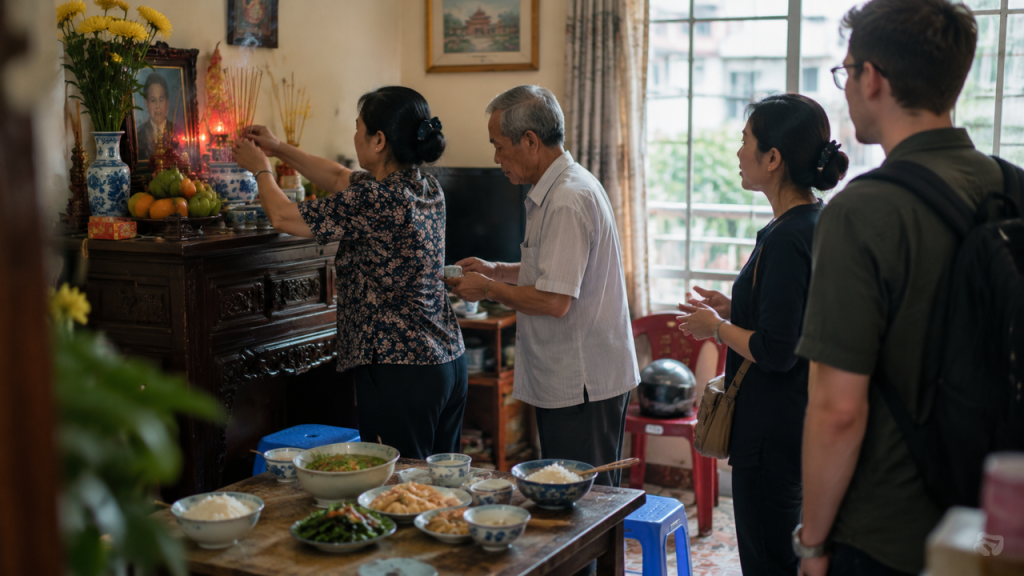
Vietnamese death anniversary is a family ritual that turns remembrance into a real table, not just a memory. If you are trying to understand why Vietnamese homes prepare food, incense, and quiet respect for the dead, this guide makes the custom easy to follow without losing the cultural meaning behind it.
For many visitors, the confusing part is not the ceremony itself, but what matters most and when to stand back. This introduction gives you the basics of a Vietnamese death anniversary, the family logic behind the altar, and the simple etiquette that helps you read the room like a local. If you love exploring deeply local culture, this is the kind of tradition that reveals how Vietnamese families keep ancestors close in daily life.
What Vietnamese Death Anniversary Means in Family Life
Vietnamese death anniversary is one of the clearest windows into family life in Vietnam, because it shows how memory, duty, and affection all sit at the same table. For first-time visitors, it can feel private and slightly mysterious, especially when incense, food, and silent bows all happen in a precise order. The good news is simple: once you understand the ritual, the logic becomes easy to read.
For travelers who like local, real, lived-in culture, this is where Vietnam gets deeply human. A giỗ is not a performance for outsiders, but it explains why many families still travel home, cook carefully, and keep grandparents present in daily conversation. If you want to understand the cultural pulse behind the altar, explore Vietnam with local insight and look at the ritual as part of everyday family identity, not a museum display.
Featured snippet: A Vietnamese death anniversary, or giỗ, is an annual family ceremony that honors one deceased relative on the exact lunar date of passing. Families prepare an altar, offer food, burn incense, and gather to remember the person by name, stories, and favorite dishes. It is both a memorial and a reunion, shaped by ancestor respect.
What the Vietnamese death anniversary is and how it is observed
A Vietnamese death anniversary is a yearly home ceremony held on the lunar date a family member died. In most households, the altar is cleaned first, then flowers, tea, fruit, and a meal are placed there before anyone eats. The eldest son usually leads the first bow, but the real rule is respect: speak softly, move slowly, and let the family guide the rhythm.
- Prepare the ancestral altar with fresh offerings
- Light incense and invite the spirit home
- Wait until the ritual is complete before sharing the meal
- Use the table to tell stories, not just serve food
A useful mini insight is that the ceremony often feels more intimate than formal. One family may offer boiled chicken and sticky rice, while another keeps the menu modest with a few favorite dishes. If you are curious about how different belief systems shape these customs, see local belief tours for broader context on Vietnamese spiritual practice.
Soft CTA: If you are planning a culture-focused trip, learning this ritual beforehand will help you read family homes, temples, and village life with much more confidence.
Why ancestor remembrance plays a central role in Vietnamese culture
Ancestor remembrance matters because many Vietnamese families see the dead as still present in family life, just in another form. That belief turns remembrance into responsibility. A son, daughter, or grandchild is not simply remembering the past; they are keeping a relationship active through prayer, food, and yearly return.
This is why giỗ can feel emotional without being gloomy. It carries filial piety, family continuity, and the idea that success in life should never come at the cost of forgetting who came before. In practical terms, the day also brings relatives back together, which is why it often works as a family reunion with meaning attached. For travelers who enjoy authentic local stories, this is one of the most revealing traditions in the country.
| Tiêu chí | Village home | City apartment | Traveler takeaway |
|---|---|---|---|
| Altar setup | Large family altar, many offerings | Small shelf, fewer items | The size changes, the respect stays |
| Family gathering | Whole clan comes home | Close relatives join after work | Giỗ still works as a reunion |
If you want to understand how broader ancestral traditions connect across ceremonies, browse all Vietnam tours that focus on local culture, because this ritual makes much more sense when seen alongside altar practice, temple visits, and village customs.
When families hold death anniversary ceremonies
Families hold the ceremony on the exact lunar date of death, not the solar calendar date, which is why the timing shifts each year on a normal phone calendar. Many households also mark three stages after a death: the first-year anniversary, the second-year closing of mourning, and the annual observance that continues after that.
In real life, this means some families hold a quiet ceremony at home during the weekday, then bring more relatives together on the nearest convenient day. That flexibility helps the tradition survive modern schedules without losing its meaning. The important point is not perfect timing to the minute. It is showing up, preparing the altar, and making space for remembrance.
Strong CTA: If your trip overlaps with a family ceremony through a local contact, treat it as a rare privilege. Learn the etiquette, keep your distance, and let the family decide what to share. That is the smartest way to experience a Vietnamese death anniversary with real respect and real depth.
How a Vietnamese Death Anniversary Ceremony Is Prepared
Vietnamese death anniversary preparation starts with the altar, not the food. Families clean the ancestral space, choose the right offerings, and set the timing by the lunar calendar so the ceremony feels respectful and exact. For travelers, this is the key detail: the ritual is not random memorial decor, but a carefully ordered family duty shaped by memory, faith, and local custom.
On the day itself, the household moves through a clear sequence. The altar is refreshed first, incense is lit to invite the ancestor, and only after the prayer does the family eat together. That flow matters because Giỗ is both spiritual and social, especially for visitors who want to understand how deep family roots still shape everyday life in Vietnam. If you want more cultural context, explore our all Vietnam crazy tours for experiences that connect travel with real local traditions.
Featured snippet: A Vietnamese death anniversary is prepared by cleaning the ancestral altar, arranging offerings such as incense, tea, fruit, and home-cooked dishes, then bowing and praying before the family meal begins. The ceremony is usually private, follows the lunar date of death, and blends remembrance, gratitude, and family reunion into one ritual.
Main steps from altar setup to prayer:
- Clean the altar, replace old flowers, and place the ancestor photo or tablet in a visible central position
- Arrange incense, candles or oil lamps, tea, rice wine, fruit, and the dishes the deceased loved most
- Light incense, bow in order of age, and speak a short prayer inviting the ancestor home
- Wait until the incense is nearly finished before the family starts the meal together
The offerings are practical and symbolic at the same time. Fresh fruit shows sincerity, incense carries the prayer, and food turns remembrance into a shared family table. In many homes, the menu may include chicken, sticky rice, soup, and vegetarian side dishes, depending on region and family preference. A real-life example: a Hanoi family may prepare boiled chicken, sticky rice, bananas, tea, and paper offerings before noon, then gather grandparents, children, and cousins around the altar for a short prayer and a long lunch. That is why Vietnam crazy tour style cultural walking trips can feel so vivid, because traditions like this are not staged, they are lived.
| Tiêu chí | Simple family altar | More formal ritual | What travelers notice |
|---|---|---|---|
| Offerings | Fruit, incense, tea, home-cooked food | Full feast, paper money, extra altar items | How much effort the family puts into honoring the ancestor |
| Atmosphere | Quiet and intimate | More ceremonial and crowded | Whether the ceremony feels like prayer or a larger reunion |
Mini insight: the most important detail is not the size of the feast, but whether the family prepares it with attention and sincerity. A well-kept altar and a calm prayer often matter more than expensive dishes. If you are curious about deeper beliefs behind these rituals, the ghost and beliefs tours can help you read the symbols without guessing.
Soft CTA: If this ceremony fascinates you, the best way to understand it is to see how Vietnamese homes, altars, and family habits connect in daily life. A local guide can explain the meaning behind each offering, each bow, and each dish without turning the experience into a lecture.
Strong CTA: For a deeper cultural journey across Vietnam, choose a local-led experience that shows how family rituals, ancestral worship, and neighborhood life all fit together. That is where the real story of Vietnam begins.
Why the Vietnamese Death Anniversary Matters Today
Vietnamese death anniversary still matters today because it keeps grief, gratitude, and family memory in the same room. For many households, the ceremony is less about mourning and more about staying connected to parents, grandparents, and the values they passed down. In a fast-moving city, that kind of pause feels rare, and that is exactly why the ritual remains powerful.
Featured snippet: A Vietnamese death anniversary is an annual family ritual that honors a deceased relative on the exact lunar date of passing. It combines altar offerings, shared food, and storytelling, creating emotional comfort, spiritual continuity, and a practical reason for relatives across generations to gather, reconnect, and remember who they are.
The emotional value is simple: people feel less alone when the dead are still spoken to, not just spoken about. The spiritual value is equally strong, because families believe ancestors continue to watch over daily life. In many homes, the altar stays active all year, and the anniversary becomes the moment when incense, food, and memory come together in a focused way.
One practical example is a family in Hanoi apartment life preparing a modest meal with boiled chicken, fruit, and tea, then later sharing stories after the offering is complete. That pattern is common in Vietnam crazy tour style local experiences too, where visitors learn that ritual is woven into ordinary home life, not kept behind temple walls.
Why it still works:
- It gives families a regular moment to gather, even when work and distance pull them apart
- It teaches younger generations the names, habits, and stories of older relatives
- It turns remembrance into action, not just private emotion
Mini insight: the ceremony is often most meaningful after the formal incense burning ends, when elders start telling stories that younger relatives have never heard. That is when the anniversary stops being a ritual and becomes living family history.
In urban Vietnam, the tradition survives by adapting. Families keep smaller altars, shorten the menu, or return to the hometown on a weekend close to the lunar date. If you want to understand how Vietnamese beliefs shape everyday practice, a ghost culture tour can add real context without turning the experience into a performance.
| Tiêu chí | Home ritual | Urban adaptation | Why it matters |
|---|---|---|---|
| Family bond | Full relatives gather | Smaller group, video calls | Keeps family linked across distance |
| Tradition style | Large meal and altar | Simplified offering | Preserves meaning with less pressure |
For travelers who prefer deep local culture, this is one of the clearest windows into Vietnamese family life. It shows how respect for the dead still shapes how the living cook, speak, and gather. If that kind of local access is your thing, check the all tours of Vietnam Crazy tour page for experiences that bring you closer to real neighborhood culture.
Bottom line: the Vietnamese death anniversary matters because it keeps family identity active across generations, even in modern cities. It is emotional, spiritual, and social at the same time, which is why it has survived every shift in lifestyle, migration, and urban pressure.
Vietnamese Death Anniversary vs Other Ancestor Rituals
Vietnamese death anniversary is the family ritual that centers on one named ancestor, on one exact lunar date, with one shared meal and one clear purpose: remember that person properly. For travelers, the confusion usually starts when this ceremony gets mixed up with Tet ancestor worship, grave-sweeping, or general memorial rites. The difference matters because each occasion has a different mood, setting, and level of formality.
If you are exploring Vietnam as a curious solo traveler, couple, or family, this chapter helps you read the ritual correctly without guessing. A good local guide can also show you how these customs connect in daily life, and you can see that same cultural logic in Vietnam crazy tour experiences that focus on real homes, real altars, and real family traditions, not just tourist-friendly explanations.
Featured snippet: A Vietnamese death anniversary is an annual home ceremony for one deceased family member, while Tet ancestor worship honors the whole lineage at Lunar New Year. Memorial rites are broader and more flexible, but Giỗ is personal, date-specific, and centered on food, incense, and family memory.
| Tiêu chí | Vietnamese death anniversary | Tet ancestor worship | General memorial rite |
|---|---|---|---|
| Who is honored | One specific ancestor | All household ancestors | One person or a group |
| Main mood | Family reunion with remembrance | Welcoming, festive, and symbolic | Quiet respect or formal tribute |
| When it happens | Exact lunar date every year | Lunar New Year period | Flexible by family or institution |
Traditional practice is full-scale, but many urban families now simplify it. Instead of a large feast, they may prepare a smaller altar, buy ready-made dishes, and gather only immediate relatives. That does not make the ritual weaker; it simply reflects apartment living, busy work schedules, and families spread across cities or abroad. If the family still lights incense, prepares the deceased’s favorite food, and shares stories afterward, the heart of the custom is still intact. For deeper context on local belief systems, some travelers pair this topic with ghost culture tours, where ritual, memory, and everyday life overlap in a very Vietnamese way.
Mini insight: the right approach is not about being more traditional or more modern. It is about matching the family’s own comfort level. In some homes, a large ceremonial table with many dishes feels right. In others, one plate of fruit, a bowl of rice, and a sincere prayer are enough. A respectful visitor should follow the host’s lead, speak softly, and never assume that bigger means better.
How to choose the right approach for your family:
1. Use the full version if elders expect formal offerings, ancestor tablets, and shared cooking.
2. Use the simplified version if the family lives abroad, has limited space, or prefers a quiet routine.
3. Keep the core elements: clean altar, incense, food offering, and family gathering.
4. Avoid copying temple rites blindly, because a home Giỗ is personal, not theatrical.
5. When in doubt, ask the eldest family member, since they usually know the exact balance between tradition and practicality.
For visitors who want to understand the culture beyond the surface, the most memorable experiences often come from seeing how families actually live these values. That is why many travelers choose to browse all Vietnam Crazy Tour options before deciding which neighborhood, market, or local home visit fits their style best. A good guide turns a ritual explanation into a real cultural encounter.
Bottom line: the Vietnamese death anniversary is different from Tet ancestor worship because it focuses on one person instead of the entire lineage, and it differs from general memorial rites because it is repeated every year on a fixed lunar date. Traditional or simplified, the ceremony still works when it protects the same three things: respect, remembrance, and family connection.
Common Mistakes, FAQ, and Final Tips for Visitors or Families
The biggest mistakes around a Vietnamese death anniversary usually come from good intentions done too early, too casually, or with the wrong assumptions. Visitors often think the ceremony is a public memorial, but it is a private family ritual built on timing, silence, and respect. If you understand the altar first and the feast second, you avoid almost every awkward moment.
A second trap is treating the day like a cultural photo op. In real homes, people are busy cooking, arranging offerings, and guiding children through habits they have learned for years. The smart move is simple: observe quietly, ask once, and follow the family’s lead. That approach keeps you welcome and helps you see the ritual as locals do, not as a staged scene.
| Tiêu chí | Good choice | Risky choice | Why it matters |
|---|---|---|---|
| Clothing | Dark, modest, neat | Bright, flashy, revealing | Shows respect in a family home |
| Behavior | Wait, watch, ask softly | Touch altar items or interrupt | Keeps the ritual calm and natural |
Featured snippet: For visitors, the safest way to approach a Vietnamese death anniversary is to dress simply, arrive on time, keep your hands off the altar, and speak only when invited. Bring nothing unless the family asks, and if you are unsure, let the eldest person or host guide every step.
FAQ
What to wear: choose clean, modest clothes in neutral colors. For what to bring: a small fruit basket, flowers, or simply your respectful presence can be enough if the family invited you. What to say: short, gentle phrases work best, such as I am honored to be here or Please accept my respect. If you do not know Vietnamese, a quiet bow is often better than forcing words.
What not to do is just as important. Do not joke near the altar, do not photograph food without permission, and do not ask personal questions about death or inheritance. If incense is burning, stay slightly back and wait. This is where a local host or a guide from Vietnam Crazy Tour can help translate the atmosphere, so the whole experience feels natural instead of confusing.
Gentle closing advice
If you are joining a family ceremony, move slowly, speak less, and watch how elders handle each moment. The deepest sign of respect is not a perfect phrase, but a calm presence. When in doubt, let the ritual lead you. That is the real rhythm of a Vietnamese death anniversary, and it is exactly what makes the tradition feel so human.
For travelers who want more local context, this is the kind of cultural moment best understood with a guide who knows the family logic behind it. If your trip includes temples, old houses, or village visits, the right local expert can connect the dots without making the day feel staged. Explore more experiences at all Vietnam tours or keep the journey personal with a small-group walk.
Final tip: if you are invited, treat it like a rare privilege, not a performance. Bring a quiet mindset, accept food when offered, and leave with gratitude. That simple approach keeps the visit warm, respectful, and unforgettable for everyone at the table.