Danh mục: Itineraries

  • Police in Vietnam 2026: 4 Stops Travelers Never Expect

    Police in Vietnam 2026: 4 Stops Travelers Never Expect

    Police in Vietnam is one of the first things travelers and expats search before landing, because nobody wants a smooth trip to turn into a confusing roadside problem. If you are driving, parking, reporting a loss, or facing a checkpoint, the real challenge is not panic, it is knowing who to contact and what to show.

    This guide gives you the practical version: how law enforcement works, when you may need help, and how to handle checks without making a small issue bigger. For travelers planning more local and adventurous routes, it also helps to understand the support system behind the scenes, whether you are staying in a city or heading out with Vietnam Crazy Tour on a wild road day.

    Featured snippet: Police in Vietnam mainly handle traffic enforcement, public order, lost items, incidents, and emergency support. For visitors, the key rule is simple: stay calm, carry the right documents, and respond politely. If a checkpoint, report, or parking issue happens, clear communication usually resolves it faster than argument.

    Criteria Best for travelers Best for expats Best use case
    Traffic stop Carry license, IDP, helmet Keep full documents ready Road checks and violations
    Police report Useful for loss or theft Important for insurance and residence matters Lost passport, bike, or incident

    A useful mini insight: many foreign visitors worry about police in Vietnam before they arrive, but most problems come from missing documents, wrong parking, or misunderstanding a checkpoint. If you want a smoother trip, treat every interaction like a quick admin task, not a negotiation. For route ideas that keep the trip fun while staying practical, you can also browse all Vietnam tours before you go.

    If your trip includes motorbike days, nightlife, or remote stops, the safest move is to prepare before anything happens. Save your hotel address, keep copies of key papers, and know where to ask for help. That small prep can save a lot of stress, and it makes the rest of this guide much easier to use.

    Police in Vietnam Overview: Who They Are and What They Do

    Police in Vietnam Overview: Who They Are and What They Do

    Police in Vietnam is one of those topics travelers search right before a trip, usually because they want clarity, not drama. The short version: most contact is routine, practical, and tied to traffic, documents, or public order. If you understand the basics early, you avoid stress later and move around with a lot more confidence.

    For adventurous visitors, expats, and local-exploration travelers, this matters because Vietnam can feel fast, busy, and unpredictable on the street. A smart approach is simple: know the rules, carry the right papers, and stay calm if you are stopped. If you want more local travel context before planning a ride or route, see Vietnam Crazy Tour for Vietnam trip ideas built around real-world travel.

    Featured snippet: Police in Vietnam usually refer to the public security system that handles traffic, crime prevention, documents, and local order. Travelers most often meet officers during roadside checks, parking issues, or when asking for help. The safest response is always calm, polite, and prepared with valid ID and travel documents.

    In daily life, police in Vietnam means more than traffic police alone. It includes officers who manage road safety, residence checks, local security, and public order in cities and smaller towns. In practical terms, a traveler might see them near a checkpoint, a market, a hotel street, or a busy intersection where traffic gets chaotic.

    • Traffic police handle speed, helmets, lane discipline, and alcohol checks
    • Local police may support document checks, lost items, or neighborhood issues
    • Public security officers help maintain order during festivals, crowds, or incidents

    A useful mini insight: most situations are administrative, not confrontational, especially if your documents are valid. For example, a rider with a helmet, license, and registration copy usually gets a brief check and moves on in minutes. That is why seasoned travelers keep essentials ready, not buried in a backpack.

    The Vietnam police force sits inside a broader public security system, so their job is not just punishment. They also help prevent theft, control traffic flow, and respond when a situation becomes unsafe. In big cities, that can mean directing rush-hour chaos. In smaller places, it may mean helping settle a local dispute or checking a suspicious vehicle.

    Tiêu chí Traveler view What it means Best response
    Roadside stop Common in traffic-heavy areas Usually checks helmet, license, and behavior Pull over safely and stay calm
    Local assistance Less common but helpful Used for lost items or safety issues Speak slowly and show ID

    Travelers, expats, and locals may interact with police in Vietnam for three main reasons: road checks, paperwork questions, and public safety situations. A tourist might get stopped while renting a motorbike, an expat may be asked about residence registration, and a local could deal with parking or neighborhood enforcement. The pattern is different, but the logic is the same: order first, then explanation.

    There is also a soft CTA here for anyone building a local adventure plan. If your trip includes motorbike routes, remote villages, or off-the-map city corners, it pays to learn the legal side before you go. That is where all Vietnam tours can help you connect exploration with practical planning.

    When a traveler interacts with police, it is often because of one of these situations: a traffic violation, a parking issue, a document check, or a request for help. Example: you park in the wrong place near a market, return late, and find your bike moved. In many cases, the issue is resolved with proof, patience, and the right paperwork.

    What matters most is behavior. Speak respectfully, avoid sudden movements, and do not treat the interaction like a debate. If you are unsure what the officer wants, use a translation app or ask for the reason in simple English. That small habit can turn a confusing stop into a quick administrative moment.

    Bottom line: police in Vietnam are part of the normal travel environment, especially in cities and road-heavy destinations. If you prepare your documents, keep your cool, and understand the basic role of officers, the experience is usually straightforward. For travelers who want freedom without chaos, that mindset is the real travel hack.

    If you are planning a Vietnam trip that mixes road adventure, cultural stops, and local discovery, build it with safety in mind from day one. For more trip inspiration and practical route ideas, start with Vietnam Crazy Tour and choose the style of travel that fits your pace. The calmer you are on the road, the better Vietnam opens up.

    How Police in Vietnam Work in Real Situations

    Police in Vietnam can feel intimidating at first, especially if you are riding, driving, or simply carrying the wrong documents at the wrong time. The good news is that most encounters follow a clear administrative pattern. Once you understand the flow, you can stay calm, avoid expensive mistakes, and move through a stop with far less stress.

    For foreign travelers, the real issue is usually not the officer, but the process. A traffic stop, an identity check, or a report at a local station can move fast if you know what to present and what to say. If you are planning a more local, adventurous route, it also helps to be ready before the first checkpoint, especially when you are far from central tourist areas. In a Vietnam crazy tour style trip, that preparation saves time and nerves.

    Featured snippet: When police in Vietnam stop you, the process usually starts with a signal to pull over, followed by document checks, a short explanation of the issue, and either a warning, a fine, or a referral to the local station. Stay polite, keep your documents ready, and do not argue on the roadside.

    Typical process is simple:

    • Pull over safely and switch off the engine
    • Show passport copy, driving license, and vehicle papers if asked
    • Listen first, then answer with short clear sentences
    • If needed, go to the local police station for formal processing

    A traffic police officer usually handles road violations, while local police may handle identity checks, lost items, or community issues. In some districts, you may also encounter ward police, border police, or station staff who help verify documents. If you want to reduce friction before a long ride, keep your papers organized and read all Vietnam tours for trip styles that fit your comfort level.

    Tiêu chí Traffic stop Identity check Police report
    Who handles it Traffic police Local police Station officer
    Main goal Check road compliance Verify who you are Record an incident

    Real-life example: a solo traveler in Da Nang may get stopped for a helmet or lane issue, while a couple in Hanoi might be asked for ID near a crowded area after a complaint. In both cases, the smartest move is the same: stay still, stay respectful, and ask for clear instructions. For deeper local experiences that go beyond the usual tourist circuit, a Vietnam crazy tour can help you explore with more confidence and less guesswork.

    Mini insight: most problems happen when travelers try to explain too much. Short answers, clean documents, and calm body language work better than long stories.

    If you are asked to go to a station, treat it like a paperwork step, not a drama. Bring your passport, rental papers, and any supporting receipts. The process can take longer in rural areas because English is limited and records are checked manually. That is normal, not necessarily a sign of trouble.

    Soft CTA: If your trip includes remote roads, motorbike rental, or border-style routes, prepare your documents before you leave the city so the first police interaction does not interrupt your day.

    Common foreigner situations:

    • Riding without the right license and being stopped at a checkpoint
    • Getting an identity check near a market, hotel, or nightlife area
    • Reporting a lost item, minor accident, or parking dispute at the local station

    The key takeaway is practical: police in Vietnam are not one single system, and each department has a different job. If you know whether you are dealing with traffic police or local police, you can respond faster and avoid unnecessary panic. For travelers who want a more local adventure but still want support behind the scenes, that clarity matters a lot.

    Strong CTA: Before you head into the countryside, save your documents, keep copies on your phone, and choose routes that match your experience level, because the best travel story is the one that stays smooth from start to finish.

    How to Deal with Police in Vietnam Safely and Respectfully

    Police in Vietnam can feel intimidating at first, especially if you are riding through busy streets, remote passes, or local towns for the first time. The good news is that most stops are routine when you stay calm, show respect, and carry the right papers. If you know the process, the experience becomes much less stressful and far easier to handle.

    For foreign travelers, the biggest risk is not the stop itself but the panic that follows it. A simple, respectful response usually solves more than fast talking or arguing. If you are planning a self-guided ride or a local-style adventure, understanding how police in Vietnam work is as important as checking your fuel, helmet, and route.

    Featured snippet: If police in Vietnam stop you, pull over safely, turn off the engine, keep your hands visible, and speak politely. Show your passport, driving license, and vehicle papers when asked. Avoid arguing, joking, or making sudden moves. Calm behavior, clear documents, and respectful communication usually keep the situation short and controlled.

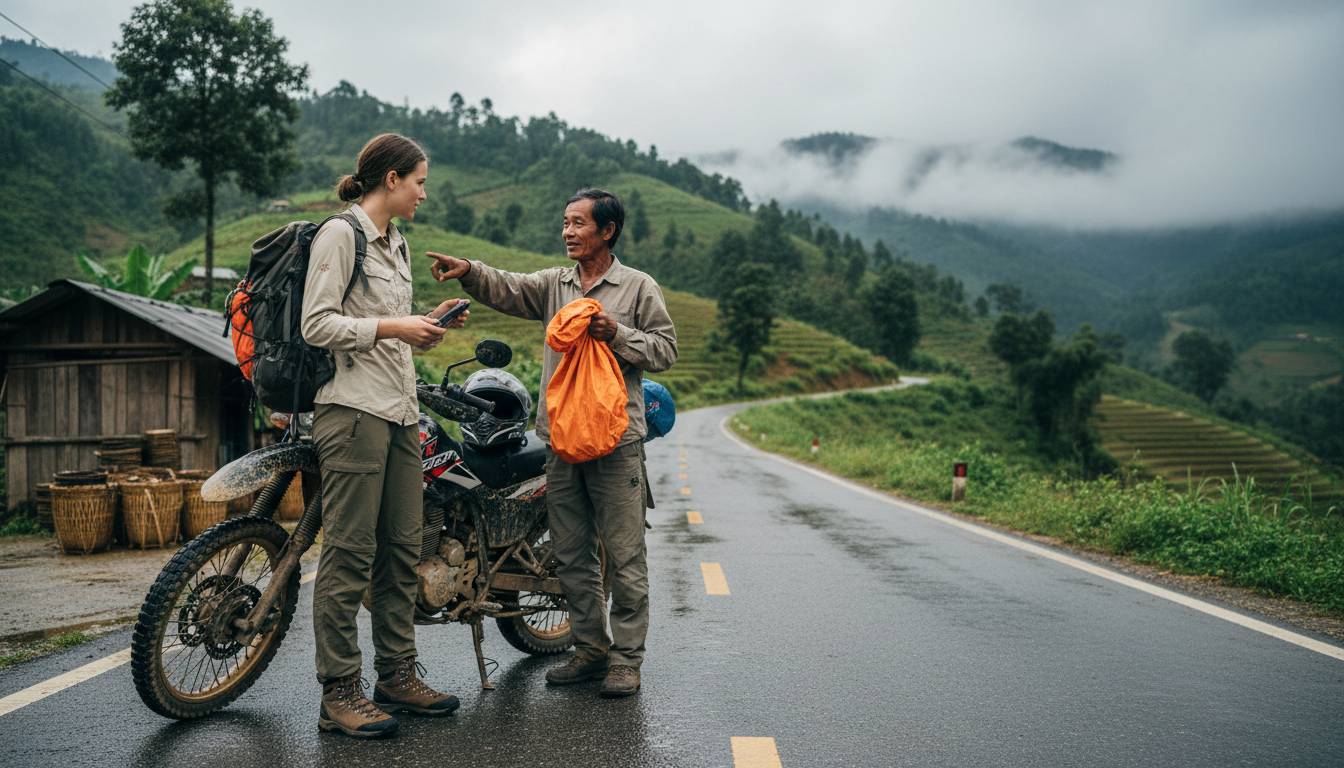
    The safest approach starts before any stop happens. Keep your passport copy, license, and rental papers in one easy-to-reach place, not buried in a backpack. When an officer signals you, slow down smoothly, park safely, and wait for instructions. A small detail matters here: do not reach into pockets or bags too quickly, because that can look confusing in a roadside check.

    What to say is simple: hello, yes, and sorry if needed. You do not need perfect English. Slow speech, short sentences, and a calm tone are enough. If the officer wants documents, hand them over one by one. If you are on a Vietnam motorbike adventure, a clean document setup can save ten minutes and a lot of stress.

    Practical example: a traveler riding near Hanoi was stopped for a routine check. He had his passport photo, rental agreement, and license ready in a small folder, so the stop ended quickly. Another rider, by contrast, searched through three bags, started explaining too much, and made the officer suspicious. Same checkpoint, very different outcome.

    A smart rule for local travel is this: cooperate first, clarify second. If you do not understand the reason for the stop, ask politely and wait for a clear answer. If language becomes difficult, use a translation app and keep your phone screen visible. For deeper local experiences that still feel organized, many travelers pair independent riding with a local adventure tour list so they can explore with more confidence.

    Tiêu chí Safe move Risky move Best result
    First reaction Stop smoothly and stay calm Argue or speed away Fast, low-stress check
    Document handling Hand papers over neatly Search bags in a panic Clear communication

    Common mistakes are usually emotional, not legal. Do not laugh at the officer, film aggressively, or make jokes about bribes. Do not pull out a passport photo after being asked for a license, because that looks unprepared. Do not raise your voice if you feel confused, especially at night or in busy urban traffic. In most cases, the officer wants order, not drama.

    Another mistake is assuming every situation is the same. A random roadside check, a parking issue, and a paperwork request are not identical. Read the situation, answer only what is asked, and keep your body language relaxed. For couples, solo travelers, and families exploring the country in a more local way, this mindset is the difference between a smooth checkpoint and a long delay.

    Soft CTA: If you want to explore Vietnam beyond the usual tourist loop, choose routes and experiences that keep you close to real local life while still giving you support when needed. That balance is what makes adventurous travel feel exciting instead of chaotic.

    When you are dealing with police in Vietnam, the winning formula is simple: respect, preparation, and patience. Carry proper papers, speak calmly, and never assume a roadside stop is a fight. If you want to keep your trip adventurous and low-stress, build your days around flexible plans, trusted transport, and local knowledge that helps you move with confidence.

    Strong CTA: Ready for a more local, more alive Vietnam trip with less guesswork? Explore smarter routes, ride prepared, and keep your documents in order so every checkpoint stays brief and every journey stays focused on discovery.

    Mini insight: most travelers do not get into trouble because they are bad tourists. They get into trouble because they are rushed, confused, or visibly nervous. In Vietnam, calm is a travel tool. Treat it like part of your gear.

    Police in Vietnam vs. Other Ways to Get Help

    Police in Vietnam vs. Other Ways to Get Help

    Police in Vietnam are only one option when something goes wrong, and the fastest fix is not always the official one. If you are stopped, lost, cheated, or involved in a rental problem, the smartest move depends on whether you need law enforcement, translation, documentation, or immediate practical support. This chapter helps you choose the right door before stress turns a small issue into a full travel nightmare.

    For foreign travelers, the real challenge is usually not the problem itself, but knowing who can solve it fastest. A hotel desk may be better for a missing phone, your embassy may be better for a lost passport, and local support may be better for a bike issue on the road. When you travel Vietnam crazy style, local speed matters as much as formal procedure.

    Featured snippet: Use police for theft, assault, serious traffic incidents, or official reports. Use your embassy for passport loss, legal trouble, or detention. Use hotel staff for translation, local calls, and nearby help. Use emergency contacts for injury or danger. The best choice is the one that solves the problem fastest without creating a second problem.

    Here is the simple breakdown:

    Tiêu chí Police Embassy or hotel Emergency or legal support
    Best for Theft, assault, traffic reports Translation, documents, local help Injury, detention, urgent rights issues
    Main tradeoff Can be slow and formal Cannot enforce the law May cost more but saves time

    If you are riding or touring and need human backup, a local operator can shorten the pain fast. For example, a hotel can call the station, but a Vietnamese-speaking team can explain the issue clearly and keep the conversation calm. That is why many travelers keep a support number saved before the ride starts, especially on remote routes near the mountains or coast. For trip planning, see all Vietnam crazy tours if you want organized support with the adventure.

    Pros of contacting police directly in Vietnam: they can file an official report, document theft or accidents, and help when the issue must become formal. Cons: language barriers, slower response, and a process that can feel confusing if you are tired, injured, or dealing with a crowded district office.

    How to choose: if someone is hurt, call emergency services first. If a passport is gone, call your embassy and hotel. If a motorbike is involved, police and rental support should both be informed. If you only need translation or local mediation, hotel staff or a trusted local contact is usually faster than waiting at a station. Soft CTA: save the right contacts now, because in Vietnam the best travel day is the one where you never need to improvise.

    Mini insight: the best help is not always the most official help; it is the help that gets you stable, safe, and understood within the next 10 minutes.

    In real travel life, the cleanest move is a sequence, not a guess. Start with safety, then report, then paperwork. For example, if a solo traveler loses a bag at a café in Hanoi, the hotel may translate, the café may check CCTV, and the police may only be needed if the loss looks like theft. If a family breaks down on a rural road, a local contact or rental support is usually more useful than waiting for an English conversation at a station.

    Use this rule of thumb:

    If the problem is criminal or official, involve police in Vietnam.
    If the problem is administrative or language based, go to hotel or embassy.
    If the problem is medical or dangerous, call emergency support first.
    If the problem is a travel disruption, call local help before you panic.

    Strong CTA: before your next ride, store your embassy number, hotel front desk, rental contact, and emergency line in one note. That tiny habit can save a whole day in Vietnam.

    Key Tips, FAQs, and When to Call Police in Vietnam

    Police in Vietnam can feel intimidating if you are new to the country, but most problems get easier when you know the basics. The biggest stress usually comes from not understanding the process, not from the stop itself. Keep your documents ready, stay calm, and know when a small issue can be handled on the spot versus when you need official help.

    If you are planning a local-style trip with Vietnam Crazy Tour, this is the kind of practical safety knowledge that saves time on the road. For adventurous travelers, solo riders, couples, and families, the real win is simple: less confusion, fewer mistakes, and faster decisions when something goes wrong.

    Featured snippet: Call police in Vietnam for serious crashes, theft, threats, assaults, medical emergencies, or any situation where public safety is at risk. For minor losses, parking confusion, or language issues, first contact your hotel, rental provider, or local support line. Always keep your passport copy, emergency contacts, and location pin ready.

    Important safety tips

    Start with the basics: keep your passport copy, travel insurance, hotel name, and phone number in one place. If an officer stops you, answer briefly, do not argue, and use translation apps for simple phrases. In a traffic issue, a calm attitude usually works better than fast talking. If you are on a remote route, save offline maps and one trusted local contact before leaving town.

    A useful rule is this: if the situation is administrative, gather documents; if it is physical danger, call for help. That is why many riders keep a local support number and a backup route plan before heading out. When you are exploring hidden areas, the gap between a small delay and a bad day can be one missing phone number.

    Tiêu chí Quick check Best action When police matter
    Lost item Check last stop and hotel Ask staff and nearby venues File a report if passport or cash is gone
    Traffic stop Remain polite and show papers Use translation and call support Needed if there is a formal violation or crash

    FAQ: language barrier, lost items, scams, traffic issues, and emergencies

    Do police in Vietnam speak English? Sometimes in major cities, but do not count on it. A translation app or a local guide makes a big difference. If you lose a wallet or phone, first retrace your steps, then ask the venue for security footage or a written report. For scams, the fastest move is to stop paying, keep receipts, and document everything with photos.

    Traffic issues are common near busy streets and tourist zones. If there is only a misunderstanding, a clear explanation and patient tone may resolve it. If there is an accident, injury, or threat, call police right away and notify your hotel or insurance provider. For water, mountain, or night routes, a second contact on your phone is smart because signal can drop fast.

    Quick CTA

    Know your rights, keep emergency numbers saved, and keep your cool. If you are renting a bike or planning a longer ride, check your documents before you start and share your route with someone you trust. For more travel support and local trip ideas, browse all Vietnam tours and build a plan that feels adventurous without turning reckless.

    Strong CTA: save your contacts now, not after the problem starts. Keep police, hotel, embassy, and insurance numbers in your phone, and store a paper backup in your bag. When something goes wrong in Vietnam, the traveler who stays calm and acts fast usually gets the best outcome.

  • How Much Money Can I Bring to Vietnam? 2026 Cash Rules

    How Much Money Can I Bring to Vietnam? 2026 Cash Rules

    How much money can i bring to Vietnam is one of the first questions smart travelers ask before landing in Hanoi, Da Nang, or Ho Chi Minh City. The real stress is not just carrying cash, but knowing when customs wants a declaration, how to avoid delays, and how to keep your travel money safe from the start.

    This guide gives you the Vietnam cash limit in plain English, plus practical airport tips for solo travelers, couples, and families who want a smooth entry. If your trip is part city, part countryside, and maybe a little wild in local Vietnam tours, understanding the rules early helps you spend less time worrying and more time enjoying the ride.

    How Much Money Can I Bring to Vietnam? The Basic Rules

    How much money can i bring to Vietnam is one of the first practical questions travelers ask before landing in Hanoi, Da Nang, or Ho Chi Minh City. The simple answer is this: you can bring cash into the country, but if you carry more than the customs threshold, you must declare it. That rule matters because it protects you from delays, fines, and messy airport conversations.

    For most foreign visitors, the real goal is not to carry a giant stack of notes. It is to arrive with enough flexibility for taxis, food, hotels, and emergency spending, then use cards or ATMs for the rest. If you want a smooth local-style trip with less money stress, planning the payment mix before departure is the smart move.

    What the cash limit means for travelers

    Vietnam customs treats cash rules as a transparency issue, not a tourism trap. In practice, travelers can usually bring up to 5,000 USD or 15 million VND without declaration, but higher amounts need paperwork at entry. The limit applies to cash, not your total travel budget, so your card balance or digital wallet is not counted here.

    Here is the quick breakdown for a simple airport decision:

    • Carry under the limit if you want a fast, low-friction arrival
    • Declare above the limit if you are bringing cash for a long trip, business, or group travel
    • Keep proof ready if your money comes from withdrawals, exchange, or bank funds

    A mini insight many first-time visitors miss: if you are traveling as a couple or family, each adult should understand what cash belongs to whom. That avoids confusion when officers ask where the money came from. For travelers who prefer exploring beyond the standard route, all Vietnam adventures can be easier to manage when your payment plan is already clear.

    When you must declare money at customs

    You must declare money at customs when your cash exceeds the allowed threshold or when officials ask for a declaration because of the amount, currency mix, or travel pattern. The process is straightforward: fill out the form, state the amount, and keep supporting documents if needed. This is especially useful for digital nomads, long-stay visitors, and people arriving with funds for hotels, tours, or business expenses.

    Criteria Under limit Over limit
    Airport action No declaration needed Declare at customs
    Risk level Low Fine or delay if skipped

    When in doubt, declare. It is the cleanest way to keep your arrival smooth, especially if your Vietnam plan includes multiple cities, local markets, or spontaneous side trips. For a softer travel experience after immigration, many visitors like to balance cash with guided local experiences through Vietnam Crazy Tour, where the focus stays on real local energy and easy planning.

    Strong takeaway: bring enough cash for your first day, keep the rest in cards or withdrawals, and declare any amount above the limit before customs becomes a problem. That small step saves time, protects your money, and lets you start Vietnam the right way.

    How the Vietnam Money Declaration Process Works

    How much money can I bring to Vietnam is one of the first questions smart travelers ask before landing in Hanoi, Da Nang, or Ho Chi Minh City. The short answer is simple: you can carry cash and monetary instruments, but if your total exceeds the legal threshold, you must declare it at customs. That matters most for solo travelers, couples, and families who want a smooth arrival, not a stressful airport delay.

    The process is not complicated, but it does reward preparation. If you are bringing a large sum for a long stay, business use, or a multi-country trip, keep your money organized and ready to explain. For a deeper travel planning mindset, many visitors also check all Vietnam tours before they fly, because budgeting and route planning usually go hand in hand.

    Featured snippet: Vietnam customs requires travelers to declare cash and monetary instruments above the permitted limit. The declaration is done at the airport, usually by filling out a form and showing supporting documents if asked. Keep your cash count clear, your paperwork ready, and your answer consistent with your travel purpose.

    Cash, traveler’s checks, and similar monetary instruments are the main items customs officers care about. This can include foreign currency, Vietnamese dong, and in some cases negotiable instruments. Mini insight: if your wallet has money for a two-week adventure plus backup funds, count everything before you reach the desk, not after.

    Tiêu chí Declare No declaration Best use case
    Total cash above the limit Yes, fill in customs form Risk of fines or seizure Large travel budgets or business funds
    Small personal spending cash Usually not needed Fast airport exit Short trips and normal holiday spending

    At the airport, the step-by-step flow is usually straightforward: arrive, complete the declaration if needed, present your passport, and answer basic questions about where the money came from and what it is for. If you are joining a more adventurous trip through Vietnam, a guide or operator can help you focus on the experience instead of the paperwork, especially when you are moving fast between flights and domestic connections. A practical soft option is to check Vietnam Crazy Tour trips if you want a local-style route with less planning stress.

    What documents you may need to show depends on the amount and the officer’s request. Common examples include bank withdrawal slips, ATM receipts, proof of transfer, or a simple explanation of your travel budget. For a clean customs experience, do this:

    • Count all cash before landing
    • Keep proof of source nearby
    • Declare honestly if you are over the limit
    • Match your story with your documents

    If you are unsure, choose the safe path and declare. That small step protects your trip, keeps entry smooth, and helps you move on to the real fun, whether that means city food runs, island hopping, or a wild local adventure.

    Strong CTA: If you want a Vietnam trip that feels local, adventurous, and easy to organize, start with a route that fits your budget and arrival plan, then explore the right experiences before you fly.

    Best Ways to Carry Money in Vietnam

    Best Ways to Carry Money in Vietnam

    If you are asking how much money can i bring to Vietnam, the real travel question is how to carry it safely, spend smoothly, and avoid useless fees. For adventurous travelers chasing local food, hidden alleys, and day trips beyond the tourist strip, the best setup is usually a mix of cash, one reliable card, and a backup payment method.

    Vietnam is still a cash friendly country, but it is not cash only. In big cities, cards and mobile wallets work well in many hotels, cafés, and modern restaurants, while local markets, street stalls, motorbike taxis, and small family businesses often prefer cash. The smart move is to carry enough VND for daily life, then let cards and ATMs handle the bigger moments.

    Featured answer: The best way to carry money in Vietnam is to split it into three layers. Keep small VND cash for food, transport, and market buys. Use a credit or debit card for hotels and larger bills. Leave emergency funds separate in a second card or a hidden backup pouch so one loss does not ruin the trip.

    Payment option Best for Watch out for
    Cash in VND Street food, taxis, local markets Loss, theft, bulky notes
    Credit or debit card Hotels, tours, restaurants, shopping malls Foreign fees, card blocks, weak rural acceptance
    ATM plus mobile pay Flexible travelers in cities Fees, withdrawal limits, app access rules

    Cash wins in the moments that matter most on a Vietnam trip: buying banh mi at a corner stall, paying a xe om rider, or grabbing coffee before sunrise. Cards make more sense for booking hotels, paying for local adventure tours, or covering a larger dinner bill in Hanoi or Ho Chi Minh City. Mini insight: many travelers overspend on card fees because they withdraw tiny amounts too often.

    ATMs are useful, but they work best when you withdraw a larger amount once or twice, not every day. Choose bank ATMs in bright, secure places and keep your PIN ready before you arrive. Currency exchange is also practical, especially at licensed counters or banks, where rates are usually fairer than hotel desks. If you want a softer landing in the country, consider arranging your first-day logistics through Vietnam Crazy Tour, then focus on enjoying the trip instead of hunting for cash right after arrival.

    Mobile payments are growing fast in Vietnam, but foreign visitors should treat them as a bonus, not a core plan. Some services need a local number, local bank account, or verified wallet setup, so they are not always ready on day one. That is why the best rule is simple: use cash for the street, card for structure, and ATM or exchange as your refill system.

    When each option makes the most sense comes down to where you are and how local you want the trip to feel. In major cities, card plus ATM is enough for most travelers. In small towns, islands, mountain routes, and real local spots, cash becomes king. For couples, families, and solo travelers who like freedom, the smartest answer to how much money can i bring to Vietnam is not a single number, but a balanced payment stack that keeps you ready for anything.

    Strong tip: carry small notes, separate your backup card, and never keep all your money in one bag. If you are planning a deeper Vietnam journey, browse the full range of Vietnam Crazy Tour options to match your payment style with your route, from easy city days to more adventurous local experiences.

    How Much Money Should You Bring to Vietnam Based on Your Trip Style

    How Much Money Should You Bring to Vietnam Based on Your Trip Style

    How much money can i bring to Vietnam depends less on the passport in your hand and more on the trip style you want to live. A solo backpacker eating pho, riding buses, and sleeping in simple rooms will spend very differently from a couple booking boutique hotels or a family wanting private transfers and comfort.

    The smart move is to budget for your daily rhythm, then add a buffer for surprises. That way you stay flexible without carrying a scary pile of cash. For local-style adventure, a mix of card, ATM withdrawals, and small VND notes works better than one big wad of money in your pocket.

    Featured snippet: Most travelers should bring enough for 3 to 5 days of spending in cash, then rely on cards and ATMs for the rest. Budget travelers often need 35 to 60 USD per day, mid-range travelers 70 to 130 USD per day, and luxury travelers 180 USD and up, depending on cities, hotels, and activities.

    For budget travelers, Vietnam can feel beautifully cheap if you keep things local. Expect street food meals at 2 to 5 USD, short taxi or ride-hailing trips at 1 to 4 USD, and clean guesthouses or hostels from 10 to 25 USD per night. A realistic daily total is around 35 to 60 USD, especially if you move slowly and avoid too many tourist extras.

    Mid-range travelers usually want more comfort, so the daily budget rises fast. A couple staying in a good 3-star or boutique hotel may spend 35 to 80 USD on rooms, 20 to 40 USD on food, and another 10 to 25 USD on transport and small activities. If you want a smoother trip, this is the sweet spot where Vietnam feels easy without going full luxury. You can also check all Vietnam Crazy tours if you want a local adventure built around your budget.

    Luxury travelers should plan for private drivers, upscale resorts, fine dining, and curated experiences. In big cities or coastal hotspots, a comfortable day can quickly reach 180 to 400 USD or more. The biggest cost drivers are hotels, private transfers, and premium day trips, not street food. That is why travelers often carry only a small amount of cash and pay larger expenses by card or bank withdrawal.

    Tiêu chí Budget Mid-range Luxury
    Daily spend 35 to 60 USD 70 to 130 USD 180 USD and up
    Main cost focus Food and local transport Hotels and mixed dining Private stays and premium services

    A safe plan is to carry enough VND for the first 2 or 3 days, then withdraw more from secure ATMs as needed. Keep larger bills separate, store one backup card in your luggage, and avoid carrying all your trip money in one place. If you like exploring offbeat neighborhoods and local culture, a soft safety net matters more than overstuffing your wallet.

    For adventurous travelers, the best setup is simple: some cash for markets, taxis, and rural stops, one main card for hotels, and one emergency card hidden away. That balance gives freedom without stress, which is exactly what a Vietnam trip should feel like. If you want a more immersive experience, Vietnam Crazy Tour can help you build a trip that matches your style and spending level.

    Common Mistakes, FAQs, and Smart Travel Tips

    How much money can i bring to Vietnam is one of the first money questions smart travelers ask before landing in Hanoi, Da Nang, or Ho Chi Minh City. The real issue is not only the total amount, but also how you carry it, declare it, and split it between cash, cards, and backup options.

    If you are planning a local, adventurous trip with street food runs, hidden alleys, motorbike days, and a few wild detours, money prep matters more than most people expect. A clean plan helps you move faster at customs, avoid stress at arrival, and spend more time exploring with a Vietnam crazy tour mindset instead of standing in line solving payment problems.

    Featured snippet: Travelers can usually bring cash into Vietnam, but if the amount is above the legal threshold, it should be declared at customs. Keep proof of source for larger sums, carry smaller notes for daily spending, and use a mix of cash, cards, and ATM withdrawals to stay flexible during the trip.

    Mistakes to avoid when bringing money into Vietnam

    The biggest mistake is assuming all cash is treated the same. In reality, the customs rule depends on whether you bring foreign currency or local currency, and whether your total exceeds the allowed limit. Another common error is stuffing all your travel money into one wallet. If that wallet disappears, your whole first day turns into a rescue mission.

    Use a simple split like this: some cash in your day bag, some in your main luggage, and one backup card kept separately. If you are doing remote routes, island hops, or food-focused road trips, that split keeps you safe when ATMs are rare or card machines fail. For travelers comparing flexible tour ideas, the all Vietnam tours page can help you match your budget with your route.

    Tiêu chí Cash only Cash plus card Cash plus card plus ATM
    Best for Very short trips Most tourists Longer or active itineraries
    Main risk No backup if lost Card fee or block More planning needed

    FAQ: Do I need to declare USD in Vietnam?

    Yes, if your cash amount is above the declaration threshold, you should declare it at customs. This is especially important for travelers carrying fresh dollars for long stays, tours, or family trips. Bring a bank slip, withdrawal proof, or exchange record if the amount is significant, because customs officers may ask where the money came from.

    Mini insight: declaration is not a punishment, it is a paperwork step. If your money is organized and your documents are ready, the process is usually fast and boring in the best way possible.

    FAQ: What happens if I bring too much cash?

    If you carry more than allowed and do not declare it, you may face fines, delays, or seizure of part of the amount. That is why high-cash travelers should never treat customs like a guess game. If you are arriving for a wedding, long family visit, or a multi-week adventure with private transfers, check the rules before you fly.

    Soft CTA: if your trip includes many local stops, street markets, and countryside detours, a smart money setup will protect your schedule as much as your wallet.

    FAQ: Is it better to bring USD or VND?

    For most first-time visitors, USD is better for entry flexibility, while VND is better for daily spending once you are in the country. Small shops, taxis, local eats, and rural stops prefer Vietnamese dong, especially when you are away from big cities. The smartest move is to land with some USD, then exchange or withdraw VND as needed.

    Quick rule: USD for backup and bigger exchange value, VND for real travel life. If you are heading into local neighborhoods, night markets, or offbeat adventures, VND will save you time and awkward payment moments.

    Quick CTA: plan your Vietnam trip money strategy before you fly

    Before departure, decide three things: how much cash you will carry, how much you will declare, and where your backup money lives. Keep one card for daily use, one backup card in a separate place, and a small cash reserve for food, taxis, and arrival day. If you want a more adventurous route with local flavor, start with Vietnam crazy tour planning and match your budget to the kind of trip you actually want.

    Strong finish: the best money strategy is simple, legal, and flexible. That means less airport stress, fewer payment surprises, and more energy for the real reason you came, which is to explore Vietnam in a way that feels bold, local, and unforgettable.

  • Motorbike Rental in Vietnam: The Smart Local Way 2026

    Motorbike Rental in Vietnam: The Smart Local Way 2026

    Motorbike rental in Vietnam is the fastest way to turn a basic trip into a real local adventure. Many travelers arrive wanting freedom, then get trapped by taxis, bus timetables, or tour schedules that skip the good stuff. A well chosen bike gives you control, saves money, and opens the door to hidden streets, coastal roads, and small towns most visitors never reach.

    For solo travelers, couples, and even families with the right riding experience, this is often the smartest way to explore. In this guide, you will learn how the rental process works, what to check before you ride, and how to pick a safe option that fits your route. If you want a broader look at local experiences, see all Vietnam Crazy Tour experiences while planning your trip.

    Tiêu chí Cột 1 Cột 2 Cột 3
    Best for Flexible city and coast travel Hidden local routes Independent day planning
    Main advantage Freedom to stop anywhere Lower cost than private transport Easy access to offbeat areas

    Quick decision: choose motorbike rental if you want freedom, short travel times, and a more local feel; choose organized transport if you prefer maximum comfort and zero navigation stress. A soft tip for first timers is to rent only after checking the route, the bike condition, and the support policy. That simple step can save your trip from becoming expensive trouble.

    What Motorbike Rental in Vietnam Really Means

    Motorbike rental in Vietnam is not just about getting a bike and riding off. It usually includes a scooter or manual bike, a basic helmet, a rental agreement, and sometimes delivery, route advice, or support if something goes wrong. For travelers who want real street-level freedom, this is often the fastest way to move between cafés, local markets, beach roads, and hidden corners without waiting on taxis or tour schedules.

    For many first-time visitors, the biggest question is not whether a bike is available, but whether the rental fits their trip style, skill level, and safety comfort. That is where a clear motorbike rental in Vietnam decision matters, especially if you are exploring as a solo traveler, a couple, or a family. If you want a broader travel plan with local experiences, you can also check Vietnam Crazy Tour ideas while comparing your options.

    Featured snippet: Motorbike rental in Vietnam means more than transport. It gives travelers flexible access to local streets, short detours, and spontaneous stops, but it also requires the right bike type, basic riding confidence, and a plan for traffic, parking, and weather.

    What a motorbike rental service includes usually depends on the provider and the city. In most places, you can expect:

    • A scooter, semi-automatic, or manual motorbike
    • A helmet and sometimes a spare helmet
    • Simple pickup or hotel delivery
    • Basic instructions, fuel level notes, and return terms
    • Optional damage deposit or passport copy request

    A good rental is not only about price. It is also about condition, tire grip, brakes, and whether the shop explains the rules in a way you can understand. Small details matter, because a cheap bike with weak brakes can turn a fun day into stress very fast.

    Why it matters for travelers in Vietnam is simple: distance looks short on a map, but traffic, heat, and road style can change the whole experience. A bike gives you control over timing, photo stops, and food stops, which is why many independent travelers prefer it over fixed transfers. For local travel planning, this flexibility can save hours and make your route feel much more alive.

    Tiêu chí Self-ride bike Taxi or ride-hailing Tour vehicle
    Flexibility High for stops and detours Medium with app availability Low with fixed schedule
    Local feel Very strong street-level access Moderate city view only Guided and structured

    When renting a bike makes the most sense is usually during short city hops, beachside exploring, rural day trips, or any itinerary where public transport would slow you down. It works best for confident riders who want freedom, but it is less ideal during heavy rain, rushed airport transfers, or routes with steep mountain roads if you are inexperienced.

    Soft CTA: If your trip is still flexible, compare the bike option with guided local experiences before you decide. In some cases, riding yourself gives the best adventure, while in others a planned route saves time and stress.

    A practical way to decide is to match the bike to the trip, not the other way around. Use this quick filter: choose a rental if you can ride safely, handle traffic calmly, and want to stop often. Choose another transport if you are tired, carrying heavy luggage, traveling with young children, or arriving in Vietnam for the first time and still learning the road rhythm.

    Strong CTA: If you want the freedom of the road without guesswork, book a reliable bike only after checking the condition, insurance terms, and return policy. That is the smartest way to turn motorbike rental in Vietnam into a real travel advantage instead of a risky gamble.

    How Motorbike Rental in Vietnam Works

    How Motorbike Rental in Vietnam Works

    Motorbike rental in Vietnam is usually simple, but the real win is knowing the process before you arrive at the shop. Most travelers want freedom, fast pickup, and no drama with deposits, scratches, or confusing rules. If you are planning a local-style trip, this guide shows how the rental flow works, what to prepare, and where small mistakes can cost you time and money.

    The good news is that a normal rental day is very manageable for foreign visitors, even first-time riders. You book, show documents, inspect the bike, pay a deposit, and ride out. The tricky part is not the paperwork, it is the details: fuel level, tire condition, helmet quality, and how the owner handles late return. That is where a smart renter saves stress and starts the trip right.

    In most cities, the process begins with a message or phone call, then a short pickup check. Shops near tourist zones often ask for passport details, a cash deposit, or sometimes a photo of your driving license. If you are building a more local travel plan, you can also compare vehicle choices through all Vietnam tours and pair mobility with a wider route idea.

    For the usual rental process from booking to return, expect this flow:

    • Reserve the bike and confirm the daily rate
    • Share ID, passport copy, or license if requested
    • Inspect brakes, lights, horn, mirrors, and tires
    • Take photos of every visible scratch before leaving
    • Pay deposit or leave passport according to shop policy
    • Refuel if needed and return on the agreed time

    A strong mini insight: the cheapest bike is not always the cheapest trip. A slightly better scooter with good brakes and a stable seat often feels safer on busy streets and rural roads, especially for couples or solo travelers who value comfort.

    Documents, deposits, and bike checks are the trust layer of the whole system. A passport photo is common, but handing over your original passport can be risky unless you fully trust the operator. A cash deposit is often safer because it keeps your documents in your control. Before riding, check the front brake, rear brake, horn, headlight, and both tires, because those are the first things that matter in real traffic.

    Tiêu chí Basic scooter Mid-range bike Better choice for
    Deposit Low cash deposit Higher cash deposit Longer trips and comfort
    Bike check Simple, fast, basic More detailed inspection Riders who want better control

    Example of a real rental day in Vietnam: you wake up in Da Nang, message the shop at 8 a.m., and pick up the bike by 8:30. After a quick check, you ride to the beach, stop for coffee, then continue to a local market and a hidden viewpoint. By late afternoon, you return the bike with the same fuel level and a clean photo record, which makes checkout fast and calm. If your trip is built around culture and local life, Vietnam Crazy Tour can help you connect the ride with a deeper route experience.

    Soft booking tip: if you are planning a multi-day adventure, confirm the return time in writing and ask how they handle late fees. That one question can prevent the most common rental surprise.

    In short, the motorbike rental in Vietnam process is easy when you treat it like a checklist, not a gamble. Compare the bike, protect your documents, and inspect before you pay. Do that, and the whole experience becomes a smooth part of the journey instead of a problem to solve on the road.

    Why Motorbike Rental in Vietnam Is So Popular

    Motorbike rental in Vietnam is popular because it gives travelers a simple way to move fast, stop often, and see real life up close. For adventurous visitors, that means more freedom than a bus, more flexibility than a tour van, and a much lower cost than private transport. If you want local streets, hidden food spots, and easy day trips, this is the format that fits Vietnam best.

    The biggest reason people choose it is control. You can leave early, change plans on the road, and explore places that are hard to reach by taxi or public transport. For many first-time visitors, that freedom feels like the whole trip opens up. If you want to compare the wider travel style behind it, the Vietnam Crazy Tour homepage gives a good sense of how flexible local travel can be.

    Featured snippet: Motorbike rental in Vietnam is popular because it combines freedom, low daily cost, and easy access to cities, beaches, and mountain routes. Travelers can move at their own pace, stop for food and views, and reach local areas that bigger vehicles often miss.

    Here is the simple breakdown:

    • Freedom: ride when you want, stop where you want, and change plans without stress.
    • Cost: daily rental is usually cheaper than repeated taxis or private car hire.
    • Convenience: perfect for short city loops, coastal rides, and mountain roads with frequent stops.

    In cities, a bike helps you beat traffic and reach coffee shops, markets, and evening streets without waiting. On the coast, it turns a simple transfer into a scenic ride with sea views and photo stops. In the mountains, it is the practical choice for travelers who want to explore smaller roads and local villages at their own pace.

    This is also why motorbike rental in Vietnam works so well for solo travelers and couples who want an adventurous trip with more independence. Families can consider it too, but only when everyone is comfortable with the pace, road conditions, and helmet use. For travelers who want a broader look at activity options across the country, all Vietnam Crazy Tour experiences can help shape the rest of the plan.

    Tiêu chí City travel Coastal trip Mountain trip
    Best for Short hops, food stops, busy streets Scenic rides, beach hopping, sunset views Village access, viewpoints, flexible pacing
    Main benefit Avoids traffic delays Turns transport into part of the trip Reaches places harder for cars and buses

    If you like local culture with a stronger edge, the same independent travel mindset also fits ghost and beliefs tours, where small-group movement and flexible timing matter a lot.

    Who should rent a motorbike in Vietnam? Travelers who enjoy independence, comfortable road handling, and spontaneous stops will get the most value. It suits confident solo riders, adventurous couples, and experienced travelers who want a deeper local feel instead of a rigid itinerary. If your goal is to see more, spend less, and move like a local, this is one of the smartest travel choices in the country.

    Soft tip: if you are building a trip around freedom and local discovery, choose the route first, then match the bike to the road. That small decision saves time and makes the ride smoother.

    Motorbike rental in Vietnam is best for travelers who want freedom, local access, and flexible movement across cities, beaches, and mountain regions. It is a smart choice when the trip matters more than the transfer.

    Final advice: check your comfort level, route difficulty, and daily distance before you book. The right bike should support your plan, not control it. For a deeper look at what style fits your trip, start with the full tour list and build from there.

    How to Choose the Right Motorbike Rental Option

    How to Choose the Right Motorbike Rental Option

    Motorbike rental in Vietnam can feel simple at first, but the wrong choice quickly turns a fun day into a stressful ride. If you are planning local roads, city traffic, or a longer scenic route, the best rental option depends on your balance, confidence, luggage, and how much navigation you want to handle on your own.

    The good news is that you do not need to guess. Once you compare scooter, manual bike, and guided rental choices side by side, the right fit becomes obvious for solo travelers, couples, and families who want a smoother adventurous trip without wasting time or energy.

    Featured insight: For most first-time visitors, a scooter is the easiest choice for city riding, a manual bike works better for experienced riders on mountain roads, and a guided rental or support-based option is the safest pick when you want local routes without navigation stress.

    Comparing scooters, manual bikes, and guided rentals

    Scooters are the easiest starting point because they are automatic, light, and simple to use in traffic. They suit short city rides, coastal towns, and relaxed day trips. Manual bikes give more control on hills and rougher roads, but they require confidence with shifting and braking, especially when traffic gets busy or the route gets steep.

    Guided rentals are different because they reduce decision fatigue. If you are planning a remote loop, want local support, or are nervous about route changes, a local tour selection can be a smart alternative to riding alone. The mini insight here is that the best option is not the most powerful bike, but the one that matches your route and stress level.

    Tiêu chí Scooter Manual bike Guided rental
    Best for City streets and easy day rides Hills, long routes, experienced riders First-timers and remote routes
    Main tradeoff Less power on steep climbs Harder to manage in traffic Less freedom, more support

    Quick decision rule: choose a scooter if you want comfort and simplicity, choose a manual bike if you already ride confidently and need stronger performance, and choose a guided rental if you want the safest way to explore local roads with less planning.

    Pros and cons of each rental choice

    Scooters are cheap to rent, easy to park, and ideal for beginners, but they can feel underpowered on mountain passes. Manual bikes offer better engine control and are often preferred for adventure routes, yet they demand skill and attention. Guided rentals cost more, but they save time, reduce mistakes, and help you reach places that are harder to navigate alone.

    If your trip includes mixed terrain, think beyond price and ask what you really want from the ride. A soft CTA here: if you are still comparing options for a Vietnam motorbike rental in Vietnam, check whether the route is flat, hilly, or remote before booking. That one detail often decides whether the trip feels easy or exhausting.

    How to pick the best option for your route and skill level

    Use this simple filter. If you are a beginner in a busy city, pick an automatic scooter. If you have manual riding experience and plan to cross mountain roads, choose a manual bike. If you are traveling with a partner, carrying bags, or heading into unfamiliar rural areas, guided support is often the safer and calmer choice.

    Before you book, match the vehicle to three things: your skill level, your route length, and your comfort with traffic. That is the fastest way to avoid regret and keep the ride enjoyable. For travelers who want a reliable base before heading out, the Vietnam Crazy Tour home base can also help you compare trip styles and plan the next move with less guesswork.

    Final CTA: the right rental option is the one that lets you enjoy the road instead of surviving it. Choose simple for cities, powerful for mountains, and guided for peace of mind, then book with confidence and ride smarter from the first kilometer.

    Motorbike Rental in Vietnam: Mistakes, FAQs, and Final Tips

    Motorbike rental in Vietnam is the fastest way to unlock the real local vibe, but one bad choice can turn a fun ride into a stressful day. The biggest problems usually come from rushed bookings, weak bike checks, and unclear rental terms. If you know what to watch for, you can ride with more confidence, save money, and keep the trip smooth from city streets to coastal roads.

    For travelers who want Vietnam beyond the postcard route, the smart move is simple: compare the bike, read the contract, and ask the right questions before paying. A good rental is not only about price. It is about condition, support, and whether the shop is honest when something goes wrong. That is where the real peace of mind starts.

    Common mistakes travelers make when renting are usually easy to avoid once you slow down for five minutes. The first one is taking the cheapest bike without checking tires, brakes, lights, and mirrors. The second is assuming every shop includes a helmet in good condition. The third is skipping a photo record, which matters if the shop later claims a scratch was already there.

    A practical example: a solo traveler in Da Nang may save a few dollars on a scooter, but if the chain is loose and the brake pad is worn, the savings disappear fast. A better approach is to inspect the bike in front of the owner, test the horn and turn signals, and ask whether roadside support is included. That small habit can prevent a lot of drama.

    Tiêu chí Good choice Risky choice Why it matters
    Bike condition Clean, checked, responsive brakes Old tires, weak lights, noisy engine Safety and fewer breakdowns
    Rental terms Clear deposit, photo proof, support included Vague rules, no receipt, hidden fees Less conflict after return

    Top FAQs about licenses, safety, insurance, and prices usually start with one question: can I legally ride in Vietnam. In many cases, travelers need the right home license plus an International Driving Permit that matches local rules. If you are unsure, do not guess. A quick check before you rent is far cheaper than dealing with a fine or an insurance claim later. For broader planning, some travelers also compare guided local experiences through all Vietnam tours to decide whether riding solo or joining a tour fits their style.

    Safety is the next big topic. A helmet is the minimum, but good habits matter more: wear closed shoes, keep a rain layer ready, and avoid night rides on unfamiliar roads. Insurance is where many visitors get surprised, because basic travel insurance may not cover motorbike accidents unless the license and helmet rules are followed. Price wise, a fair rental often depends on engine size, rental length, and the shop’s location, not just the sticker number.

    Featured snippet: Before renting a motorbike in Vietnam, check the brakes, tires, lights, helmet quality, deposit terms, and license requirements. Ask whether roadside help is included, confirm insurance conditions, and take photos of the bike from every angle. This simple routine reduces disputes, improves safety, and helps you choose a rental that fits both your route and your comfort level.

    Quick CTA: how to choose confidently before you ride comes down to three filters. First, choose a shop that explains everything clearly, not one that rushes you. Second, choose a bike that feels stable in a short test ride. Third, choose a rental price that matches the support you get. If you want a smooth start to an adventurous Vietnam trip, consider browsing Vietnam Crazy Tour for ideas that pair well with independent riding.

    Final tip: do not rent with your ego, rent with your common sense. The best motorbike rental in Vietnam is the one that helps you explore freely without draining your energy. When the bike is solid, the terms are clear, and the shop feels trustworthy, you can focus on the good stuff: rice fields, sea views, hidden cafes, and that unreal local rhythm that makes the ride unforgettable.

  • Motorcycle Travel Insurance Vietnam: What Riders Miss in 2026

    Motorcycle Travel Insurance Vietnam: What Riders Miss in 2026

    Motorcycle travel insurance Vietnam is the safety net smart riders check before chasing coastal bends, mountain passes, and chaotic city traffic. If you are planning to explore on two wheels, one small mistake can become a big bill fast, especially with clinic costs, stolen gear, or a broken rental bike. The right policy keeps the trip adventurous without turning your budget into roadkill.

    This guide shows you what travel insurance for motorbike riding usually covers, where many policies fail, and how to read the fine print before you ride away. If you are pairing a road trip with a local experience, keep a look at all Vietnam crazy tours for ideas that fit adventurous travelers who want the real Vietnam, not the glossy postcard version.

    Featured snippet: Motorcycle travel insurance protects riders against medical expenses, emergency transport, trip interruption, and sometimes baggage or rental damage. For Vietnam, the key is checking whether motorbike riding is included, because some standard travel policies exclude it unless you buy an add-on or meet engine-size and license rules.

    Tiêu chí Standard travel policy Motorbike add-on Best for
    Ride coverage Often excluded Usually included Vietnam road trips
    Medical support Basic Stronger Solo, couples, families

    Mini insight: many riders only discover the exclusion after an accident, when the insurer asks about license type, engine capacity, and helmet use. A soft move is to confirm the policy before booking your route, and if you want a trip with less risk and more local flavor, Vietnam crazy tour homepage is a good starting point for planning.

    Soft CTA: If you are still building your Vietnam route, compare insurance first, then shape the ride around your comfort level, not your ego. The smartest riders protect the boring stuff so they can enjoy the wild stuff.

    Strong CTA: Before you hit the road, choose motorcycle travel insurance Vietnam that clearly includes motorbike use, emergency medical care, and trip protection. That single check can save your whole journey from becoming an expensive story you do not want to tell.

    What Motorcycle Travel Insurance Vietnam Actually Covers

    What Motorcycle Travel Insurance Vietnam Actually Covers

    Motorcycle travel insurance Vietnam is the safety net most riders wish they had before a scraped knee, a smashed phone, or a lost bag turns a cool ride into a messy bill. If you are planning to ride in Vietnam, the real question is not whether insurance sounds good, but what it actually pays for when the road gets wild.

    For foreign travelers, especially solo riders, couples, and families chasing a more local, adventurous trip, this coverage can make the difference between a smooth story and a stressful one. If you want to understand the bigger travel picture in a simple way, start by checking Vietnam Crazy Tour for a clearer view of how Vietnam travel experiences are built around real movement, real roads, and real risk.

    Featured snippet: Motorcycle travel insurance for Vietnam usually covers emergency medical care, accident treatment, theft of personal belongings, trip cancellation or delay, and sometimes evacuation. It does not automatically cover every motorbike-related claim, so travelers should verify engine-size limits, license rules, and exclusions before riding.

    What it means for travelers riding motorbikes in Vietnam is simple: the policy is designed to protect you from the expensive parts of a bike trip, not from every possible mistake. The strongest plans usually focus on emergency care, hospital treatment, accident injury, stolen items, and disrupted travel plans.

    Mini insight: many first-time riders assume standard travel insurance is enough, but motorbike use is often treated as a special activity. That is where people get surprised. A cheap policy can look fine until the insurer says your bike size, helmet use, or license status does not meet the terms.

    Tiêu chí Basic Plan Better Plan Best Fit
    Medical treatment Limited emergency care Hospital and follow-up care Riders on longer trips
    Theft and trip issues Partial cover Broader protection Adventure travelers

    Core coverage types usually break down into four buckets. Medical expenses cover doctor visits, scans, medicine, and sometimes emergency transport. Accidents help with injury treatment after a crash. Theft may reimburse lost bags, electronics, or riding gear if the policy includes it. Trip disruptions can cover delay, cancellation, or missed connections when plans collapse.

    For example, if a rider slips on a wet road near Da Nang and needs X rays plus a clinic visit, the medical section is the one that matters. If a backpack is taken from a parked scooter, theft coverage may help, but only if the policy terms include unattended belongings. That is why reading the fine print is not boring, it is the whole game.

    Soft CTA: before booking, compare your policy against the ride you actually want, not the one you hope for. If you are planning a local-style adventure and want ideas for combining road travel with curated experiences, see all Vietnam tours for more context.

    One practical rule: if the policy does not clearly mention motorbike riding, ask whether it covers you as a passenger, a casual rider, or an insured driver. The difference sounds small, but it can decide whether a claim is accepted or rejected. That is the kind of detail smart travelers check before they hit the road.

    In short, motorcycle travel insurance Vietnam is not about luxury protection. It is about covering the high-cost surprises that can happen fast on Vietnamese roads, from clinic bills to stolen gear to trip disruption. For adventurous travelers, that peace of mind is often worth more than the premium itself.

    Strong CTA: if you are serious about riding in Vietnam, choose a policy that matches your route, your bike, and your risk level, then book your trip with confidence. The right coverage keeps the adventure fun, local, and free from painful surprise costs.

    How Motorcycle Travel Insurance Vietnam Works in Real Life

    Motorcycle travel insurance Vietnam is not just a checkbox before a ride, it is the difference between a smooth reset and a trip that goes sideways after one bad fall, one stolen phone, or one hospital visit in a place you do not know. If you are planning a local, adventurous route through Vietnam, the real question is how the policy actually works once you buy it.

    In real life, the process is simple when you know the timing, the documents, and the limits. The tricky part is usually not buying the policy, but making sure your bike use, trip dates, and claim records all match the policy terms. That is where most travelers get caught, especially first-time visitors, couples, and solo riders on a flexible road plan. If you want a wider idea of the experience style, see our Vietnam travel ideas before you lock in the insurance side.

    Featured snippet: Motorcycle travel insurance in Vietnam usually works in three steps: buy before departure or during the trip if allowed, activate coverage based on the policy start date, and keep every proof needed for claims. The policy may cover accidents, medical treatment, trip disruption, or theft, but only if the riding conditions, license rules, and documentation match the contract.

    How to buy and activate a policy before or during your trip

    Most travelers buy online, enter passport details, trip dates, destination, and sometimes motorcycle usage, then receive a policy certificate by email. Activation often starts at midnight on the chosen date, so buying one day early is safer than cutting it too close. If the provider allows mid-trip purchase, coverage usually begins after a waiting period, which means you should never assume instant protection.

    Real example: a couple flying into Ho Chi Minh City can buy coverage before arrival, keep the certificate on their phone, and start riding the next morning. A solo traveler who decides to extend a trip to Ha Giang may be able to add coverage later, but only if the insurer accepts in-trip activation and the bike rental conditions are already approved.

    Tiêu chí Before trip During trip Best use
    Coverage start Scheduled in advance May include waiting period Safer for planned riders
    Risk control High Medium Use before departure when possible

    Mini insight: if your bike trip is part of a bigger local adventure, insurance should be active before you hit the road, not after you already feel safe. That timing matters more than the price gap.

    Claim process, documentation, and common policy conditions

    The claim process usually starts with immediate reporting, followed by medical papers, police records, receipts, and proof that the incident happened during the covered trip. For accidents, take photos of the scene, the bike, the damage, and any visible injuries before anything gets moved. For theft or loss, file a report quickly, because insurers often ask for a local police document within a short deadline.

    Common policy conditions are where travelers lose claims. Many insurers require a valid license for the bike class, helmet use, legal rental papers, and proof that you were not riding under alcohol or reckless conditions. A rider who skips the rental agreement or uses an oversized bike without approval can see a claim reduced or denied, even if the injury is real.

    Soft CTA: if you are building a ride plan around remote roads, local food stops, and flexible overnight moves, it helps to pair coverage with a route that fits your risk level. You can also browse all Vietnam crazy tour options to see how an adventure can stay exciting without becoming chaotic.

    Quick claim checklist

    – Report the incident as soon as possible
    – Keep passport, policy number, and bike rental papers ready
    – Save hospital receipts, prescriptions, and diagnosis notes
    – Ask for police records if theft, collision, or third-party damage is involved
    – Do not throw away damaged items until the insurer says you can

    Mini insight: the cleanest claims are the ones backed by boring paperwork. In Vietnam, that paper trail is what turns a stressful event into a recoverable one.

    For adventurous travelers, the real value of motorcycle travel insurance Vietnam is not dramatic emergency rescue language, but whether the policy still works when you are far from a city, tired after a long ride, and dealing with a local clinic in a hurry. That is why the smartest riders treat insurance as part of route planning, not an afterthought.

    In practice, the best setup is simple: buy early if you can, verify bike coverage, keep every receipt, and read the exclusions before you leave the hotel. If you want help planning a Vietnam trip that balances local adventure with less risk, explore the site and choose a route that fits your pace, your bike, and your comfort level.

    Why Motorcycle Travel Insurance Vietnam Is Worth It for Riders

    Motorcycle travel insurance Vietnam is worth it because a small ride mistake can turn into a big money problem fast. In Vietnam, traffic, weather, road surface changes, and long riding hours create real risk for foreign riders who are still learning the rhythm of local roads. Good insurance does not remove the adventure, but it gives you a clear backup when the trip gets messy.

    For solo travelers, backpackers, long-distance explorers, and thuê xe máy riders, that backup matters even more. One clinic visit, one broken phone, one cancelled ride, or one overnight hospital stay can cost far more than the policy itself. If you are planning a local-style trip and want to compare smarter travel options too, explore all Vietnam Crazy tour options while you plan your route.

    Featured snippet: Motorcycle travel insurance Vietnam helps cover injury, emergency care, and financial loss after an accident, theft, or trip disruption. It is especially useful for foreign riders who rent motorbikes, ride long distances, or travel solo outside major cities.

    Protection for injury, emergency care, and financial loss

    The real value is simple: you get support when the ride stops being fun. A fall on a wet road, a sudden fever in a remote town, or damage to a rented bike can create three costs at once: medical, transport, and replacement. That is why many riders choose a policy before leaving the city, not after something goes wrong.

    Look for coverage that can handle:

    • Emergency medical treatment and hospital care
    • Accident-related injury costs
    • Trip interruption or cancellation loss
    • Personal belongings or phone damage
    • Rental bike-related liability, if included

    Mini insight: the cheapest policy is not always the best value. A rider who saves a few dollars on insurance may lose hundreds on one airport transfer, one night in a private clinic, or one damaged scooter panel.

    Here is the fast decision rule. If your route includes mountain roads, night riding, or long stretches between cities, insurance becomes less of a nice-to-have and more of a travel control tool. That is the same mindset smart travelers use when they book local Vietnam travel experiences with a backup plan built in.

    Tiêu chí Basic policy Better fit Best for
    Medical coverage Low limit Higher limit Long rides and solo trips
    Bike-related risk Often excluded Check rental add-on Renters and backpackers

    Best use cases: solo riders, backpackers, long-distance explorers, and thuê xe máy travelers

    Solo riders need insurance because there is no second person to manage the fallout if they are hurt, stranded, or need help finding care. Backpackers use it as a budget shield, especially when one accident can wipe out weeks of travel money. Long-distance explorers need it because fatigue and distance increase the chance of small mistakes becoming expensive ones.

    For thuê xe máy travelers, the key question is not only whether you are insured, but whether the policy actually recognizes motorcycle use. Some plans cover general travel but exclude motorbike riding above certain engine sizes or without a valid license. Read that part before you pay. A good policy should match your real riding style, not your wishful thinking.

    Soft CTA: if you are building a Vietnam road trip and want a more local, adventurous pace, make insurance part of your first-hour planning, not your last-minute panic buy. The smartest riders are not the most fearless ones. They are the ones who can keep going after a problem without blowing the whole trip budget.

    Strong CTA: before you book the bike, check the coverage limits, read the exclusion line, and confirm your rental conditions. That one small step can save your trip, your wallet, and your confidence on the road.

    How to Choose the Right Motorcycle Travel Insurance Vietnam Policy

    How to Choose the Right Motorcycle Travel Insurance Vietnam Policy

    Motorcycle travel insurance Vietnam is not the place to guess. If you ride through Hanoi traffic, cruise the Ha Giang loop, or join a long coastal transfer, one small policy gap can turn a fun day into a very expensive problem. The right policy should cover the real risks of riding, not just the standard airport-to-hotel travel copy.

    Start by matching the policy to your actual trip style. A solo rider on a rented semi-automatic has different needs from a couple doing easy city rides, and both differ from a family using a driver-led day tour. For local planning and unusual routes, it helps to review route expectations early, then compare policy terms with the same care you would use when checking all Vietnam tours or choosing a bike itself.

    The fastest way to shortlist a policy is to compare four things: riding coverage, medical protection, exclusions, and rider eligibility. If the insurer only covers passenger travel but not motorbike use, that is a red flag. If the policy looks cheap but excludes scooters over a certain engine size, night riding, unlicensed riding, or mountain roads, it may fail exactly when you need it most.

    Criteria Standard policy Motorbike-focused policy Best for
    Riding coverage Often excluded Usually included Actual riders
    Coverage limit Basic medical cap Higher accident support Remote routes

    Mini insight: the cheapest policy is rarely the smartest one in Vietnam, because hospital access, roadside transfer, and bike damage can stack up fast. For adventurous travelers, especially if your trip includes local culture stops or offbeat detours, look for a plan that stays valid on motorbike days and not only on sightseeing days.

    When comparing coverage limits, exclusions, and rider eligibility, read the details like a mechanic, not a tourist. Check whether the policy requires an international driving permit, a valid home-country license, helmet use, or a certain engine class. Some plans cover only minor scooter use, while others accept larger bikes but only with strict safety conditions. That difference decides whether a claim gets paid.

    A practical example: a traveler in Da Nang falls off a scooter on a wet street and needs stitches plus a clinic transfer. A general travel policy may cover medical care but deny the case if motorbike riding was listed as a restricted activity. A proper motorcycle travel insurance Vietnam policy should clearly state what is allowed, what proof is needed, and which situations trigger exclusion.

    Use this quick decision list before buying: coverage for medical treatment, emergency transport, personal liability, riding-related accidents, and any trip interruption linked to injury. Then verify exclusions for racing, intoxication, solo night riding, unlicensed riding, and off-road use. If a policy is vague, choose another one because vague insurance is expensive insurance.

    Before you click buy, ask one hard question: does this plan protect the way I will actually ride in Vietnam, or only the way a brochure imagines I will ride? If your route includes rural roads, family stops, or a mix of city and countryside, choose the policy that follows the trip, not the other way around. If you also want a flexible itinerary with local flavor, you can pair smart planning with a route that feels handcrafted, like a Vietnam adventure tour built for real movement, not just check-in photos.

    What to check versus standard travel insurance or bike rental insurance comes down to responsibility. Standard travel insurance protects the traveler, but often not the motorcycle event itself. Bike rental insurance may protect the vehicle, but not your medical bills or liability to others. The right setup usually needs both sides covered, because a scratched bike and a hospital visit are two different financial risks.

    Here is the clean breakdown: standard travel insurance is for illness, delay, and lost luggage; bike rental insurance is for the machine; motorcycle travel insurance is for the rider and the ride. If you are renting in Vietnam, confirm who pays for third-party damage, roadside towing, theft, and injury during the ride. One missing clause can turn a small spill into a full wallet drain.

    Smart travelers from Europe, North America, Korea, and Japan usually compare policies in this order: medical limit, motorbike activity allowance, deductible, proof requirements, and claim support language. If the insurer can explain the claim process clearly, that is a strong trust signal. If not, walk away and choose a cleaner policy before the road chooses for you.

    In short, the right policy is the one that covers your bike day, your body, and your liability with no hidden trap. Buy the plan that matches your real route, then ride with a calmer head. If you want a trip that feels adventurous but still controlled, explore options that keep the riding fun while the risk stays boring, which is exactly how it should be.

    Common Mistakes, FAQs, and Final Travel Tip Before You Ride

    Motorcycle travel insurance Vietnam is one of those things riders skip right before the trip gets real, then regret later at the first roadside incident. The most common mistake is assuming a normal travel policy will cover scooter crashes, rental bikes, or a ride through mountain passes. In Vietnam, that guess can get expensive fast.

    The smarter move is simple: check the fine print before you collect the keys, ask about license requirements, and match the policy to the way you actually ride. If your plan is a local-style trip with wild routes, village stops, and open-road freedom, a basic policy is rarely enough. A good start is to compare trip style with coverage on all Vietnam tours so you know what kind of road risk you are really buying into.

    Featured snippet: The biggest mistakes with motorcycle travel insurance in Vietnam are riding without the right license, assuming rental bikes are always covered, ignoring engine size limits, and buying a policy that excludes motorbike accidents. Always confirm coverage for your exact bike, route, and rider documents before you hit the road.

    Frequent mistakes riders make are predictable, and that is good news because they are easy to avoid. First, many travelers do not check whether their policy includes motorbike use at all. Second, they rent a bike over the allowed engine size. Third, they forget that some insurers require an international driving permit with a valid motorcycle endorsement.

    Here is the fast breakdown:

    Tiêu chí Safe Choice Risky Choice Why It Matters
    Bike type Covered rental scooter or approved motorbike Any bike without checking limits Policy can be void if the bike is excluded
    License Valid motorcycle license and permit Riding with no proper license Claims may be denied after an accident

    A small but important insight: many claims fail not because the crash was severe, but because the paperwork was weak. Even for a short coastal ride, take photos of the rental contract, helmet condition, and bike plate before leaving the shop. If your itinerary includes hard-to-find local stops, Vietnam Crazy Tour style planning can help you think like a rider, not just a tourist.

    FAQ: Do you need motorcycle travel insurance in Vietnam? If you plan to ride, yes, because medical bills, bike damage, and transport support can get costly very quickly. Does it cover rental bikes? Sometimes, but only if the policy explicitly allows the bike type and engine size. What if you ride without a license? In many cases, the insurer may refuse the claim, especially if the policy says the rider must be legally qualified.

    Final travel tip before you ride: buy the policy first, then rent the bike, not the other way around. That order gives you a chance to match coverage to the exact machine, route, and legal documents. For travelers who want a soft, local, adventurous plan with less guesswork, booking with a team that understands road reality is often smarter than improvising on arrival.

    If you want the safest experience with the least stress, review your coverage one last time, keep digital copies of your license and policy, and choose routes that fit your skill level. Then you can ride with confidence, enjoy the scenery, and spend your energy on the good stuff, not on what happens after a bad fall.

  • Da Nang Local Markets in 2026: Which Ones Are Actually Worth It

    Da Nang Local Markets in 2026: Which Ones Are Actually Worth It

    Da Nang local markets are the fastest way to trade resort vibes for real city energy, especially if you want street food, budget souvenirs, and a local atmosphere in one stop. For first-time visitors, the challenge is not finding a market, but knowing which one fits your day, your appetite, and your patience for bargaining.

    This quick guide to Da Nang local markets helps you skip the guesswork and go straight to the good stuff: fresh produce, seafood, snacks, and practical shopping tips that actually work. If you like local travel planning with a real-world edge, this is the clean, easy route to a better market visit. For broader trip ideas, you can also check Vietnam travel inspiration and all Vietnam Crazy Tour experiences before you go.

    Tiêu chí Best for food Best for souvenirs Best for local vibe
    Morning visit Han Market Con Market Bac My An Market
    Night visit Helio Night Market Son Tra Night Market An Thuong Night Market

    The smart move is simple: pick one daytime market for shopping and one night market for snacks, then leave room for slow browsing, because the best finds usually happen when you are not rushing. If your style leans adventurous and very local, the market scene pairs well with a city day that feels human, not polished, and that is exactly the kind of energy many travelers come to Da Nang for.

    What Da Nang Local Markets Are and Why They Matter

    Da Nang local markets are the city’s most honest everyday spaces, where residents buy fresh seafood, produce, clothes, spices, and ready-to-eat food without the polished feel of a mall. For adventurous travelers, they solve a common problem: how to experience Da Nang beyond beaches and hotel zones while still getting practical value from every stop.

    In simple terms, these markets are open-air or covered trading hubs where early-morning fishermen, food sellers, and neighborhood shoppers meet face to face. If you want a real read on local life, this is where the rhythm shows up fast. You will see what people actually eat, what they price, and how they move through a normal day in the city.

    Featured snippet: Da Nang local markets are community shopping spaces where locals buy daily essentials and travelers discover fresh seafood, street food, and cultural details. They matter because they show the city’s real routine, offer affordable food and goods, and give visitors a practical way to explore Da Nang like a local.

    Why do they matter so much in daily life? Because they are not built only for tourists. A grandmother buying herbs, a seafood stall cutting ice around the morning catch, and a vendor packing breakfast for office workers all tell the same story: the market is part of the city’s engine. That is especially clear at places like Han Market and Con Market, where quick shopping and fast bites keep the day moving.

    For travelers, this is where the trip gets more useful and more memorable. You can compare prices, taste regional dishes, and learn what people in central Vietnam actually value. If your itinerary already includes beach time or sightseeing, adding a market stop gives the trip deeper texture. For a wider local-travel style, you can also browse all Vietnam crazy tours or start from the Vietnam Crazy Tour homepage for more street-level travel ideas.

    When should you go? Early morning is best for seafood, fruit, and the busiest local energy. Late afternoon works well for snacks and a slower browse. Night markets are better for couples, solo travelers, and families who want a relaxed walk, photo moments, and easy dinner options.

    Tiêu chí Morning visit Evening visit Best for
    Food freshness Highest for seafood and produce Good for cooked dishes and snacks Food-focused travelers
    Atmosphere Busy, local, practical Leisurely, social, more photogenic Solo, couples, families

    Soft tip: if you want your market time to feel smoother, go with cash in small notes, wear light shoes, and keep your plans flexible. The best experience is rarely the fastest one. It is the one where you leave with a snack, a story, and a better sense of how Da Nang really works on the ground.

    If you like local-first travel with a bit of edge, Da Nang local markets are one of the smartest places to begin. They are simple, lively, and deeply practical, which is exactly why they stay relevant for both residents and curious visitors. For a stronger day plan after the market, explore more Vietnam Crazy Tour routes and build a trip that goes beyond the obvious.

    How to Explore Da Nang Local Markets Like a Pro

    How to Explore Da Nang Local Markets Like a Pro

    Da Nang local markets are the fastest way to feel the city up close, but first-timers often waste time wandering aimlessly, overpaying, or stopping at the wrong stalls. The smarter move is simple: arrive with a plan, follow the market flow, and know when to shop, snack, and bargain so the experience stays fun, fast, and local.

    For adventurous travelers, this is where Da Nang gets real. You are not just buying souvenirs; you are reading the rhythm of the neighborhood, testing street food, and seeing how vendors work. If you want a deeper local layer after the market, a cultural day with all Vietnam Crazy tour experiences can be a strong next step.

    Featured snippet: The best way to explore a Da Nang market is to move in three stages: scan the aisles first, eat where the crowd is strongest, then bargain only after comparing a few stalls. This keeps you efficient, avoids tourist pricing, and helps you find better food, better quality, and a more authentic local feel.

    The basic flow is usually the same across the biggest markets. Start by walking one full loop without buying anything, because the first stall is rarely the best one. Then pick one food stop, one clothing or souvenir lane, and one price check on seafood or dry goods. A simple rule works well: observe first, buy second, negotiate last.

    Example: at Han Market or Con Market, many visitors begin with snacks, then move to gifts, then return for the best deal after comparing two or three stalls. That sequence saves time and helps you avoid impulse purchases. If your trip includes a broader local culture day, the Vietnam Crazy Tour homepage is a useful place to compare trip styles.

    Tiêu chí Cột 1 Cột 2 Cột 3
    Best first stop Food stalls Souvenir lanes Seafood counters
    Best for Quick energy and local taste Easy gifts and browsing Fresh selection and price checks

    What you will usually find is a mix of food, clothing, seafood, and souvenirs, but each market leans a little differently. Food-heavy places like Bac My An focus on noodles, grilled snacks, and sweet drinks. Seafood markets lean practical, with live catch, simple cooking services, and early-morning energy. Night markets add casual clothes, accessories, and easy-to-carry gifts.

    Mini insight: the most efficient buyers do not chase every stall. They scan for three clues instead: queue length, freshness, and vendor attitude. A busy food stall usually means faster turnover and fresher dishes, while a calm souvenir stall may mean more room to negotiate. That small habit can save both money and time.

    Real examples make the difference. Solo travelers usually do best with a 45-minute market loop: 10 minutes to scan, 15 minutes to eat, 10 minutes to compare, and 10 minutes to buy. Couples often split tasks, with one person checking prices while the other tests food. Families should prioritize clear meeting points and lightweight purchases so the visit stays relaxed.

    A practical route looks like this: enter, walk the center aisle, stop for one signature dish, compare prices on one product category, then leave before fatigue sets in. This works especially well in Da Nang local markets because the atmosphere is lively but compact enough to reward a focused visit. If you want more planned Vietnam inspiration, keep exploring with curated local tours that match your travel style.

    Soft CTA: If you enjoy local culture with a bit of adventure, build one market morning into your Da Nang itinerary. It is one of the easiest ways to understand the city without a guidebook.

    Strong CTA: Make your market visit count by going early, shopping smart, and tasting boldly. That is how you turn a simple stop into a real Da Nang memory, with less stress and more local flavor.

    In practice, the pro move is simple: eat where locals queue, bargain with a smile, and keep your pace steady. That combination gives you better value, better photos, and a much more authentic feel than rushing from stall to stall.

    Best Things to Buy at Da Nang Local Markets

    Best Things to Buy at Da Nang Local Markets

    Da Nang local markets are the easiest place to buy something real, tasty, and not overly touristy. If you want souvenirs that actually feel local, or snacks you can pack for the flight home, these markets give you a fast answer without wasting half a day wandering blind.

    The smart move is simple: shop with a short list, check freshness, and compare two or three stalls before paying. That works especially well in busy places like Con Market, Han Market, and the seafood corners where prices can move fast depending on the crowd and the time of day.

    Featured snippet: The best things to buy at Da Nang local markets are dried seafood, chili sauces, sesame crackers, coffee, coconut candy, handmade lanterns, rattan crafts, non-conical hats, and seasonal fruit. For the best value, go early, inspect quality carefully, and bargain politely while keeping an eye on freshness and packaging.

    For edible souvenirs, start with the easy wins. Dried squid, fish jerky, shrimp chips, rice paper, and sesame peanut candy travel well, smell less risky, and make gifts that people actually use. If you like bold flavors, look for local chili paste, fish sauce, and Da Nang-style spice blends, because they capture the coastal taste in one small bag.

    A good real-world trick is to ask vendors which items are made in central Vietnam, then compare weight, packaging, and expiration dates before you buy. That small habit helps you avoid overpriced tourist stock and makes Vietnam Crazy Tour style local shopping feel sharper, safer, and more rewarding.

    For souvenirs, go beyond the obvious magnets. Handwoven baskets, lacquerware, small embroidered bags, bamboo chopsticks, and simple kitchen tools are practical gifts that survive the trip home. Many couples and solo travelers like these because they are light, low-stress, and easy to fit into a carry-on without drama.

    Tiêu chí Best for food buyers Best for souvenir hunters Best for seafood shoppers
    What to look for Dry, sealed, labeled snacks Light, durable, easy to pack Cold display and strong smell test
    Best timing Morning or lunch hours Late morning to afternoon Very early morning for freshness

    When it comes to fresh seafood and seasonal products, timing is everything. Clams, prawns, squid, crab, and fish are strongest in the early hours, while fruit like dragon fruit, mango, lychee, and mangosteen changes with the season. If you want maximum value, ask what came in that morning, then buy only what looks lively and clean.

    Seafood markets are not for rushing. Check ice, ask for the total price before weighing, and make sure the stall can clean or cook the catch if needed. That is the difference between a great local market stop and a messy regret, especially for families and first-time visitors who want confidence without guessing.

    A soft next step is to combine your market stop with a local food walk and see how the city tastes beyond the beach zone. If you want a fuller Vietnam trip after shopping, browse all tours from Vietnam Crazy Tour for more local-style routes and easy add-on ideas.

    Quick shopping formula: buy food items that seal well, choose souvenirs that are light and useful, and reserve seafood purchases for the freshest morning stock. That approach keeps your bag manageable, your budget under control, and your Da Nang market trip focused on real value instead of random browsing.

    If you want the strongest local experience, go early, talk to vendors, and move with purpose. Da Nang local markets reward curious travelers who know what they want, and they are even better when you treat them like part of the journey, not just a place to spend money. For a smarter Vietnam trip plan, check the full Vietnam Crazy Tour homepage and build the rest of your route around the same local energy.

    How to Choose the Right Da Nang Local Markets for Your Trip

    Da Nang local markets are easiest to enjoy when you choose the right one for your travel style, not just the most famous name. If you want real local energy, fast bites, and practical shopping, the best market is the one that matches your time, budget, and comfort level.

    For first-time visitors, the mistake is going straight to the busiest market without a plan. A smarter move is to compare market size, opening hours, food focus, and crowd level so you can get the local vibe without wasting time or dealing with stress.

    Featured snippet: Choose Da Nang local markets by matching them to your goal: big markets for variety and convenience, neighborhood markets for a more local feel, seafood markets for fresh catch, and night markets for easy food hunting after sunset.

    Big famous markets like Han Market and Con Market are best when you want everything in one stop. You get souvenirs, dried goods, snacks, clothes, and more foot traffic, which also means easier taxi access and clearer vendor patterns. Smaller neighborhood markets feel more raw and local, with fewer tourists and a stronger everyday rhythm, but they may be less polished and harder to navigate if you only have one short stop in the city.

    Here is the clean breakdown:
    Pros of big markets: more variety, easier orientation, better for quick first visits.
    Cons of big markets: busier, louder, and sometimes more tourist-priced.
    Pros of neighborhood markets: authentic atmosphere, lower prices, stronger local food scene.
    Cons of neighborhood markets: fewer English signs, limited product selection, and less predictable opening hours.

    That is why food lovers usually win at Bac My An Market, seafood fans do better at Dong Da or Thanh Khe Dong, and budget travelers often get the best value at smaller morning markets. If you want a deeper local experience with less guesswork, check all Vietnam Crazy tour options and build the market stop into a custom day plan.

    For solo travelers and couples, the sweet spot is a market that is lively but not overwhelming, with easy food stalls and simple logistics. Families and first-timers should prioritize clean layouts, daylight visits, and places where they can compare stalls calmly. If your goal is soft adventure with local flavor, start with one famous market, then add one neighborhood market for contrast.

    Tiêu chí Big famous market Small neighborhood market Best for
    Atmosphere Busy, energetic, tourist-friendly Calmer, more everyday local Different travel moods
    What you get Wide variety, easy shopping Local food, lower prices Food lovers and budget travelers

    In short, choose big if you want convenience, choose small if you want texture. If you are chasing authentic street-level travel, a smart market combo gives you the best result: one iconic stop for orientation, one local stop for flavor, and one night market for easy bites after dark. That is the real Da Nang move.

    Want a smoother, more local-style trip with less trial and error? Book a guided route with Vietnam Crazy Tour and let the market-hopping part feel easy, fun, and genuinely local from the first stop to the last.

    Da Nang Local Markets Tips, Mistakes to Avoid, and FAQ

    Da Nang local markets are the kind of place where the city stops pretending and gets real: steam rising from food stalls, scooters squeezing past baskets of herbs, and vendors calling out prices with zero chill. If you want the most local experience, you need more than curiosity. You need a simple game plan so you can shop smart, eat safely, and avoid paying tourist tax.

    The good news is that the market scene is easy to enjoy once you know the rhythm. Go early for better produce, bring small cash, and keep your expectations flexible because every market has its own mood. For a wider adventure base before or after your market run, browse all Vietnam crazy tours or check the Vietnam crazy tour homepage for more local-style trip ideas.

    Featured snippet: The best way to enjoy Da Nang local markets is to arrive early, carry small VND notes, compare a few stalls before buying, ask prices before ordering food, and keep your bag close in crowded aisles. This simple routine helps you save money, avoid common tourist mistakes, and enjoy a safer, more authentic market experience.

    Common mistakes tourists make at local markets are usually small, but they can spoil the vibe fast. The biggest one is buying at the first stall without comparing. Another is assuming every price is fixed, when in many places a friendly bargain is normal. Some visitors also order seafood or snacks before checking the price, then get hit with a bill that feels way too spicy.

    Here is the quick breakdown:

    1. Do not skip price checking: compare 2 or 3 stalls first, especially for souvenirs, dried goods, and clothes.

    2. Do not flash large bills: carry small denominations so payment feels smoother and less awkward.

    3. Do not ignore hygiene cues: choose stalls with steady turnover, clean counters, and visible cooking.

    4. Do not overpack your day: markets are better when you walk slowly, snack often, and leave room for surprises.

    A mini insight: locals often shop with a calm, selective pace. Copy that energy and you will instantly feel less like a tourist and more like a sharp-eyed traveler.

    Tiêu chí Best for food Best for shopping Best for night vibe
    When to go Early morning for freshness Late morning for more stall choice After sunset for lights and energy
    Smart move Ask the price first Compare before bargaining Keep valuables close

    FAQ 1: How much should I expect to pay at Da Nang local markets? Prices vary by market, stall, and your bargaining skill. Snacks and local dishes can be very affordable, while souvenirs and seafood can move up quickly if you do not ask first. A good rule is to compare nearby stalls before buying.

    FAQ 2: What are the usual opening hours? Morning markets often start around 6 AM and stay busy through the day, while night markets usually open in the early evening and run until about 10 PM or 11 PM. For the freshest seafood and the most active atmosphere, go early or just after opening.

    FAQ 3: Is it safe to visit alone? Yes, solo travelers generally have a good experience if they stay alert, keep bags in front, and avoid carrying too much cash. The main risk is petty theft in crowded areas, not serious trouble. Stay aware, especially when the market gets packed.

    FAQ 4: Can I bargain respectfully? Yes, and it is part of the fun. Keep it light, smile, and treat it like a normal exchange rather than a battle. If the price still feels too high after a polite try, just walk away and compare another stall.

    FAQ 5: What should families or couples focus on? Families usually do best at cleaner food stalls with easy seating, while couples often enjoy night markets for snacks, photos, and easy strolling. If you want a softer cultural extension after market hopping, consider a ghost culture experience or explore more local-led ideas through Vietnam crazy tour experiences.

    For a simple market day, keep this order: arrive early, eat something local, compare prices, buy your favorite item, then leave before fatigue turns browsing into impulse spending. That is the sweet spot for travelers who want real atmosphere without the chaos. If you are ready to keep exploring, Da Nang market hopping pairs well with a soft, local-first itinerary that gives you street food, culture, and a deeper feel for the city.

    Ready to explore Da Nang’s market scene like a confident local? Start with one morning market, one night market, and one simple rule: ask, compare, then buy. That small habit changes everything. If you want more adventurous, grounded Vietnam experiences after Da Nang, check the full Vietnam crazy tour lineup and build your next local-style route from there.

  • Mid Autumn Festival in Vietnam 2026: What Locals Know

    Mid Autumn Festival in Vietnam 2026: What Locals Know

    Mid Autumn Festival in Vietnam is one of the country’s most loved cultural nights, where families, children, and curious travelers fill the streets with lantern light, mooncakes, and loud happy energy. If you are wondering what it is, when it happens, and why everyone talks about it, this guide gives you the clean answer with no tourist fluff.

    Also called the Vietnam moon festival and often treated like a lantern festival, it usually falls on the 15th day of the 8th lunar month, when the moon is fullest and the atmosphere feels wild in the best way. In Vietnam, it is not just a date on the calendar; it is a living tradition built around reunion, childhood joy, and local street scenes that feel deeply real.

    Featured snippet: The Mid Autumn Festival in Vietnam is a lunar celebration centered on full moon views, lantern parades, mooncakes, and family gatherings. It usually happens in late September or early October, and in Vietnam it is especially known as a children-first festival with strong local culture, photo-friendly streets, and seasonal food.

    Tiêu chí Cột 1 Cột 2 Cột 3
    Best for Families and kids Travelers wanting local culture Easy evening street exploring
    Main things to see Lanterns and mooncakes Lion dances and folk fun Markets and old streets

    For first-time visitors, the smart move is to focus on one lively area instead of trying to chase every event. In Hanoi, Ho Chi Minh City, or Hoi An, you can feel the festival mood fast, especially if you combine street wandering with a local food stop and a night walk. If you want more immersive travel ideas, explore all Vietnam Crazy Tour experiences or see how a local Vietnam adventure can turn a simple evening into a full cultural hit.

    Soft CTA: If your trip dates match the festival season, plan early because lantern streets, family venues, and popular old quarters get busy fast. That small timing move can save you from crowded, boring, last-minute choices.

    Strong CTA: Keep reading to learn the meaning, rituals, food, and best places to celebrate the Mid Autumn Festival in Vietnam like a local, not like a rushed tourist.

    What Is the Mid Autumn Festival in Vietnam?

    The Mid Autumn Festival in Vietnam is a warm, moonlit celebration that blends family reunion, local tradition, and pure street energy. If you are planning a trip and want something deeply local rather than a polished tourist show, this festival gives you the real pulse of Vietnam in one night.

    It is often called the Children Festival because kids become the center of the celebration, but adults are just as involved through mooncakes, offerings, lantern walks, and family gatherings. For travelers, it is one of the easiest cultural events to understand and one of the best to experience up close in Hanoi, Hoi An, or Saigon.

    Featured snippet: The Mid Autumn Festival in Vietnam is a lunar festival held in the eighth month of the lunar calendar. It celebrates family reunion, children, lanterns, mooncakes, and gratitude. In Vietnam, the festival feels both traditional and lively, with street scenes, home rituals, and local communities sharing the night together.

    At its core, the festival is a mix of meaning and movement. Families prepare a small offering tray with fruit, mooncakes, and tea, then watch the moon together. Children carry star lanterns, join lion dances, and enjoy the festive streets. The mood is simple, local, and very human, which is why Vietnam Crazy Tour often recommends it to travelers who want culture without filters.

    One practical way to understand it is this: if Tet is the biggest family holiday, Mid Autumn is the most child-centered family night. That is the short version, but the emotional layer matters too. It reflects gratitude, reunion, and the idea that busy modern life should still pause for shared time.

    Tiêu chí City experience Family home ritual Traveler takeaway
    Best for Lantern streets and parades Offering tray and moon viewing See both public and private culture
    Energy level Busy, colorful, photogenic Quiet, warm, symbolic Choose based on your travel style

    Historically, the festival grew from lunar harvest traditions and later became strongly tied to children and family life in Vietnam. Today, that old meaning still survives, but it has been reshaped by city streets, snack stalls, and community parades. If you want a deeper local angle after this chapter, a full list of Vietnam tours can help you match the festival with the right city stay.

    For first-time visitors, the key insight is simple: this is not just a date on the calendar. It is a living cultural moment where food, light, ritual, and family all meet in one place. That is why it matters now, and why it still feels authentic even in modern Vietnam.

    If you are coming for a local, adventurous trip, plan to be in an old quarter, lantern street, or neighborhood market in the evening. That is where the festival becomes real. Book early, stay curious, and let the night guide you through the crowd.

    How the Mid Autumn Festival in Vietnam Is Celebrated

    How the Mid Autumn Festival in Vietnam Is Celebrated

    Mid autumn festival in Vietnam is a lively night celebration where streets glow with lanterns, families share mooncakes, and children take center stage. If you want the real local rhythm, this is the moment to leave the tourist bubble and follow the sound of drums, laughter, and small crowds moving toward the moon.

    For first-time visitors, the festival can feel busy and chaotic, but that is exactly the charm. In city neighborhoods and old town lanes, you will see food stalls, toy sellers, lion dance teams, and parents taking photos. The best approach is simple: arrive early, stay flexible, and let the street energy guide you.

    Featured snippet: The Mid Autumn Festival in Vietnam is celebrated with lantern parades, mooncake sharing, lion dances, ancestral offerings, and family gatherings. It usually happens on the 15th day of the eighth lunar month, and visitors can expect decorated streets, child-focused events, and strong local crowds in Hanoi, Hoi An, Saigon, and provincial towns.

    The celebration is not one single ritual, but a mix of family, religion, and street culture. A typical evening may include:

    • Lantern parades led by children carrying star lanterns
    • Mooncakes and tea shared after sunset
    • Lion dances performed at homes, shops, and street corners
    • Ancestor offerings and moon-viewing with relatives

    In practical terms, the mid autumn festival in Vietnam is most visible in Hanoi Old Quarter, Hoi An, and local town centers where vendors sell masks, toys, and colored paper lanterns. If you want a deeper local angle, plan your route around markets and heritage streets instead of only major landmarks. You can also browse all Vietnam Crazy tour experiences if you want a trip built around real neighborhood energy.

    Tiêu chí Cột 1 Cột 2 Cột 3
    Best street scene Hanoi Old Quarter Busy, colorful, photogenic Good for first-time visitors
    Most local scale Tuyen Quang City Huge lantern parade Best for adventurous travelers

    If you are traveling as a couple or with family, go before sunset so children can enjoy the street games and the lion dance teams can perform before crowds get too dense. In places like Hoi An, the atmosphere is calmer and more romantic, while Hanoi and Saigon feel louder, faster, and more electric. For travelers who enjoy culture with edge, a local-style evening often beats a polished show.

    Soft tip: if your trip is already covering food, street culture, and heritage, this festival window is a strong time to build a custom route around it. The best experiences are usually the unplanned ones, where a side alley suddenly becomes a lantern lane and a simple snack stop turns into a full neighborhood celebration.

    Visitors should expect the biggest activity on the evening of the festival, with the strongest energy in the hour after sunset. Mooncakes are sold in decorated boxes, drums start early, and families gather outdoors when the weather is clear. In smaller towns, the celebration may be more intimate, but it often feels more authentic because everyone knows each other and the whole street joins in.

    For solo travelers and adventurous couples, the smartest move is to walk slowly, stay near active squares, and watch how local people participate rather than rushing for major sights. If you want a bolder local trip in Vietnam, a good starting point is Vietnam Crazy Tour, especially when you want culture that feels real, not staged.

    Strong CTA: If you want to experience the Mid Autumn Festival in Vietnam like a local, plan your route around Hanoi, Hoi An, or a regional city where the streets still belong to the people. Book early, travel light, and let the lantern light lead the night.

    Why the Mid Autumn Festival in Vietnam Matters to Locals and Travelers

    Why the Mid Autumn Festival in Vietnam Matters to Locals and Travelers

    The mid autumn festival in Vietnam is more than a pretty night with lanterns. For local families, it is a warm reunion built around children, mooncakes, and the feeling that the whole neighborhood is celebrating together. For travelers, it is one of the clearest ways to see Vietnamese life in motion, especially if you want a trip that feels local, alive, and easy to remember.

    The festival matters because it blends emotion with street-level culture. In Hanoi, Hoi An, and Ho Chi Minh City, you can see parents buying toys, children carrying glowing lanterns, and vendors setting up seasonal snacks. If you want to understand how Vietnamese people celebrate family and community, this is the season where the answer is happening right in front of you.

    Featured snippet: The mid autumn festival in Vietnam is a family-centered cultural celebration where children receive lanterns, mooncakes, and special attention. Travelers can experience crowded lantern streets, lion dances, traditional markets, and festive photo spots in cities like Hanoi, Hoi An, and Ho Chi Minh City.

    For locals, the emotional core is simple: children come first. Parents use the festival to create memories, give mooncakes to relatives, and share a night outdoors under the full moon. The atmosphere feels playful but also deeply rooted in respect, gratitude, and reunion. That mix is why the festival still feels meaningful even in busy modern cities.

    For visitors, the best move is to slow down and watch how the celebration works at street level. You will see practical details that make the experience richer, such as:

    • Lantern markets packed with handmade stars, carp shapes, and colorful paper toys
    • Lion dance groups moving through alleyways and small squares
    • Food stalls selling mooncakes, tea, and seasonal snacks
    • Families taking portraits because the lighting and colors are naturally cinematic

    If you want a softer first taste of the city’s festive energy, plan an evening walk near local festival routes where the crowds, music, and lights feel spontaneous rather than staged. That is usually where first-time travelers realize the event is not just a show, it is a living neighborhood ritual.

    Tiêu chí Best for locals Best for travelers Why it matters
    Family meaning Children, reunion, mooncakes Observe home-style traditions Shows the emotional heart of the festival
    Visitor experience Neighborhood walks and gifts Markets, performances, photos Creates a strong local travel memory

    For couples and solo travelers, the strongest moments are usually not the biggest stages but the smaller scenes: a child holding a paper lantern, an old street glowing at dusk, or a family sharing tea beside a busy stall. If you want more cultural depth after this chapter, you can also explore beliefs and ritual culture to understand how Vietnamese festivals connect community, luck, and daily life.

    In short, this festival matters because it gives travelers a rare chance to see Vietnam through emotion, not just sightseeing. Come for the lanterns, stay for the family energy, and you will leave with a much clearer sense of why local culture here feels so human, vivid, and impossible to fake.

    Mid Autumn Festival in Vietnam vs Other Asian Moon Festivals

    Mid Autumn Festival in Vietnam is often compared with the moon festivals in China, Korea, and nearby countries, but the feeling on the ground is very different. If you are a traveler looking for a local, adventurous, and family-friendly cultural night, the Vietnamese version solves a common pain point: it is easier to see real neighborhood life instead of a staged show.

    The festival is built around children, lanterns, and community spirit, so the streets feel playful, not formal. You may see parents buying toys, friends sharing mooncakes, and whole blocks gathering outside together. For first-time visitors, that makes the experience simple to follow, visually rich, and ideal for photos, especially in old quarters and lantern streets where every corner feels alive.

    Tiêu chí Vietnam China and Korea Travel takeaway
    Festival focus Children, lanterns, family fun Reunion, harvest, moon worship Vietnam feels more playful and public
    Street atmosphere Busy, colorful, neighborhood driven More home centered or ceremonial Better for walkable local discovery

    Compared with China, where the Mid-Autumn Festival often centers on reunion dinners and moon-viewing, Vietnam puts children in the spotlight. In Korea, Chuseok has a stronger ancestral and family travel rhythm, while Vietnamese streets feel more open and social. That difference matters for visitors who want a soft cultural immersion without needing deep language knowledge.

    For a practical plan, the best places are Hanoi Old Quarter, Hoi An, or Saigon’s lantern streets, where you can watch the crowd, taste mooncakes, and follow the music. If you want a deeper local angle, browse all Vietnam tours before the holiday, or pair the night with a Vietnam crazy tour style experience that keeps you close to real community life.

    What makes Vietnam’s version unique is the energy level. Kids carry star lanterns, lion dances move from house to house, and families set food trays outside to honor the night. The result is not just a festival to observe; it is a festival to join. If you are traveling as a couple, solo visitor, or family, this is one of the easiest Asian moon celebrations to experience without feeling like an outsider.

    Vietnam also adds a strong neighborhood ritual layer that many travelers miss at first glance. Mooncakes matter, but so do the streets, the drumbeats, the homemade toys, and the spontaneous gathering of people who may not know each other well. That is why the mid autumn festival in Vietnam feels warmer and more accessible than a purely ceremonial event, and why it leaves a stronger memory for visitors who want real culture, not just a checklist stop.

    Tips for Experiencing the Mid Autumn Festival in Vietnam + FAQ

    Mid autumn festival in Vietnam is best enjoyed when you plan around crowds, lantern streets, and local family time instead of expecting a quiet sightseeing day. For first-time visitors, the biggest win is choosing one strong area, arriving early, and keeping your evening flexible so you can catch the best atmosphere without rushing.

    If you want a deeper local feel, focus on places where children, street vendors, and community performances mix naturally. That is where the festival feels alive, especially in old districts and heritage towns. For curated cultural trips that still feel real, browse all Vietnam tours and build your route around the festival night.

    Criterion Best choice Why it works Who should go
    Atmosphere Hanoi Old Quarter Busy streets, lanterns, street life Solo travelers and couples
    Local scale Tuyen Quang City Huge community parade and giant lanterns Families and adventurous visitors

    Featured snippet: The best way to experience the Mid Autumn Festival in Vietnam is to visit a lantern-filled neighborhood in the evening, eat mooncakes with tea, and watch a lion dance or children’s parade. Avoid arriving too late, dress for walking, and check festival dates based on the lunar calendar.

    Common mistakes to avoid are simple but important. Do not assume every city celebrates in the same way, do not treat mooncakes as a late dinner, and do not expect the festival to work like a public holiday. In many places, the best moments happen in a short evening window, so a slow, local-style plan always wins.

    Best places to visit depend on your travel style. Hanoi Old Quarter gives you classic street energy, Hoi An gives you romantic lantern scenes, and Tuyen Quang feels bigger, louder, and more local. If you like cultural nights with a bit of edge, a ghost and beliefs tour can also help you understand the spiritual side behind the celebration.

    Practical travel tips: book a central stay, arrive before sunset, carry cash for snacks and lanterns, and keep your camera ready but polite. Families should choose calmer streets, while solo travelers and couples can stay later for the best light and sound. A soft dinner stop and one main festival zone are usually enough for a great night.

    FAQ

    When is the festival date? It follows the 15th day of the 8th lunar month, so the Gregorian date changes every year. If you are planning a trip, always confirm the exact year before booking flights or hotel nights.

    Can tourists join? Yes, absolutely. Visitors are welcome in public streets, lantern areas, and most community celebrations as long as they respect local customs and avoid blocking family activities.

    Where should you go for mooncakes and lanterns? Hanoi, Hoi An, and Ho Chi Minh City are easy picks, but smaller cities often feel more authentic. Mooncakes are sold in markets, bakeries, and pop-up stalls, especially in the days before the festival.

    Want a deeper local experience without the tourist gloss? Start with the festival night, then extend your stay into nearby neighborhoods and local food streets. That is where the real memory sticks, especially for travelers who want Vietnam to feel vivid, human, and unforgettable.

    For a smooth trip plan, combine one festival hotspot with one cultural add-on and one food stop. If you want help turning that into a route, explore Vietnam Crazy Tour for more local-first travel ideas and ready-to-go experiences.

  • Vietnam Digital Arrival Card 2026: What Travelers Miss

    Vietnam Digital Arrival Card 2026: What Travelers Miss

    Vietnam digital arrival card is the pre-entry step many travelers now check before flying, because nobody wants to land tired and then get stuck guessing which form to complete at immigration. If you are coming for a beach escape, a city hop, or a wild local adventure, this guide clears up the confusion fast and shows how the process fits into Vietnam entry requirements.

    The short version: it is an online arrival form that helps border officers collect your details before you reach the counter. In practice, that means less fumbling with papers, fewer surprises, and a smoother first touchpoint after a long-haul flight. If you want a deeper travel flow, check local Vietnam trip ideas while you sort your arrival steps, then move with confidence like a pro landing in Saigon chaos mode.

    Featured snippet: The Vietnam digital arrival card is an online pre-arrival declaration used by eligible travelers before entering Vietnam. It is separate from a visa, usually requires passport and flight details, and can help speed up immigration processing when completed correctly before departure.

    Tiêu chí Before departure After landing Best choice
    Speed Usually smoother Can mean longer queues Before departure
    Stress Low if details are ready Higher if airport is busy Before departure

    For most solo travelers, couples, and families, the smart move is simple: prepare your immigration form early, keep your confirmation on your phone, and arrive with your hotel address ready. If your trip is all about easy flow from airport to street food to hidden neighborhoods, explore all Vietnam tours for a softer landing and a better first day.

    Soft CTA: If you are planning a local-style trip and want your arrival to feel less messy, finish the form early and then focus on the fun part, because Vietnam rewards travelers who arrive organized and curious. A calm start usually means a better trip from the very first minute.

    Next step: complete the required details, double-check your passport number, and keep your QR or confirmation accessible for inspection. That small habit can save time, reduce airport confusion, and make your Vietnam arrival feel far more controlled.

    What Is the Vietnam Digital Arrival Card?

    The vietnam digital arrival card is a pre-arrival entry form used by eligible foreign travelers before they pass through immigration in Vietnam. It collects key trip details in advance, so officers can process arrivals faster and with fewer manual checks at the checkpoint. For first-time visitors, that means less confusion after a long-haul flight and a smoother start to the trip.

    In plain travel terms, it is part of Vietnam’s modern entry flow, sitting between your visa status and the final passport inspection. If you are landing for a beach escape, a city break, or a local-style adventure with all Vietnam crazy tours, this form helps the airport move a little less chaotically. It does not replace your visa, but it can reduce the friction that often happens when everyone lands at once.

    Featured snippet: The Vietnam Digital Arrival Card is a pre-arrival declaration for eligible travelers entering Vietnam. It helps immigration officers verify your details before you reach the counter, which can reduce processing delays and make the entry step more organized. It is separate from a visa and should be checked before flying.

    Criteria Digital Arrival Card Vietnam Visa Airport Effect
    Purpose Entry details and checkpoint readiness Legal permission to enter Faster document flow
    When to complete Before arrival or on-site if allowed Before travel, based on visa rules Less stress at immigration

    Who should care most? Travelers on tight connections, families with tired kids, and solo visitors who do not want to guess the airport process should check it before boarding. A quick pre-flight review can save real time, especially during peak arrival waves. If your Vietnam trip is built around local discovery, a clean airport entry matters as much as the itinerary itself, and that is why many travelers also look at Vietnam Crazy Tour ideas after they clear immigration.

    A small but important insight: the form is not just a bureaucratic box to tick. It is a signal that Vietnam is moving toward more digital border control, which usually means better organization, but also stricter accuracy. A wrong passport number or flight detail can slow you down, so double-check everything before you fly. If your route includes busy airports or late-night landings, treat the form like part of your packing list.

    If you are unsure whether you need it, the safest move is to verify the latest entry rules before departure and confirm how they apply to your nationality, visa type, and airport of arrival. That is the smart way to avoid surprises at the counter and start your Vietnam trip in control.

    For adventurous travelers, couples, families, and solo explorers, the real win is simple: less airport guesswork, more time for the trip itself. Complete the required steps early, keep your confirmation handy, and your first hour in Vietnam will feel a lot more relaxed.

    How the Vietnam Digital Arrival Card Process Works

    The vietnam digital arrival card is a pre-arrival entry form that helps immigration officers process your details faster at the airport. If you are flying into Vietnam for a local, adventurous trip, filling it out before landing can save time, reduce stress, and keep your arrival smooth, especially after a long-haul flight.

    In practice, the process is simple. You open the official form, enter your passport details, travel dates, flight information, and where you will stay in Vietnam, then submit it before departure or scan the QR code after arrival if allowed. For travelers who want a smoother first day, this is the kind of practical preparation that pairs well with local Vietnam travel planning and a clean airport exit.

    Featured snippet: The Vietnam digital arrival card is completed by entering your passport information, travel dates, flight number, and accommodation details, then submitting the form online before arrival or at the airport through a QR code. Keep the confirmation on your phone and match every field exactly to your passport.

    Tiêu chí Before departure After arrival Best for
    Speed Fast and prepared Slower and queue dependent Early planners
    Risk Low if details are correct Higher if internet or queue issues happen Families, solo travelers, first-timers

    A real-world example: a couple flying from Tokyo lands in Hanoi, checks their passport number, flight code, and hotel name the night before, then submits the form from their phone at the airport lounge. That small habit avoids the classic mistake of typing an extra space in the passport field, which can trigger a mismatch and slow the arrival process.

    Common mistakes are easy to avoid if you slow down for one minute. Double-check spelling, dates, and flight numbers; use the same name format as the passport; and confirm the hotel address is complete. If your travel style is adventurous and you are heading straight into a remote loop or offbeat route, this tiny admin step matters more than it looks, because it keeps your first transfer on schedule.

    Soft CTA: If you want the easiest possible entry, complete the form before departure and keep your phone charged for the QR confirmation. That small move makes the rest of your Vietnam day feel more like a smooth landing and less like an airport puzzle.

    Strong CTA: For travelers who value time on the ground more than time in line, prepare the digital arrival card early, verify every detail, and arrive ready to move straight into your Vietnam experience. If you are planning a longer trip, check our all Vietnam tours for routes that start strong from day one.

    Benefits and Practical Uses of the Vietnam Digital Arrival Card

    Benefits and Practical Uses of the Vietnam Digital Arrival Card

    Vietnam digital arrival card is useful because it removes the slow, messy part of arrival and turns it into a quick pre-check before you even reach immigration. For travelers landing after a long-haul flight, that matters more than it sounds. You are tired, carrying bags, maybe traveling with family, and the last thing you want is to stand in a confusing line trying to fill details by hand.

    The real value is not only speed, but control. When the form is done in advance, your arrival feels more organized, and staff can process your details with less back-and-forth. For a first-time visitor, that small difference can reduce stress a lot. For a couple on a short city break, it saves time. For a solo traveler chasing a local adventure, it keeps the trip moving from airport to street food to hotel without a clumsy pause.

    Featured snippet: The Vietnam digital arrival card helps travelers save time, reduce airport stress, and prepare entry details before landing. It is especially helpful for tourists, business travelers, and first-time visitors who want a smoother immigration process and a faster start to their Vietnam trip.

    Here is why it works so well in real travel situations:

    • Convenience: complete details before departure, not after a tiring flight
    • Speed: less time spent on manual form filling at the airport
    • Lower stress: fewer chances to panic over passport data or hotel address
    • Cleaner process: digital submission is easier to review and keep on your phone

    On busy arrival days, this is where the difference becomes obvious. A family landing late at night can keep children calm and move faster through the airport. A business traveler can arrive with documents already ready and head straight to the city. A first-time visitor can avoid the awkward moment of not knowing what to write or where to stand.

    It is also a smart match for travelers who want a smoother, more adventurous start in Vietnam. If your plan includes remote beaches, local food hunts, or a wild itinerary from north to south, a fast arrival matters. Many travelers pair a digital entry process with support from all Vietnam tours so the trip starts clean, not chaotic.

    Criteria Digital Arrival Card Paper Form Best Fit
    Processing style Pre-filled online Written by hand Digital wins for speed
    Travel situation Busy airports and tired arrivals Low-pressure entry flow Digital is better for peak hours

    Common use cases are very straightforward. Tourists use it to avoid wasting the first hour of the trip. Business travelers use it when timing is tight and the schedule is already packed. First-time visitors use it because it gives them a clearer arrival path. It is especially useful when you land at a major airport during peak traffic, arrive late at night, or are traveling with kids and want everything to move without drama.

    Soft tip: if you are planning a Vietnam itinerary with local experiences, hidden neighborhoods, and offbeat stops, make the airport part easy first. Then the rest of the trip feels more relaxed and more fun. That is why the digital process is more than paperwork; it is the first smooth step into the country.

    In practical terms, use the Vietnam digital arrival card before departure whenever possible, especially if you hate queues or you are traveling with a group. It is not just for tech-savvy travelers. It is for anyone who wants a cleaner entry, fewer mistakes, and a better start in Vietnam.

    For travelers who want the whole arrival experience handled with less friction, combining digital pre-arrival processing with local trip planning is the smart move. If you are already thinking beyond the airport, start with Vietnam Crazy Tour for ideas that match your pace, style, and route.

    Best use case summary: Use the digital form when you want a faster entry, reduced airport stress, and an easier start to your Vietnam journey. It delivers the biggest value for tourists, first-time visitors, families, and business travelers arriving during busy periods.

    Travel smart, land smoother, and let Vietnam begin the easy way.

    Vietnam Digital Arrival Card vs Other Entry Options

    Vietnam Digital Arrival Card vs Other Entry Options

    Vietnam digital arrival card is the faster choice for many travelers, but it is not always the only document you need. If you are landing in Vietnam with a visa, visa exemption, or a special entry case, the real challenge is figuring out which form applies before you reach immigration, so you do not waste time in a crowded arrival hall.

    For adventurous travelers, couples, families, and solo visitors who want a smooth landing before the real Vietnam crazy tour begins, the smart move is to compare the digital process with paper forms and visa-on-arrival paperwork. That way you avoid duplicate steps, missed details, and the classic airport panic of filling forms while everyone else is already moving forward.

    In simple terms, the digital option is usually cleaner, quicker, and easier to track, while manual handling can still matter if your airline, visa type, or airport procedure requires it. The best answer depends on your nationality, your visa status, and how you plan to enter, whether that is a short beach escape, a city hop, or a wild local trip across the north and south.

    For many visitors, the question is not which option is best in general, but which one matches their exact entry profile. A traveler from Europe entering visa-free has different needs from a North American with visa-on-arrival paperwork or a Korean visitor using an eVisa. The right choice is the one that fits your passport, your arrival airport, and your travel timeline.

    Criteria Digital Arrival Card Paper Form or Manual Process Best Fit
    Speed Usually faster to prepare Slower and more queue dependent Digital for most travelers
    Convenience Mobile friendly and easy to store Needs manual handling and extra care Digital for families and solo travelers
    Error risk Lower if completed in advance Higher due to handwriting or missing fields Digital for first-time visitors

    A practical rule is simple. If your entry requires a form that can be completed online, do it before departure and keep a screenshot ready. If your visa type still asks for extra physical documents, keep those printed too. When in doubt, check the official requirements and use the digital process as your main preparation tool, while staying ready with backups.

    Mini insight: the smartest travelers do not choose digital or manual out of habit. They choose based on their passport, visa, and arrival airport. That small decision can save real time, especially after a long-haul flight when the last thing you want is to stand in the wrong line with the wrong document.

    Here is the easiest decision path for most visitors: if you are unsure what applies, verify your nationality rules first, then match them with your visa format, then confirm whether your airport expects a digital declaration or separate immigration paperwork. If all three align, go digital. If one point is unclear, keep both digital proof and printed backup ready, and consider a service like Vietnam travel support if you want local help before landing.

    Example: a Japanese couple on a short leisure trip may only need the correct pre-arrival procedure and a visa exemption check, while a family from North America arriving with a visa-on-arrival arrangement may need extra documents ready at hand. The winning move is not guessing. It is matching the rules to your exact trip.

    If you want to turn entry stress into a smoother start, prepare early, verify the latest rules, and keep your documents organized in one phone folder. For travelers who want a fuller Vietnam experience after arrival, you can also explore all Vietnam tours once the airport part is sorted.

    In short, the vietnam digital arrival card is best when speed, clarity, and convenience matter most, but manual handling still matters when your visa or nationality requires it. Choose the option that fits your passport, not the one that sounds easiest in a forum post.

    For many readers, the safest answer is this: complete the digital form early, carry a backup, and only rely on manual handling when the official entry rules say so. That is the cleanest way to land in Vietnam ready for street food, local adventures, and a relaxed first day instead of document drama.

    Important Tips, FAQs, and Final Travel Advice

    Vietnam digital arrival card mistakes usually happen when travelers rush the form after a long-haul flight, enter a passport number wrong, or forget to match the hotel address with their real first-night stay. For adventurous visitors landing in Ho Chi Minh City, Hanoi, Da Nang, or Phu Quoc, that tiny typo can turn into a slow immigration moment fast.

    The smart move is simple: complete the form before departure, save the confirmation on your phone, and make sure every detail matches your passport. If your trip includes a late-night landing, family baggage, or a tight transfer, it helps to keep your travel flow clean with Vietnam local travel planning that supports your arrival day instead of fighting it.

    Featured snippet: The Vietnam digital arrival card is a pre-arrival immigration form for eligible foreign travelers entering selected airports in Vietnam. Complete it before flying, use passport-accurate information, and keep the confirmation ready on your phone to avoid delays at check-in and immigration.

    Tiêu chí Best choice Risky choice Why it matters
    When to complete Before departure After landing Prevents queue stress
    Data accuracy Matches passport exactly Guessing hotel or flight info Avoids correction delays

    Simple tips that save time: use a stable internet connection, double-check your flight number, and keep your first-night address written in English. If you are arriving for a more immersive trip, many travelers pair smooth entry with a guided experience from all Vietnam crazy tours so the adventure starts the moment they step outside the airport.

    FAQ: Do I need it Yes, if your nationality and entry point fall under the current digital arrival rules. Is it mandatory In participating airports, it can be required for eligible foreign travelers. What documents should I prepare Passport, flight details, and Vietnam accommodation address. When should I complete it Ideally 24 to 72 hours before departure, or as soon as your plans are fixed.

    Final advice: always double-check the official Vietnam immigration rules before departure, because entry procedures can change by airport and date. If you want a smoother arrival with less waiting and more energy for the real trip, review the latest instructions early and travel with confidence, not last-minute airport panic.

  • Turtle Lake in Ho Chi Minh City: What Locals Know First

    Turtle Lake in Ho Chi Minh City: What Locals Know First

    Turtle Lake in Ho Chi Minh City is one of those places first-time visitors hear about, then struggle to understand fast. If you want a simple, reliable guide without the noise, this is where it starts. You get the real basics: where it sits, why locals come here, and what makes this Ho Chi Minh City landmark worth a stop instead of a rushed pass-by.

    For solo travelers, couples, families, and anyone chasing a local hangout spot with real street energy, the smartest move is knowing what to expect before you go. Turtle Lake in Ho Chi Minh City is not about a big lake experience; it is about atmosphere, snacks, evening buzz, and easy access to nearby sights. Think of it as a quick local reset in the middle of District 1, with a practical edge that saves time and helps you enjoy it more.

    What Turtle Lake in Ho Chi Minh City Is and Why It Matters

    Turtle Lake in Ho Chi Minh City is a small but iconic roundabout in District 3, where city traffic, local hangout culture, and Saigon history all meet in one place. For first-time visitors, it solves a simple travel problem: finding a spot that feels genuinely local without needing a full day or a complicated route.

    In travel planning, this landmark matters because it sits close to major sights, yet it still feels different from the polished tourist corridor. If you want an easy stop before coffee, street food, or a walking loop, Vietnam Crazy Tour style city exploration fits this area perfectly, especially for adventurous travelers who want real street energy.

    Featured snippet: Turtle Lake in Ho Chi Minh City is a central local landmark in District 3 known for its roundabout layout, layered history, and evening street life. It is not a natural lake, but a social gathering point where locals come for snacks, coffee, photos, and a relaxed city vibe.

    Historically, the site has changed from older civic structures to a modern public space, which is why locals recognize it as more than a traffic circle. It represents how Saigon keeps reusing the same ground for new city life, and that is a big reason travelers remember it after one short visit.

    Here is why it stands out for visitors:

    • Easy to combine with Notre Dame Cathedral and Central Post Office
    • Good for a short local stop, not a long sightseeing block
    • Best in the late afternoon when the area feels alive
    • Useful for photos, snacks, and casual people watching

    If you are building a flexible city route, this is the kind of place that adds flavor without slowing the day down. For travelers who want to expand beyond the center, check all Vietnam Crazy Tour routes for more local-style options.

    Tiêu chí Turtle Lake Classic tourist stop Best for
    Atmosphere Local, casual, lively Formal, packaged, crowded Travelers who want city life
    Visit length 30 to 60 minutes 2 to 3 hours Quick planning and easy routing

    The cultural value is simple but strong: this is where students, office workers, couples, and families cross paths in one open urban space. That mix is why Turtle Lake in Ho Chi Minh City keeps showing up in local recommendations, and why it still matters even if you only have a short time in Saigon.

    For soft conversion, treat it as a smart first stop before food or a private city ride. The area gives you a real sense of the city without overwhelming you, and that balance is exactly what makes it useful for foreign tourists and solo travelers alike.

    Best next move: visit at sunset, stay for a snack or coffee, then continue into nearby District 1 on foot or by short ride. If you want a deeper local experience after this stop, Vietnam Crazy Tour can help you turn one landmark into a full Saigon discovery route.

    How to Visit Turtle Lake in Ho Chi Minh City

    Turtle lake in ho chi minh city is easiest to enjoy when you treat it like a local stop, not a big sightseeing site. It sits in the District 1 and District 3 edge zone, so the real challenge is not finding it, but arriving without getting trapped by traffic or missing the best time to feel the place.

    If you want the cleanest first visit, come late afternoon and stay into the evening. That is when students, office workers, and casual food sellers shape the atmosphere, and the roundabout feels alive without being chaotic. For a smoother city day, pair it with Vietnam Crazy Tour style exploration and keep your pace flexible.

    Featured snippet: Visit Turtle Lake in the late afternoon for easier walking conditions, better photos, and a stronger local vibe. Use the nearby sidewalks, expect steady motorbike traffic, and plan 30 to 60 minutes if you only want a quick look, snack stop, and short rest.

    Basic route, best time to go, and what to expect on arrival

    The simplest route is from Notre Dame Cathedral or the central post office area, then walk south or take a short ride to the roundabout. Most first-time visitors arrive by Grab, taxi, or on foot from nearby landmarks. When you step in, expect a busy circle, open air seating, snack carts, and people already hanging out.

    Best timing is 4:30 pm to 7:30 pm. Before that, the sun can be harsh and the traffic feels less friendly for photos. After dark, the lake area becomes a casual local hangout, which is great for atmosphere but less relaxed if you want quiet. A soft detour to all Vietnam tours can help you match this stop with a wider city route.

    Tiêu chí Best choice Avoid Why it matters
    Arrival time Late afternoon Midday heat Better comfort and better light
    Travel mode Walk or Grab Self-drive at rush hour Less stress around the circle

    What you should expect on arrival is not a park entrance, but a real city junction with a social heartbeat. Locals sit on low stools, teenagers snack and chat, and the space works more like a public living room than a formal attraction. That is the charm, and also the reason to move slowly.

    Practical visit tips: traffic, walking access, nearby streets, and simple etiquette

    The biggest practical issue is traffic. Stay alert when crossing, and use the corners rather than rushing straight through the center of the roundabout. Sidewalk space can feel uneven, so wear shoes that handle short walks well. If you are traveling with family or a couple, this is a good place for a short stop, not a long standing visit.

    Nearby streets such as Vo Van Tan, Pham Ngoc Thach, and Tran Cao Van make orientation easy. You can circle the area, stop for coffee, or combine the visit with nearby French-colonial landmarks. If you like a guided local feeling, one smart option is to connect it with ghost and belief tours for a deeper city story layer without forcing the pace.

    Simple etiquette matters here: do not block motorbike flow, keep your voice moderate, and respect vendors if you browse without buying. If you sit for snacks, leave a little space for others because the area gets crowded fast in the evening. For solo travelers, that is actually a plus, since the scene feels safe, lively, and easy to observe.

    If you want the best balance of local energy and low stress, come with one clear plan: arrive before sunset, walk a short loop, order one drink or snack, then move on. That gives you the strongest first impression of turtle lake in ho chi minh city without wasting time in traffic or overplanning the stop.

    For visitors who love local city textures, this is exactly the kind of place that rewards curiosity. You get movement, food, casual social life, and a bit of Saigon rhythm in one compact corner. If you want to keep building a playful, adventurous route, Turtle Lake fits neatly into a half-day urban discovery plan.

    Soft travel tip: if you enjoy local stops that feel authentic rather than packaged, combine this visit with nearby coffee, a short walking loop, and one planned evening food stop. It is a simple way to turn a quick landmark visit into a fuller city experience.

    When you are ready to explore more of the city with the same local-first energy, Turtle Lake can be one anchor point in a smarter day route. Keep the visit short, stay aware of traffic, and let the atmosphere do the work. For a broader trip idea, start with Vietnam Crazy Tour and build outward from there.

    Strong CTA: If you want a Ho Chi Minh City plan that mixes local food, walkable landmarks, and hidden corners without the tourist drag, make Turtle Lake your starting stop and continue into the city from there.

    What to Do Around Turtle Lake in Ho Chi Minh City

    What to Do Around Turtle Lake in Ho Chi Minh City

    Turtle lake in ho chi minh city is one of those spots that looks simple on the map but turns into a real local scene after sunset. If you only stop for a quick photo, you miss the best part: the mix of students, snack carts, motorbikes, and people just hanging out without any rush.

    The easiest way to enjoy it is to arrive with zero agenda and let the area do the work. Sit near the roundabout, watch the traffic flow, try a few street bites, then continue your walk toward nearby landmarks. For solo travelers, couples, and families, this is a low-effort stop that still feels very Saigon.

    Featured snippet: Around Turtle Lake, the best things to do are people-watching, taking photos, trying local street snacks, and enjoying the evening vibe. It works well as a short stop before or after Notre Dame Cathedral, the Central Post Office, or a District 1 food crawl.

    The real draw here is people-watching. In the late afternoon, students gather on the steps, friends share drinks on plastic stools, and vendors move around with quick snacks. If you like photography, shoot the oval tower, the greenery, and the crowd energy rather than only the monument. That gives your photo more context and a stronger local feel.

    Street food is the second reason people stay longer than planned. Look for grilled rice paper, corn, sugarcane juice, and coconut drinks, then keep walking instead of eating too fast. A smart move is to pair the stop with a local street food route, because this area becomes even better when you understand what and where to try next.

    For a short itinerary, start at Turtle Lake in the late afternoon, then head to Notre Dame Cathedral, the Central Post Office, and a nearby coffee shop. If you want a calmer pause, sit at a cafe facing the roundabout and watch the city switch from busy daytime traffic to a more social evening rhythm. That contrast is what makes this stop memorable.

    Tiêu chí Best for Best time What you get
    Quick photo stop Solo travelers and couples Late afternoon Soft light and less traffic
    Snack and hangout stop Families and groups Evening Street food, local crowd, easy city vibe

    If you want to turn the visit into a stronger local experience, keep the walk simple and stay nearby after dark. The area works best when you move slowly, taste a few snacks, and observe how locals use the space as an open-air meeting point. That is the kind of authentic city moment many travelers come looking for.

    For travelers who want more than a basic sightseeing stop, Turtle Lake is also a nice starting point for a custom local experience in the city. You can combine it with a relaxed evening ride, a food stop, or even a themed cultural tour through Vietnam Crazy Tour if you want a smoother, more insider-style plan.

    Best way to use this stop: come for 20 to 40 minutes, stay longer if the vibe feels right, and continue to the next landmark only after the crowd starts building. That timing gives you the most authentic atmosphere without wasting daylight or energy.

    In short, Turtle Lake is not about checking off a landmark. It is about slowing down, eating something local, and letting District 1 show you its social side. If you are building a short city itinerary, this is one of the easiest places to anchor the evening before dinner, coffee, or a wider Saigon night out.

    Turtle Lake in Ho Chi Minh City vs. Other Central Hangout Spots

    Turtle Lake in Ho Chi Minh City vs. Other Central Hangout Spots

    Turtle Lake in Ho Chi Minh City is not the loudest landmark in District 1, but that is exactly why many travelers remember it. If Nguyen Hue Walking Street feels polished and Ben Thanh area feels busy and transactional, Turtle Lake gives you a more local, lo-fi Saigon mood where students, couples, and casual food hunters actually hang out.

    For first-time visitors, the real pain point is choosing a central spot that feels authentic without wasting time. Turtle Lake solves that well because you can sit, snack, people-watch, and still stay close to major sights. If you want a broader local route, check all Vietnam tours or pair this stop with Vietnam Crazy Tour experiences for a smoother city day.

    Featured snippet: Turtle Lake is best for travelers who want a central, low-pressure hangout with street snacks, shade, and a more everyday Saigon atmosphere. It is less formal than Nguyen Hue, less shopping-focused than Ben Thanh, and better for slow time, casual photos, and local people-watching.

    Tiêu chí Turtle Lake Nguyen Hue Ben Thanh Area
    Atmosphere Local, relaxed, student-friendly Open, polished, event-like Busy, commercial, tourist-heavy
    Best for Snacking and people-watching Evening strolls and photos Shopping and market browsing

    Compared with Nguyen Hue, Turtle Lake feels less choreographed and more lived-in. You will see students on plastic stools, street vendors selling grilled snacks, and office workers stopping for a quick break. Nguyen Hue is better for wide boulevard views, but Turtle Lake wins when you want a shorter, softer stop that still feels central.

    Compared with Ben Thanh area, the difference is even clearer. Ben Thanh is where you go to buy things, negotiate, and move fast. Turtle Lake is where you go to slow down, eat something light, and absorb city life without pressure. That makes it a smart stop for couples and solo travelers who like spontaneous local scenes, especially if you enjoy cultural storytelling tours with a bit of city mystery.

    Pros include easy access, a genuine local vibe, shade from old trees, and cheap street food. Cons are simple too: it can feel crowded at night, traffic is heavy around the roundabout, and the seating is informal, so it is not ideal for visitors who want comfort-first cafes or a quiet family break.

    Best fit: solo travelers who like wandering, couples who want casual evening snacks, and adventurous visitors who prefer a real neighborhood mood over a perfect postcard. Families can enjoy it too, but only if they are comfortable with noise and a busy urban setting. For anyone building a central Saigon day, Turtle Lake works best as a flexible stop, not a long destination.

    Final take: choose Turtle Lake when you want central, cheap, local, and easy. Choose Nguyen Hue when you want clean promenade energy. Choose Ben Thanh when shopping matters most. If your travel style is curious and street-smart, Turtle Lake in Ho Chi Minh City is the spot that feels most human and most Saigon.

    Tips, Common Mistakes, FAQ, and a Quick Visit CTA

    Turtle Lake in Ho Chi Minh City is one of those local spots that looks simple, but rewards visitors who come at the right time, dress smart, and move with the flow of the street. The biggest win is knowing how to enjoy the roundabout without getting stressed by traffic, heat, or random snack temptation. For first-time visitors, this is a quick, lively stop in District 1 and District 3 edge territory, not a full-day attraction.

    If you want the real vibe, come for a short loop, grab a drink, watch students gather, and then continue to nearby cafes or heritage landmarks. The area works best as part of a local-style city walk, especially if you are pairing it with a Vietnam Crazy Tour route that focuses on food, culture, and easy movement through central Saigon. That way, you get the atmosphere without wasting time.

    Featured snippet: Turtle Lake in Ho Chi Minh City is best visited in the late afternoon or early evening for cooler weather, stronger street life, and better photos. Stay alert around the roundabout, keep cash ready for snacks, and plan a 30 to 60 minute stop if you only want the essentials.

    Tiêu chí Best choice Why it works Quick note
    Visit time Late afternoon to evening Cooler air and stronger local energy Best for photos and snacks
    Stay length 30 to 60 minutes Enough for a loop, coffee, and street food Easy add-on to nearby sights

    Common mistakes first-time visitors make are easy to avoid. Many people arrive at noon, stand in the hottest spot, and expect a quiet park instead of a busy city circle. Others cross too casually near motorbikes, order too much street food too fast, or stay so long that the visit turns into dead time. A better move is to arrive after the heat drops, pick one snack at a time, and keep your bag close. If you want a broader local experience, a full tour list can help you combine Turtle Lake with food and culture stops in a cleaner route.

    Safety and timing reminders matter here. Watch traffic at every crossing, especially when stepping off the curb near the roundabout. Bring small bills, wear breathable clothes, and avoid standing in the middle of paths for photos during busy hours. If you are visiting as a couple, family, or solo traveler, this is a low-commitment stop, not a place that needs a long schedule.

    FAQ ideas: What is the location? Turtle Lake sits near central District 1 and District 3, close to major Saigon landmarks. When is the best time to visit? Late afternoon is ideal. What should you eat? Try grilled rice paper, quail egg snacks, sugarcane juice, or coconut drinks. How long should you stay? 30 to 60 minutes is enough unless you are eating and people-watching. Is it worth visiting? Yes, if you like local street energy, simple sightseeing, and a stop that feels authentically Saigon.

    For adventurous travelers who enjoy real neighborhood energy, Turtle Lake works best as a short, smart pause before your next stop. If you want to keep the momentum, continue with a night food run or another central-city experience through all Vietnam Crazy Tour options. It is the kind of place that gives you a quick local hit, then sends you off with better stories and a stronger feel for the city.

  • Da Nang Night Market 2026: Which Spot Fits You Best?

    Da Nang Night Market 2026: Which Spot Fits You Best?

    Da Nang night market is the fastest way to turn one evening into food, shopping, and local energy without overplanning. If you want grilled seafood, cheap souvenirs, and a place that still feels real, this guide shows you how to skip the random wandering and choose the right spot for your style, whether you travel solo, as a couple, or with family.

    In Da Nang, the best night market is not always the biggest one. Some places are built for street food lovers, others are better for bargain hunting or a relaxed walk after sunset. If you know what each market does best, you can spend less time guessing and more time enjoying the night like a proper Vietnam crazy tour moment.

    What Makes Da Nang Night Market Worth Visiting

    What Makes Da Nang Night Market Worth Visiting

    Da Nang night market is an evening market where locals and visitors come for food, casual shopping, and a lively street scene after sunset. It feels different from daytime markets because the temperature drops, the pace slows a little, and the experience becomes more social. You are not just buying things. You are eating, watching, and moving through a real neighborhood rhythm.

    If you are planning a first night out in Da Nang, the market solves a common travel problem: how to get local flavor without overthinking logistics. In one stop, you can taste grilled seafood, try street snacks, and browse souvenirs while staying close to major city sights. That is why the Da Nang night market often becomes the easiest entry point for travelers who want something local but still comfortable.

    Featured answer: A Da Nang night market is best understood as a food and social hub that comes alive after dark. Compared with daytime markets, it is more relaxed, more sensory, and more travel friendly. Expect cooking smoke, music, bright stalls, and a mix of locals, students, couples, and tourists sharing the same space.

    Night markets matter in Da Nang because the city has built a strong evening culture around eating outside, meeting friends, and exploring on foot. For many residents, dinner is not just a meal. It is part of the night plan. If you want a deeper local feel, you can also pair your market visit with Vietnam Crazy Tour for a broader look at how central Vietnam moves after dark.

    Tiêu chí Daytime market Night market Best for
    Atmosphere Busy shopping focus Food, lights, and energy Travelers who want a local evening vibe
    Visitor mood Practical and fast Relaxed and social Solo travelers, couples, families

    For timing, go after sunset when food stalls are fully active and the crowd feels alive but not too rushed. Solo travelers usually enjoy the freedom to snack and wander. Couples get an easy date-night setting. Families can browse safely if they keep the visit simple and short. First-time visitors should start early in the evening, stay near main walkways, and choose busy stalls with fresh cooking in front of them.

    If your trip style is adventurous and local, this is one of the easiest low-stress experiences to start with. For travelers who want a structured evening plan, checking all Vietnam tours can help turn one market stop into a fuller city experience. When the market feels right, the whole night in Da Nang suddenly becomes easier to enjoy.

    How to Explore Da Nang Night Market Like a Pro

    How to Explore Da Nang Night Market Like a Pro

    Da Nang night market is easiest to enjoy when you go with a simple game plan. If you arrive hungry, skip the random wandering, and understand how the stalls work, you can eat better, shop smarter, and avoid the usual first-timer mistakes.

    This chapter gives you the exact visit flow: how to enter, where to start, what to order, and how to move through the market without wasting time. It is built for solo travelers, couples, and families who want a real local night out, not a messy guesswork session.

    Featured snippet: The best way to explore a Da Nang night market is to arrive early, walk the full loop once before buying, choose busy food stalls, order cooked-to-go items, and compare souvenir prices before paying. That simple flow saves money, avoids rushed choices, and makes the night feel smooth.

    Start with the outer edge of the market, where the food aroma is strongest and the lighting is easier to read. At places like Son Tra or Helio, you will usually see the rhythm right away: grills firing on one side, souvenir booths in the middle, drinks and dessert carts near the seating zone, and music or games toward the back. That layout matters because it helps you decide what to do first instead of drifting into the busiest lane and getting stuck.

    A smart first lap looks like this:

    • Walk the full market once before ordering
    • Check which stalls have local customers and fast turnover
    • Compare two or three food prices before you commit
    • Buy drinks after food, so you are not carrying cups while browsing
    • Shop souvenirs last, when you know your budget

    For food, choose items cooked fresh in front of you, such as grilled seafood, bánh xèo, or skewers. The mini insight is simple: if a stall is busy and the grill is active, the food usually tastes better and arrives hotter. For shopping, keep your bargaining polite and light. Fixed-price food is normal, but souvenir booths often leave room for a small discount, especially if you buy more than one item.

    If you want a structured evening, pair the market with a nearby sunset or bridge stop before you eat, then head to the market for dinner and snacks. For travelers who like easy local planning, you can also browse Vietnam Crazy Tour for more city ideas that fit a relaxed night out.

    Tiêu chí Cột 1 Cột 2 Cột 3
    Best first move Walk one full lap Compare food and stalls Choose with confidence
    Best buying order Food first Drinks second Souvenirs last

    Here is a smooth evening example: arrive at 6:00 PM, spend 15 minutes walking and scouting, eat grilled seafood or noodles by 6:30 PM, take a short drink break, then shop for small gifts and snacks before leaving around 8:30 PM. If the market has live music or a riverside feel, stay a little longer and let the crowd settle. That pace keeps the night easy, local, and surprisingly efficient.

    For a stronger experience, time your visit so you are not starving when you enter, and do not rush the first food stall that looks busy. A calm pace, smart ordering, and one clean lap through the market are what turn a chaotic Da Nang night market into a great night out.

    In practice, the main components are easy to read once you know the system. Street food stalls handle the hot, fast, high-energy side of the market. Souvenir booths are where you slow down, compare prices, and pick up gifts. Drink stands and snack carts fill the gaps between meals, while entertainment keeps the atmosphere alive for families, couples, and adventurous travelers who want more than a basic dinner.

    Think of the market as four zones working together: eat, browse, cool down, and enjoy the scene. That is the secret to moving like a pro instead of like a confused tourist.

    all Vietnam tours can help if you want to pair this kind of local night market with a broader Central Vietnam plan later in your trip.

    Best Things to Eat, Buy, and Do at Da Nang Night Market

    Da Nang night market is where hungry travelers, casual shoppers, and night-owl explorers all land in one easy stop. If you want a place that solves dinner, entertainment, and souvenir hunting without extra taxi hops, this is the practical choice. The energy is lively, but the layout is simple enough for first-time visitors to navigate fast.

    For most travelers, the sweet spot is not doing everything. It is choosing the right stall, the right snack, and the right reason to stay. That means grilled seafood for dinner, small gifts for the bag, and a relaxed walk for the mood. If you like local chaos with a soft landing, Vietnam Crazy Tour fits that style of trip well.

    Tiêu chí Food focus Shopping focus Best for
    Price level Low to mid, depending on seafood Usually budget friendly Travelers watching spend
    Experience Fresh, hot, fast, social Quick browse, easy gifts Short evening stop

    Featured snippet: The best things to eat at Da Nang night market are grilled seafood, grilled skewers, bánh tráng nướng, sweet soups, and fruit drinks. The best things to buy are handmade gifts, clothing, accessories, and small souvenirs. The best uses are dinner, a casual hangout, a budget night out, and an easy photo stop.

    Food is the main win here, and the smartest move is to follow the smoke and the crowd. Seafood stalls usually pull visitors in first with clams, squid, scallops, and prawns cooked fresh on the grill. Bánh tráng nướng brings the crispy snack factor, while chè, coconut ice cream, and sugar cane juice keep the mood cool after a salty meal. A soft mid-stop works well here too, so if you want a fuller night out later, check all Vietnam Crazy tours for route ideas that match your energy.

    Shopping is small-scale but useful. You will see handmade keychains, beachwear, woven bags, simple jewelry, and Da Nang themed souvenirs that are easy to pack. Prices are usually friendlier than in tourist souvenir streets, but quality varies, so touch the fabric, check the stitching, and compare two or three stalls before you buy. That tiny pause often saves you money and gives you a better piece.

    For couples and solo travelers, the best use is not shopping hard, but pacing the night. Eat first, walk second, then pick one small item that feels local instead of buying random clutter. That rhythm keeps the experience light and memorable. If your trip mixes culture with a more playful local edge, ghost culture experiences can also add a different kind of evening story.

    Use case matters here. As a dinner stop, the market is easy and efficient. As a casual hangout, it gives you people watching, neon lights, and street sounds without pressure. As a budget-friendly night out, it stretches your money well if you stay with snacks and one simple drink. As a photo spot, it works best around food stalls, bright signs, and open walking lanes where the crowd feels alive but not too packed.

    If you want the quick decision rule, keep it simple: go for grilled food if you are hungry, go for souvenirs if you need easy gifts, and go for the atmosphere if you just want a local night that feels real. The market is strongest when you treat it as a flexible local stop, not a formal attraction. That is the trick to enjoying Da Nang night market without overplanning it.

    Choosing the Right Da Nang Night Market for Your Trip

    Da Nang night market choices look similar at first, but the vibe changes fast once you step in. Some places are made for seafood hunters and easy sightseeing, while others feel more local, louder, and better for travelers who want a rawer city night. The trick is matching the market to your route, your budget, and how much energy you want to spend after sunset.

    If you are staying near the beach, Son Tra is the easiest crowd-pleaser. If food is the main mission, Helio usually wins. For a more local, adventurous mood, smaller neighborhood markets can feel more real and less packaged. That simple filter saves time and helps you avoid the wrong kind of busy.

    Tiêu chí Son Tra Night Market Helio Night Market Smaller local markets
    Food variety Good seafood, snacks, easy choices Best range, many cooked-to-order options Simple, local dishes, fewer stalls
    Crowds and mood Touristy, lively, beginner friendly Busy, modern, energetic Less polished, more local, adventurous

    Featured snippet: The best Da Nang night market depends on your goal. Choose Son Tra for convenience and a classic first-visit feel, Helio for the widest food choice and social energy, and smaller local markets for a more authentic, budget-friendly night with fewer tourists.

    Son Tra is the safest bet for couples and first-timers because it is close to Dragon Bridge, easy to find, and simple to combine with a river walk. The food is decent, but the real win is convenience. Helio gives you the strongest food variety and a more polished social scene, which suits groups and families who want dinner, music, and a lot of movement in one stop. If you want a deeper local feel, smaller markets often give you better prices and a calmer crowd, but you may need a taxi and a little more patience.

    For solo travelers and adventurous visitors, the smartest move is to pick based on mood, not just fame. If you want a safe first night out, go to Vietnam Crazy Tour home base for broader trip planning, then choose the market that fits your evening pace. A soft rule works well here: easy dinner and photos, Son Tra; food marathon and entertainment, Helio; local flavor and bargain hunting, smaller markets.

    Soft CTA: If your trip is short, lock in one market that matches your hotel location and skip the overthinking. That is usually the difference between a rushed night and a great one.

    Pros and cons are simple once you break them down. Son Tra is easy and scenic, but can feel tourist-heavy. Helio has the strongest food lineup, but it is more of a social complex than a raw street market. Smaller local markets can be the most memorable, but they are less predictable for opening hours, parking, and comfort. If you care about a relaxed flow, choose Son Tra. If you want a big feast, choose Helio. If you want local grit, choose the smaller spots.

    One practical example: a couple staying near the river may love Son Tra for a low-effort evening, then cross the area for the bridge show. A family with kids often prefers Helio because there is more space, more seating, and more food styles to satisfy different tastes. A solo traveler who wants to feel the city rather than just visit it may enjoy a smaller neighborhood market where prices are lower and the scene feels less curated.

    See all Vietnam Crazy Tour options if you want to build a bigger Central Vietnam night plan around your market stop. The real mini insight is this: convenience matters most when you are tired, while atmosphere matters most when you are curious. Pick the market that gives you the right balance, not the biggest name on the map.

    Final choice guide: stay central and want zero hassle, go Son Tra; hungry and want more variety, go Helio; chasing a more local, adventurous night, go smaller neighborhood markets. That one decision will make your Da Nang night market experience feel much more personal and far less random.

    Tips, Common Mistakes, FAQs, and Final Travel CTA

    Da Nang night market trips are easy to enjoy when you know the small rules that save time, money, and awkward moments. The biggest wins usually come from simple habits: arrive at the right hour, carry cash in small notes, and choose stalls where food is cooked fast and fresh. That is the difference between a rushed visit and a smooth local-style night out.

    If you want the vibe, not the stress, plan your route before sunset and keep your pace relaxed. A smart Da Nang night market plan gives you better food, fairer prices, and more time to enjoy the crowd, the smoke from the grills, and the real night energy. For a fuller travel flow, you can also browse all Vietnam Crazy tours after you finish your market crawl.

    Common mistakes are usually small but expensive. Going too early means many stalls are still quiet, so the market feels flat. Not bringing cash can trap you at the wrong stall. Overpaying happens when travelers accept the first price without comparing a few booths. Missing basic food safety is another easy mistake, especially when a place looks busy but the food has been sitting too long.

    A better approach is simple: watch where locals queue, order food that is cooked in front of you, and compare prices before buying clothes or souvenirs. If you want to understand local culture beyond the market scene, a ghost culture tour can be a smart add-on for curious travelers who enjoy the local side of Vietnam.

    FAQ quick answers: most markets open around early evening and stay busy until late, with the best time usually between 6:30 PM and 9:00 PM. Safety is generally good if you keep your phone and wallet close. Transport is easiest by taxi or ride-hailing app. Average spending varies, but most visitors budget around 150,000 to 400,000 VND per person for snacks, drinks, and small shopping.

    Tiêu chí Best choice Why it works Watch out
    Timing 6:30 PM to 9:00 PM Best food turnover and atmosphere Too early feels empty
    Budget 150k to 400k VND Covers food, drinks, and small buys Card payments are often rejected

    Featured snippet: The best Da Nang night market strategy is to visit after dark, bring cash, eat at busy stalls, and bargain only for non-food items. Most travelers spend 150,000 to 400,000 VND, and the best experience usually comes from a slow crawl instead of trying to see everything in one rush.

    For one easy night, pick one market, go hungry, and keep your expectations simple. Eat first, shop second, and leave room for a second round if the smell of grilled seafood pulls you back in. That relaxed pace is what makes a night market feel local instead of touristy.

    If you want a soft, no-stress way to end your trip, choose the market that matches your style and enjoy it at your own rhythm. For travelers who like local energy, a relaxed night crawl works better than a packed schedule, and it pairs nicely with a broader Vietnam escape through Vietnam Crazy Tour. Start with one market, stay open to surprises, and let the night do the rest.

  • Da Nang Local Markets: What Locals Buy First in 2026

    Da Nang Local Markets: What Locals Buy First in 2026

    Da Nang local markets are the fastest way to feel the city beyond the beach strip, especially if you want real food, low prices, and a local rhythm that tourists often miss. Instead of wandering aimlessly, you can use the markets to find fresh seafood, Vietnamese snacks, and souvenirs without the fake, polished travel trap.

    This guide shows you how Da Nang local markets work, what each market is best for, and when to go so you do not waste time in the wrong place. If you like a more adventurous city experience, a slow morning at a wet market can turn into a smart half-day plan, especially when paired with a local meal or Vietnam crazy tour experiences that keep the trip lively and practical.

    What Da Nang Local Markets Are and Why They Matter

    What Da Nang Local Markets Are and Why They Matter

    Da Nang local markets are the city’s most honest snapshot of everyday life: fresh seafood, herbs, breakfast bowls, dried snacks, clothing, and houseware all packed into one noisy, fast-moving space. For first-time visitors, they solve a real problem. Instead of guessing where locals eat or shop, you get a clear, walkable place to see the city in motion and find food that actually tastes like central Vietnam.

    What makes Da Nang local markets different is the mix of practicality and personality. You may see a vendor trimming morning herbs beside a student grabbing noodles, then a grandmother bargaining for fish, then a traveller hunting for kem bo after the beach. That rhythm is why markets matter here. They are not just places to buy things; they are where daily routines, local flavour, and neighborhood energy come together in one easy visit.

    Featured snippet: Da Nang local markets are compact hubs for daily shopping, breakfast, seafood, snacks, and street food. They matter because they show how locals really live, eat, and move through the city. For travellers, they are one of the best low-cost ways to understand Da Nang before choosing where to eat or explore next.

    Tiêu chí Day market Night market Best use
    Atmosphere Busy, local, practical Lively, casual, social Choose by time of day
    Main draw Fresh produce and breakfast food Snacks and browsing Food first or shopping first

    If you want to see how the city eats, start with a morning market and keep your plans flexible. A short visit can become breakfast, a shopping stop, and a cultural reset before the beach. For travellers building a broader Vietnam route, explore all Vietnam Crazy Tour experiences or use the main Vietnam Crazy Tour homepage as a base for local travel ideas.

    Smart rule: go early, carry cash, and follow the busiest food stall. That simple move usually leads to the freshest dishes, the clearest pricing, and the most authentic market energy. If you are after local depth without a complicated plan, Da Nang markets deliver it fast and with real flavour.

    Why markets are a big part of daily life in Da Nang comes down to habit and convenience. Many residents shop for vegetables, seafood, breakfast, and household items in the same place, often before work. For visitors, that creates a useful insight: the market is not a tourist add-on, it is the city’s daily engine.

    How to Explore Da Nang Local Markets the Right Way

    How to Explore Da Nang Local Markets the Right Way

    Da Nang local markets are the easiest way to feel the city before you do the sightseeing. If you want fresh seafood, honest street food, and real local energy, go early, move smart, and keep your eyes on the busiest stalls. That is how you avoid the tourist trap version and get the good stuff.

    The best approach is simple: arrive when vendors are setting up, scan what locals are buying, and keep your meal choices flexible. For adventurous solo travellers, couples, and families, the market is not just a stop for shopping. It is a fast, high-value way to understand what Da Nang eats every day.

    Featured snippet: The best way to explore Da Nang local markets is to visit in the morning for fresh produce and seafood, then return later for snacks, souvenirs, and street food. Choose busy stalls, bring cash, and compare prices before buying. For first-timers, Han Market is easier; for food lovers, Con Market delivers stronger local flavour.

    Best time to visit depends on your goal. For food and produce, 6am to 9am is the sweet spot, when fish, herbs, fruit, and breakfast dishes are freshest. For shopping, late morning to early afternoon works better because stalls are fully open and you can compare dried goods, coffee, spices, and gifts without the rush.

    For fewer crowds, skip peak lunch hours and avoid weekend evenings if you want a calmer walk. A useful rule is this: go early for wet market energy, go later for casual snacking. If you want a smooth local food route, pair a market visit with Vietnam local tours that already know which stalls still serve the best bowls after the morning rush.

    Tiêu chí Morning Visit Afternoon Visit Night Visit
    Best for Fresh produce and breakfast Souvenirs and dried goods Snacks and atmosphere
    Crowd level Medium, local, active Lower, relaxed, easier browsing Busy, lively, more tourist-led

    What to look for is straightforward. Fresh produce should look bright, not waterlogged. Seafood should smell clean and sea-fresh, not overly fishy. Snacks and cooked food should move fast, with locals stopping for quick bowls, pancakes, or grilled items. Souvenirs are worth buying only when they feel practical, local, and not overly mass-produced.

    Mini insight: follow the stalls with the shortest waiting time and the most local shoppers, not the loudest signs. That tiny habit usually leads to better freshness and fairer pricing. If you want a deeper culture-first route beyond food, Vietnam Crazy Tour can help you mix markets with authentic neighbourhood experiences instead of generic city stops.

    Look for these signs before you buy:

    • Fruit with natural scent and firm skin
    • Seafood displayed on ice or cooked to order
    • Snacks made in small batches, not sitting out too long
    • Souvenirs like dried seafood, coffee, tea, rice paper, and local candy

    For a soft plan, spend one market visit on eating and another on shopping. That split keeps the pace easy and the experience richer. It also makes Da Nang local markets feel less like a checklist and more like a real local adventure.

    If you want the strongest local hit, start with food, then buy only what you can carry comfortably. That is the right way to explore, especially if you are travelling solo, with a partner, or with family and want a relaxed but genuinely local experience. For a cleaner, guided version of that day, local culture tours can help you connect market life with the city’s everyday rhythm.

    In the end, the best market visit is the one that feels alive, not rushed. Go early, eat what locals trust, and keep your shopping focused. Do that, and Da Nang local markets become one of the most rewarding parts of your trip.

    Best Things to Buy at Da Nang Local Markets

    Da Nang local markets are the easiest place to buy something that feels real, useful, and unmistakably central Vietnam. If you want souvenirs that do more than sit in a suitcase, start with food first, then move to small everyday items that locals actually use. That is where the value is, especially for first-time visitors who want a smarter market stop.

    The best buys are simple: dried seafood, fish sauce, rice crackers, coffee, spice packs, and lightweight gifts that travel well. In busy spots like Con Market and Han Market, vendors group products by use, so you can shop fast without guessing. If you are planning a full local-food day, combine your market visit with Vietnam Crazy Tour experiences for a deeper local route.

    Featured snippet: The best things to buy at Da Nang local markets are dried seafood, coffee, rice paper, spices, snacks, casual clothing, and practical travel items. Choose products that are sealed, lightweight, and easy to pack. For food gifts, check expiry dates and buy from busy stalls with clear pricing.

    Criteria Best Food Items Best Souvenirs Best Everyday Finds
    Travel value High if sealed and light Medium, depends on taste High for practical use
    Best market type Con Market, Dong Da Market Han Market, night markets Han Market, Hoa Khanh Market

    Popular local foods, spices, and dry goods are the smartest first stop because they are easy to pack and easy to gift. Look for vacuum-packed dried squid, shrimp salt, chili salt, fish sauce, rice paper, sesame crackers, roasted peanuts, and instant mì quảng kits. These items give you the flavour of central Vietnam without needing a cooler or special storage.

    A practical rule is to buy what locals buy for home cooking. At a crowded stall, ask for the freshest batch, check the seal, and compare three prices before paying. For spices, choose small packets so they stay fresh longer, and for seafood products, select dry items with a clean smell rather than anything overly salty or oily.

    Mini insight: the best food gifts are the ones with a short ingredient list and clear origin, because they survive flights better and taste closer to the market version. If you want to turn shopping into a cultural half-day, pair it with our Vietnam travel ideas and keep the rest of the day open for food hunting.

    Souvenirs, clothing, and everyday travel finds are where Da Nang local markets become unexpectedly useful. Han Market is strong for T-shirts, light trousers, beachwear, hats, sandals, and simple bags, while night markets add magnets, keychains, woven accessories, and handmade-looking gifts. The quality varies, so check stitching, zips, and fabric weight before you buy.

    For adventurous travellers, the best buys are the things that solve a small trip problem. A foldable tote, an extra dry shirt, a sun hat, cheap flip-flops, or a spare phone cable can save the day when beach plans, rain, or long walks hit. These are not glamorous souvenirs, but they are the items you will actually use.

    Soft CTA: if you enjoy local market energy, consider building one market stop into a broader city route so you can shop, eat, and explore without rushing. That mix works especially well for solo travellers, couples, and families who want local texture without a complicated plan.

    For a fast decision, use this simple shortlist. Buy food gifts when you want something authentic, buy clothing when you need light travel basics, and buy small handmade items when you want easy souvenirs for friends. If you are finishing the day near the river or beach, keep one market bag for snacks and another for fragile items so your trip feels smooth, not messy.

    Strong CTA: if your goal is to experience Da Nang beyond the usual tourist stops, choose a market that matches your style, eat what is busiest, and buy only what you can pack comfortably. That is the local-market formula that keeps the trip fun, efficient, and very real.

    How to Choose the Right Market in Da Nang

    Da Nang local markets are easy to enjoy once you match the market type to your travel style. If you want fresh seafood, loud food courts, or a relaxed evening stroll, the city gives you three very different options. The trick is knowing when to go, what to expect, and how local you want the experience to feel.

    For adventurous travelers, solo visitors, couples, and families, the right choice can turn a simple stop into a real memory. Choose badly and you get crowds, confusion, or overpriced snacks. Choose well and you get the best of Da Nang local markets, from wet market energy to night-market convenience and tourist-friendly comfort.

    Featured snippet: Choose a Da Nang market by your goal: wet markets for daily local life, night markets for easy evening food, and tourist-friendly markets for simple browsing. Go early for fresh produce, go late for snacks and atmosphere, and pick the market that matches your pace, budget, and comfort level.

    Wet markets are the most authentic option. They open early, feel raw and busy, and show how residents really shop for seafood, herbs, fruit, and breakfast dishes. A place like Dong Da Market gives you that everyday rhythm, while Con Market adds a stronger food focus. If you want a local-first visit, arrive before the crowd thins and follow the busiest stalls.

    Night markets work better for travelers who want an easy, social evening. Son Tra Night Market is ideal if you plan to stay near Dragon Bridge, while An Thuong suits beach-area visitors who want a casual walk after dinner. The vibe is more snack-led than shopping-led, and that is the point. You can explore local food tours if you want a guided version of the same energy.

    Tiêu chí Wet Markets Night Markets Tourist-Friendly Markets
    Best time Early morning Evening Late morning or afternoon
    Best for Daily local life and fresh food Snacks, lights, and casual browsing First-time visitors and easy shopping
    Travel style fit Adventurous and local-focused Relaxed and social Comfortable and low-stress

    If you prefer a safer, simpler first stop, Han Market is usually the easiest entry point. It is central, readable, and less intense than a deep wet market. That makes it a smart choice for couples, families, and first-time visitors who want market atmosphere without too much chaos. For a softer introduction, the Vietnam Crazy Tour homepage can help you plan a broader local route around the city.

    Pros and cons by travel style: Adventurous solo travelers usually get the most out of wet markets and Con Market because the food feels real and the pace is fast. Couples often enjoy night markets because they mix food, lights, and easy walking. Families usually do best at Han Market or Helio Night Market, where the layout is clearer and the buying process feels less intense.

    Mini insight: the busiest stall is often the safest choice for food. Locals do not queue for hype; they queue because the dish is fresh, fast, and trusted. If you see a short line at a noodle stall or seafood counter, that is your best clue. Choose the market that fits your energy, and you will spend less time deciding and more time enjoying Da Nang local markets in a way that actually feels memorable.

    Soft CTA: If you want a smoother plan, pair one morning market with one evening market instead of trying to cover everything at once. That gives you a local food story from sunrise to nightfall without rushing.

    Strong CTA: For the best result, pick one market based on your goal, not just its fame. Want raw local life, go wet market. Want an easy evening, go night market. Want comfort and first-time confidence, go tourist-friendly. That is how you turn one market stop into a smart Da Nang experience.

    Tips, Common Mistakes, FAQ, and a Quick Travel CTA

    Da Nang local markets are the easiest way to avoid tourist-food traps and eat like a local, but first-time visitors often miss the small details that make the experience smooth. The real win is simple: know when to bargain, how to stay clean in wet market areas, and which stalls are worth your cash. That is where the trip goes from random to smart.

    If you are exploring with a solo, couple, or family mindset, a market visit can be relaxed, social, and surprisingly efficient. Pair it with a local food stop or a gentle culture walk through our Vietnam tour collection, and you get more than snacks: you get context, rhythm, and a better read on the city before dinner.

    Featured snippet: For first-time visitors, the best Da Nang market strategy is cash in small notes, polite bargaining for non-food items, and busy food stalls for safer meals. Go early for fresh produce, avoid pushing prices too hard, and watch what locals buy before you decide.

    Common mistakes are easy to avoid. Do not bargain at food stalls with fixed menus, do not wear fabric shoes in wet seafood zones, and do not assume card payment will work. A quick breakdown helps:

    • Cash: bring small Vietnamese dong notes for fast payment
    • Hygiene: choose stalls with turnover and clean prep areas
    • Buying: compare 2 to 3 stalls before choosing souvenirs or dried goods

    When you want a deeper local angle, a market walk can lead naturally into ghost and belief stories or a city experience that feels more lived-in than packaged.

    Tip Do Do Not Best For
    Bargaining Negotiate souvenirs calmly Argue over food prices Clothing and dried goods
    Payment Carry small cash notes Rely only on card payment All local markets

    FAQ: Han Market is better for first-timers, while Con Market is stronger for street food and a busier local vibe. Markets are generally safe if you keep valuables close, use clean-looking stalls, and stay aware in crowded aisles. Most visitors can reach the main markets by short Grab ride from central Da Nang.

    FAQ: Card payment is possible in some night market areas, but cash is still the smarter choice. FAQ: Yes, some cooking classes include a market walk before the class starts, which is the easiest way to understand ingredients without guessing. FAQ: For a soft next step, check the Vietnam Crazy Tour homepage if you want more local-first travel ideas.

    If you want your Da Nang day to feel local without becoming stressful, start with one market, one snack, and one clear plan. Book, wander, eat, and move on with confidence. For more trip ideas that feel adventurous but still easy to follow, explore the full Vietnam Crazy Tour tours and build your next stop from there.